When Small Spills Turn Big in Everyday Entryways
Shelf liners enable faster cleanup and prevent stains in moist, messy transition zones, keeping drop areas easy to reset daily.
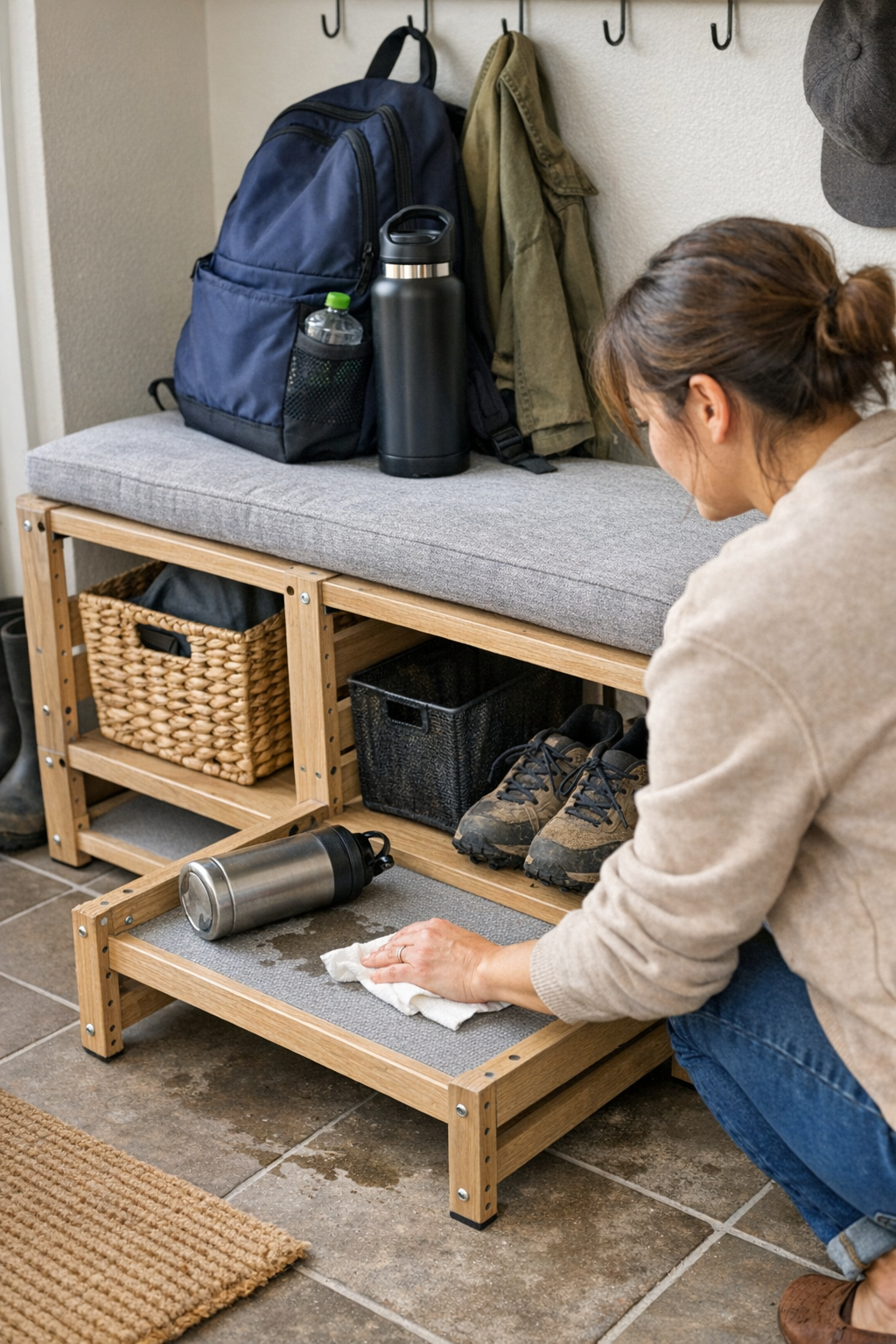
There’s a moment in the entry zone when everything looks tidy and calm—shoes lined up neatly, bags dropped in their baskets, surfaces still holding that fragile sense of order. But it only takes one damp sneaker or a bottle that dripped on the way in for that control to slip. Living with a practical transition-space setup over time, I realized it isn’t the obvious mess that wears you down—it’s the slow accumulation of small, stubborn spots that settle at the edges. Shelf liners were one of those subtle details I hardly noticed at first, but now I see clearly how they change the flow of the room and the ease of daily resets.
Surface Recovery and the Real State of Order
You don’t notice the difference immediately.
What surprised me most was how much of a practical impact a liner had after spills or wet shoes. Water dries quickly, dirt brushes off cleanly, and the shelf bounces back in no time. Without a liner, moisture lingers in seams and corners—right where shoes stick out or where a bag might be dropped just slightly off center. It’s never a dramatic mess at first. But that ongoing residue builds friction in daily use, especially on shelves or benches that see constant traffic.
It’s not a disaster—it’s a slow drag on the reset process. The little stains, the warped edges, they all add weight to what should be a quick task. So the threshold starts to feel like a place to hurry past, not pause in.
Cleanup in Practice, Not Just in Theory
One rainy evening with arms full and a collection of wet-weather shoes scattered around really brought this home. Before, cleaning up meant a drawn-out process: moving everything, patting shoes dry, discovering new damp or sticky patches. With the liners in place, it felt different—almost funny. A quick towel, a wipe, and the job was done before I even had time to resent it.
That’s what kept bringing me back to this detail. A lined surface quietly shrinks the size of the task at hand. No nagging spots demanding attention, just the easy, almost forgettable rhythm of putting things right again.
When Surfaces Invite Daily Return
It’s tempting to think that a transition space is all about looks. But it’s really about flow—the constant crossings, brief stops, handoffs of shoes and bags, the small battles of clutter at a narrow pass-through or a wall-mounted unit where things tend to drift.
Linings don’t fix every issue, but they make it easier for these transition zones to reset instead of bogging down after every arrival or departure. There’s less pressure to avoid the lingering mess or leave cleanup half-done because the space already feels overwhelmed.
Somewhere in the flow of daily comings and goings, I began trusting the drop zone again. A subtle thing—a surface that lets yesterday’s dirt fade away without holding on. Maybe that’s why it feels calmer every time I pass through.
For anyone curious about the liners I use, you can find them here.



