When Small Tools Make a Big Difference in Confined Corners
Multitool performance in tight spaces depends on balance, anti-vibration features, and blade choice like Japanese tooth geometry for better control.
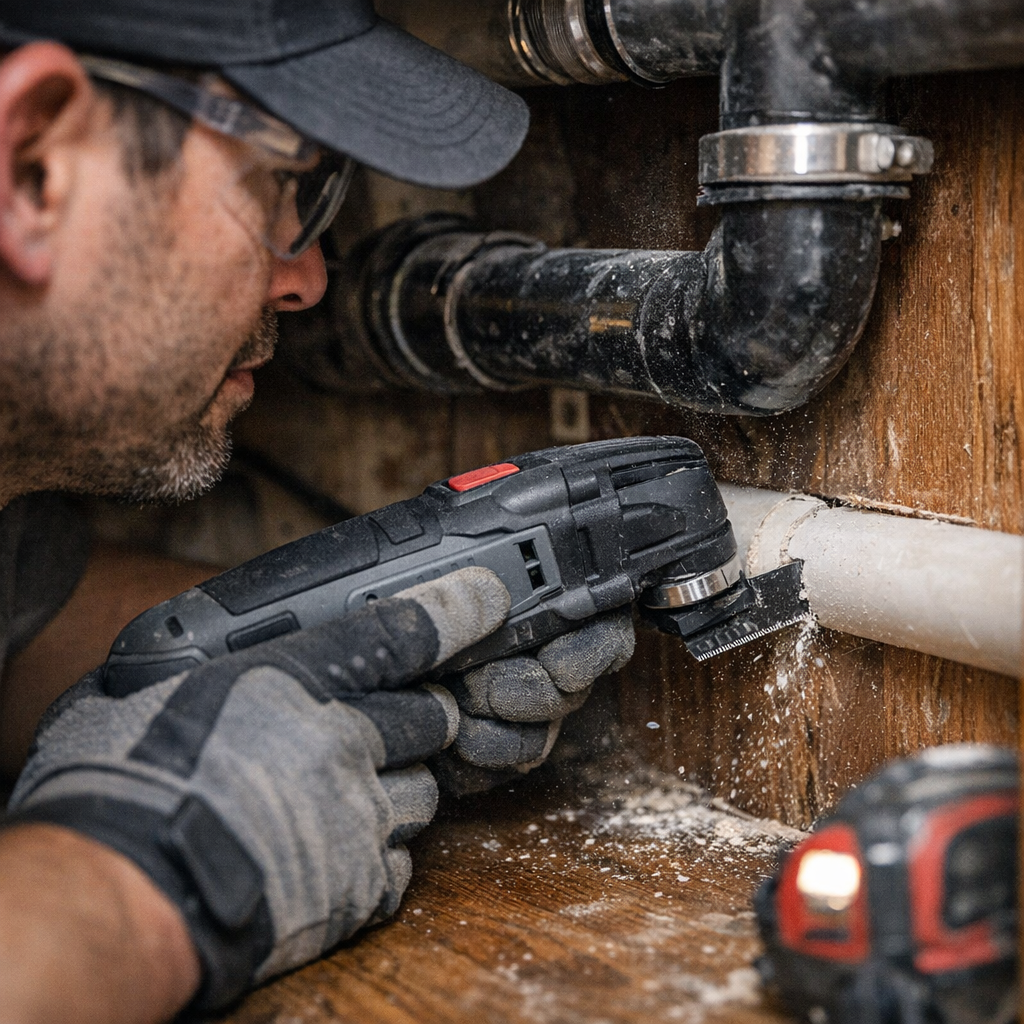
There’s a certain feeling you get when you’re squeezed beneath a cabinet or angled between old pipes—shoulder pressed to the floor, light flickering over dust motes—and you just want to make a clean cut and move on. Multitools make these impossible spaces bearable. You hardly think about the vibrations or how steady your hand feels. Until suddenly, you do. When your rhythm stutters or your wrists ache, it becomes clear: not all tools are truly alike.
The First Cut Always Feels Easy
In those first few moments, every multitool feels good enough. Slide the blade against wood grain or plastic pipe, and it slices more or less where you ask. The noise blends into the background.
You don’t notice it immediately.
But you feel it. Especially when the hours stretch or the angles require more patience than precision.
The calm of the job changes as fatigue rises. That’s when rough edges sneak in, when vibration travels up your arm, when the cut you imagined becomes a bit less sharp with each attempt.
Where the Differences Sneak In
It’s easy to believe that size and blade matter most. If two tools fit behind joists or inside a cabinet, what else could matter?
Yet, run twenty cuts through dense framing in a cramped closet and real character emerges. One tool may wander—tipping or skipping along the grain—while another keeps its cool. The heavier tool that feels solid on the shelf can become a burden overhead, tipping off the line. A lighter, balanced one is less showy, but its steadiness becomes precious when your hand grows tired.
Sometimes you don’t realize what’s happened until you’re sanding out roughness for the fourth time. Or when the tool’s hum lingers in your palm, long after the job is done.
Quiet Improvements, Subtle Rewards
One afternoon, lying awkwardly under a kitchen sink, I swapped the old multitool for one with an 80mm body and a softer grip. The change was unexpected: the blade danced less and followed the curve of PVC neatly. Japanese-toothed blades, meant for gentle starting and clean finishing, turned out to be a quiet revelation—less chatter, less fatigue, and far fewer moments worrying if each pass would go astray.
It wasn’t about finishing faster, just steadier. The work became repeatable, a little more predictable, even as the awkwardness of space stayed the same.
The surprising truth? Over time, the right combination of grip, blade, and subtle balance has less to do with visible specs and more to do with how you feel at the end of a long day: hands less numb, cleanup less daunting.
Small choices pile up, quietly shaping the day’s outcome.
These thoughts came together while working on a small personal project.