When Small Yards Stay Open Amid Daily Use
A small yard’s openness depends on storage that resists repeated clutter, keeping floor space free and maintenance easy over time.
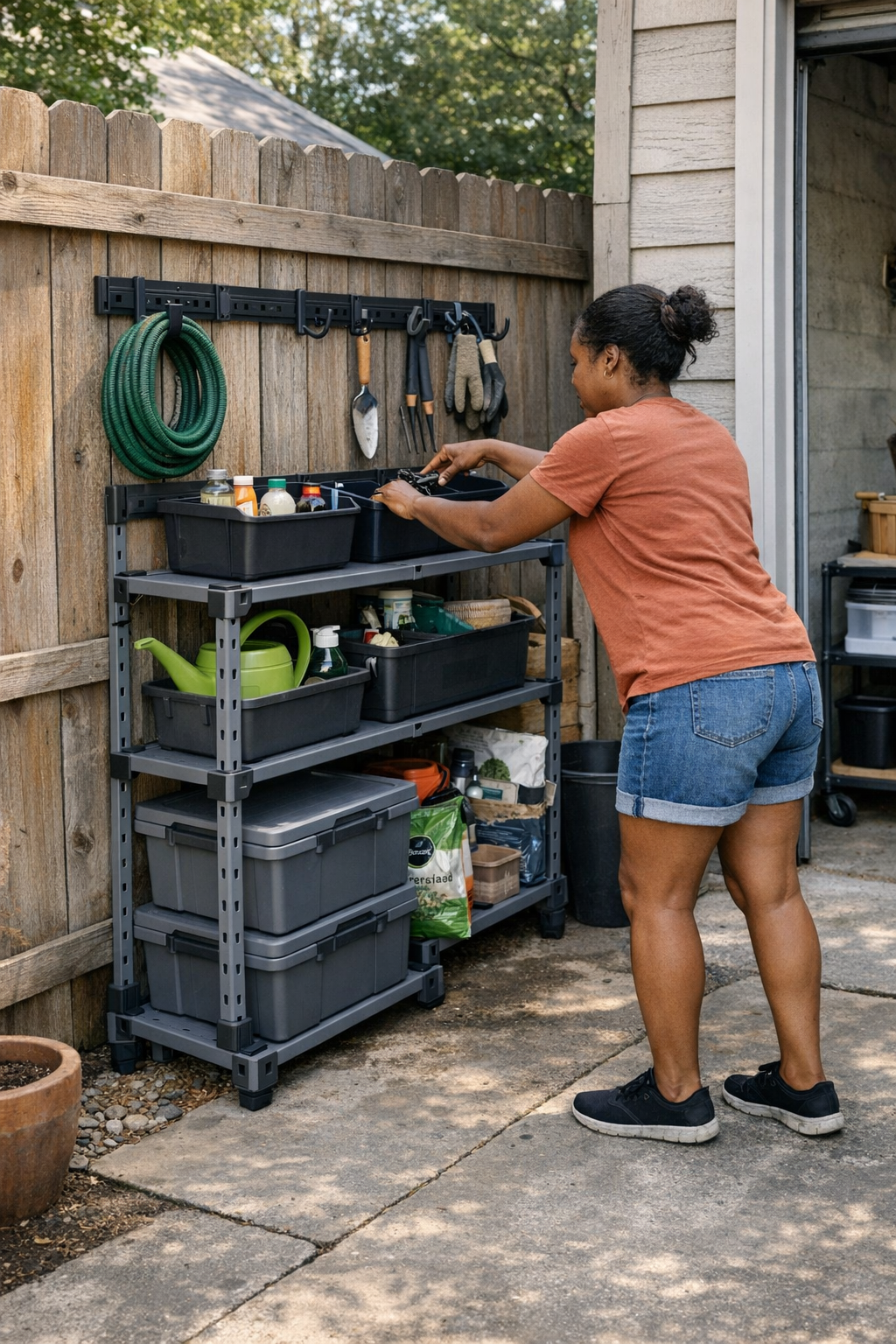
You can sweep the patio, tuck loose toys away, even hose the walkway so it looks sharp for an afternoon. For a moment, the yard feels open again. Then life returns: someone drops a garden rake by the bin, new shoes stray near the door, a neighbor’s folding chair appears out of nowhere. Little by little, the space constricts. The shift from “tidy” to “crowded” is almost invisible—until you catch yourself doing a sideways shuffle just to fetch a watering can.
I used to think small yards just required the right size of storage. Shelves, deck boxes, sheds: if it looked compact and matched the footprint, it felt like a solution. But the real divide wasn’t about measurements—it was whether storage stopped the quiet tendency for things to accumulate on the ground and around the edges, wherever it was easiest to drop them.
Where Friction Creeps In
You don’t notice the clutter immediately. Most of it builds gradually. A bike leaning near the shed, a hose looped across the box, a random soccer ball wedged in a walkway. Each piece alone feels harmless. But over a week, small blockages multiply. Suddenly, reaching for garden gloves means nudging a chair aside—then without any clear reason, you’re annoyed that using the yard isn’t simple anymore.
That was the part I kept coming back to. It wasn’t just the stuff piling up; it was how each obstacle chipped away at the flow and ease I wanted from the space. For a family with different routines and tolerances for mess, floor storage became an unspoken invitation for overflow. When you have to rearrange three things to get one, it’s easier to just drop what you have and promise to “deal with it later.”
Opening Up Space Without Moving Walls
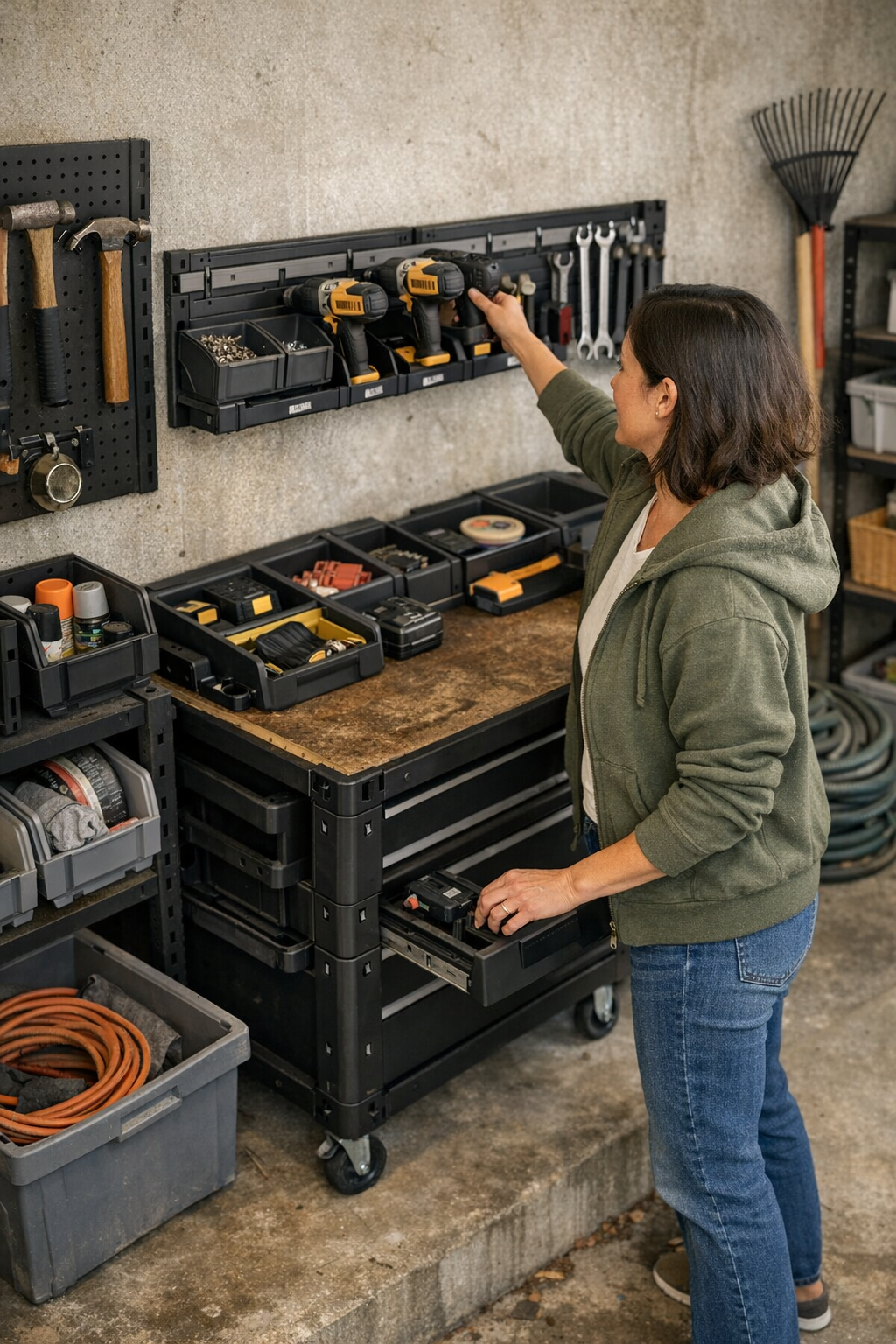
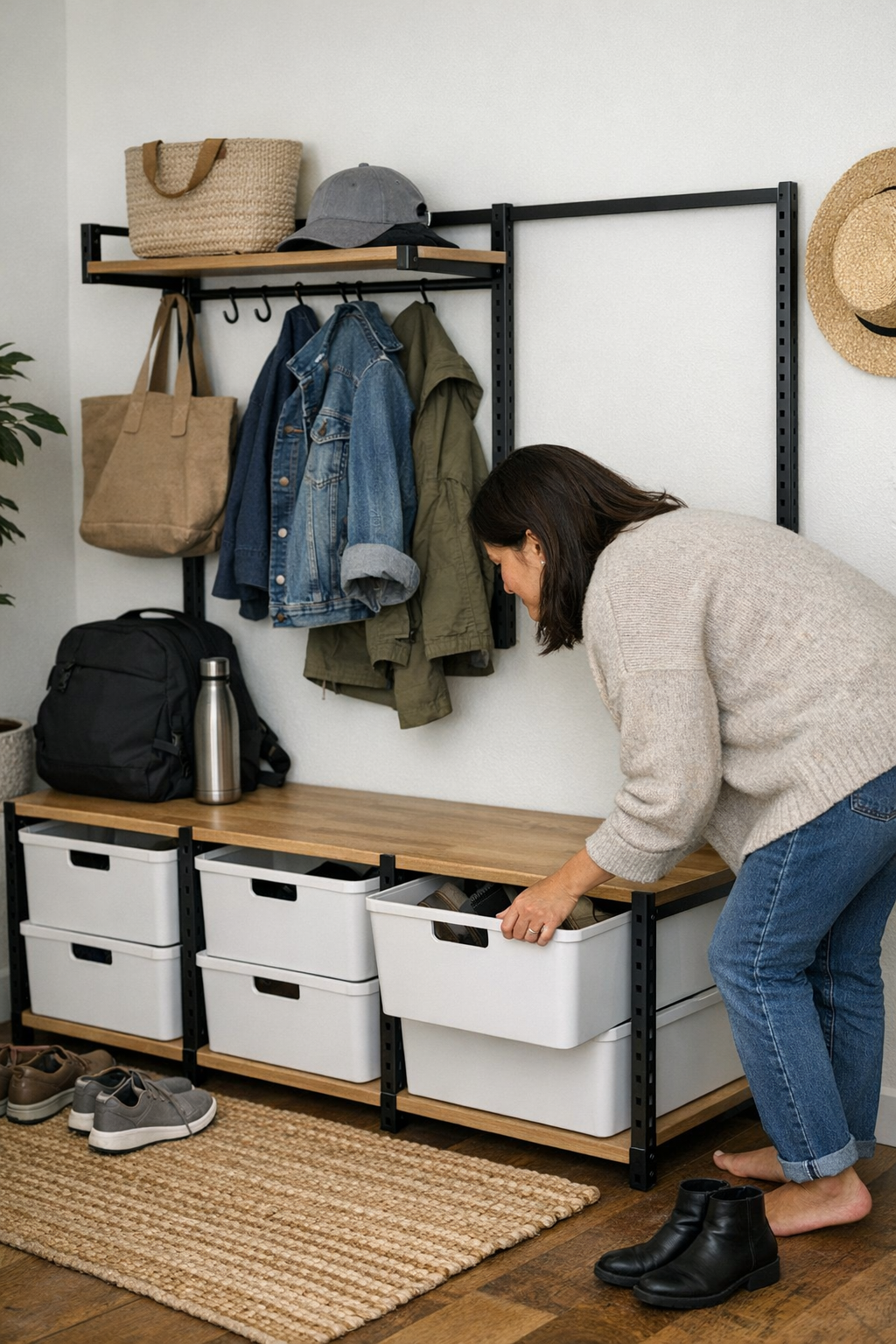
The subtle shift came when I lifted gear off the ground. Wall-mounted racks, rails, and baskets do something I hadn’t expected: they claim air that never gets in the way. Lawn tools at eye level, hoses winding overhead, toys in baskets—not at your feet. They don’t force anyone to be tidier. But absence counts, too. When there’s no easy spot on the ground to drop things in the pathway, fewer piles form.
This was the practical difference. One bin stayed for bulkier gear, but everything else moved onto the wall. Most of the time, someone who might usually leave a trowel or bike pump lying around was more likely to snap it back on the hook. Not from discipline—just because it was within easy reach, not underfoot. Cleanups shifted from excavating the deck box to a glance down the line, checking that nothing had slipped off its hook.
The Flow That Follows
I was surprised how much lighter weekly resets became. At first, wall storage felt like a small change—a piece of hardware and a few screws. But day by day, it meant less shuffling, less annoyance at hidden obstacles. Instead of watching the available yard shrink, I saw it hold steady even through clutter-prone weekends.
Sometimes the solution isn’t about adding more storage, but about lifting what you already have above the habits that cause new mess. Just one section at eye level cleared a full walkway and preserved the open feel we needed—without needing a bigger yard or bigger containers.
Small changes like these shifted how I think about keeping shared outdoor spaces effortless, even with different routines and varying thresholds for what counts as “tidy.” These patterns showed up again after trying a few approaches here: tidyyard.myshopify.com.