When Storage Choices Shape Everyday Flow and Calm
Repeatable storage with dividers keeps routines smooth and resets fast, while aesthetic bins can hide clutter that appears with daily use.
We don’t always realize which details keep our daily routines running smoothly—until one quietly slips out of place. Choosing between repeatable storage and a row of matching bins seems trivial at first, something purely cosmetic. But after a few days, the difference begins to show up in unexpected ways. Sometimes, what looks organized by sight simply doesn’t feel organized at all.
You don’t notice it immediately.
But you feel it.
Space invites us to create order. To line up baskets, fold sweaters in neat columns, stack shoes heel to toe. The urge for symmetry is strong. The alternative—storage that prioritizes specific categories, clear dividers, and easy retrieval—can look a bit less curated. But living with those setups is a different story, especially on mornings that start a little too fast.
Surfaces or Flow?
Think of a closet that greets you with identical bins on a single shelf. The look is satisfying: every edge lines up, every color matches. But after a week of hurried mornings, you notice socks sharing space with scarves, gloves slipping between folded shirts. The system begins to blur.
The difference isn’t usually loud. More often, it’s small moments accumulating—a pause as you search for something familiar, a pile quietly forming at the edge of the shelf. Clutter doesn’t return all at once—it tiptoes back when structure is missing.
At first, matching storage makes everything appear seamless. Over time, it’s the flow of your daily reach that reveals what’s really working. If finding a mitten means moving three baskets, something subtle is off.
How Use Redefines “Order”
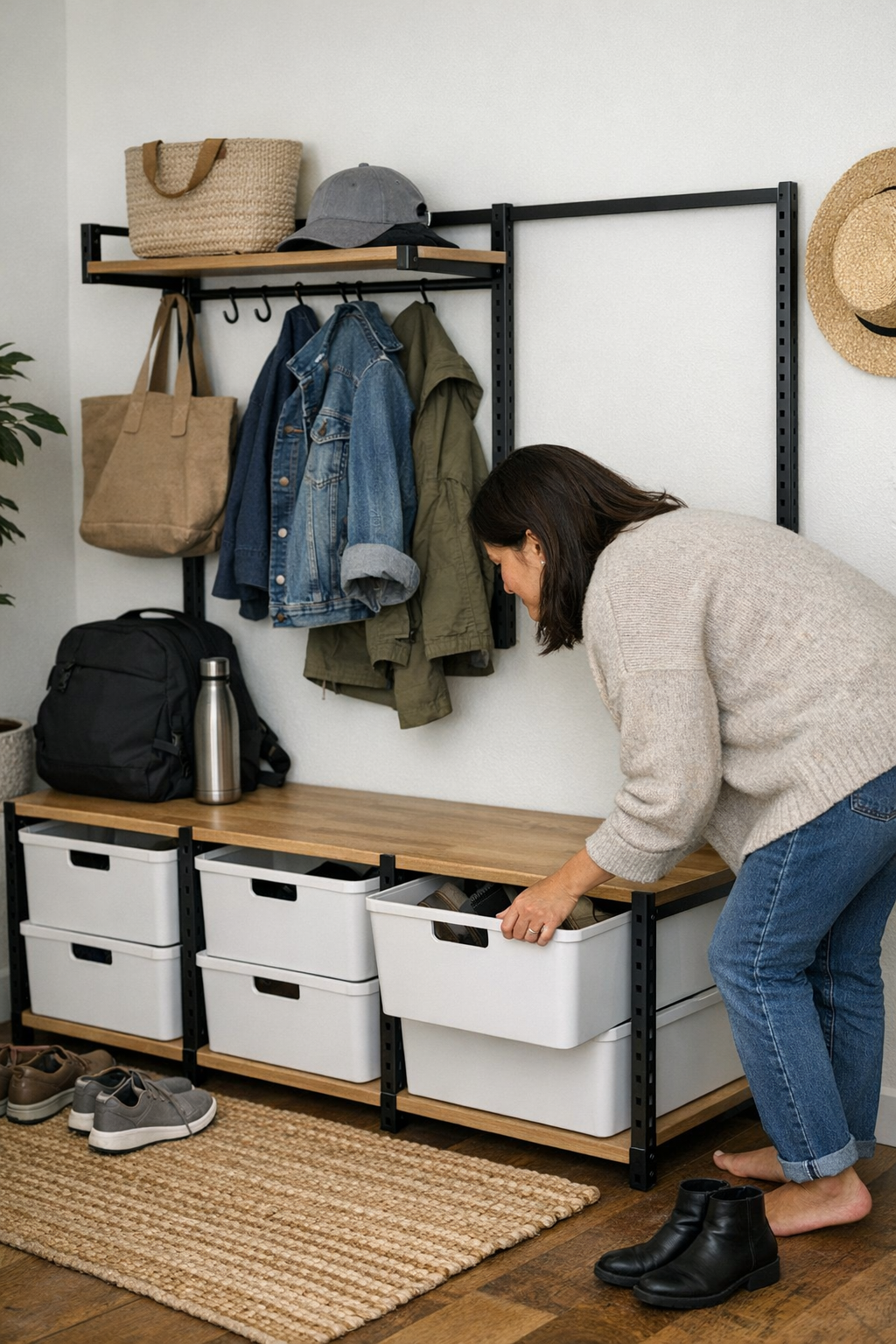
Routines put our systems to the test. What holds up under quiet weekend resets might buckle after three busy mornings. Take a narrow entryway closet as an example. If scarves, gloves, and bags share space for the sake of uniformity, every retrieval becomes an exercise in patience. One hand holds your bag, the other tries to navigate bins that don’t quite separate what you need.
That subtle frustration builds. Day by day, things get a little more shuffled and less clear. The space that once looked “done” starts to scatter at the seams.
You don't notice the change at first. But when putting things back takes longer—or when a favorite scarf vanishes behind a new pile—you begin to understand the quiet cost of choosing form over function.
A Small Shift with Quiet Impact
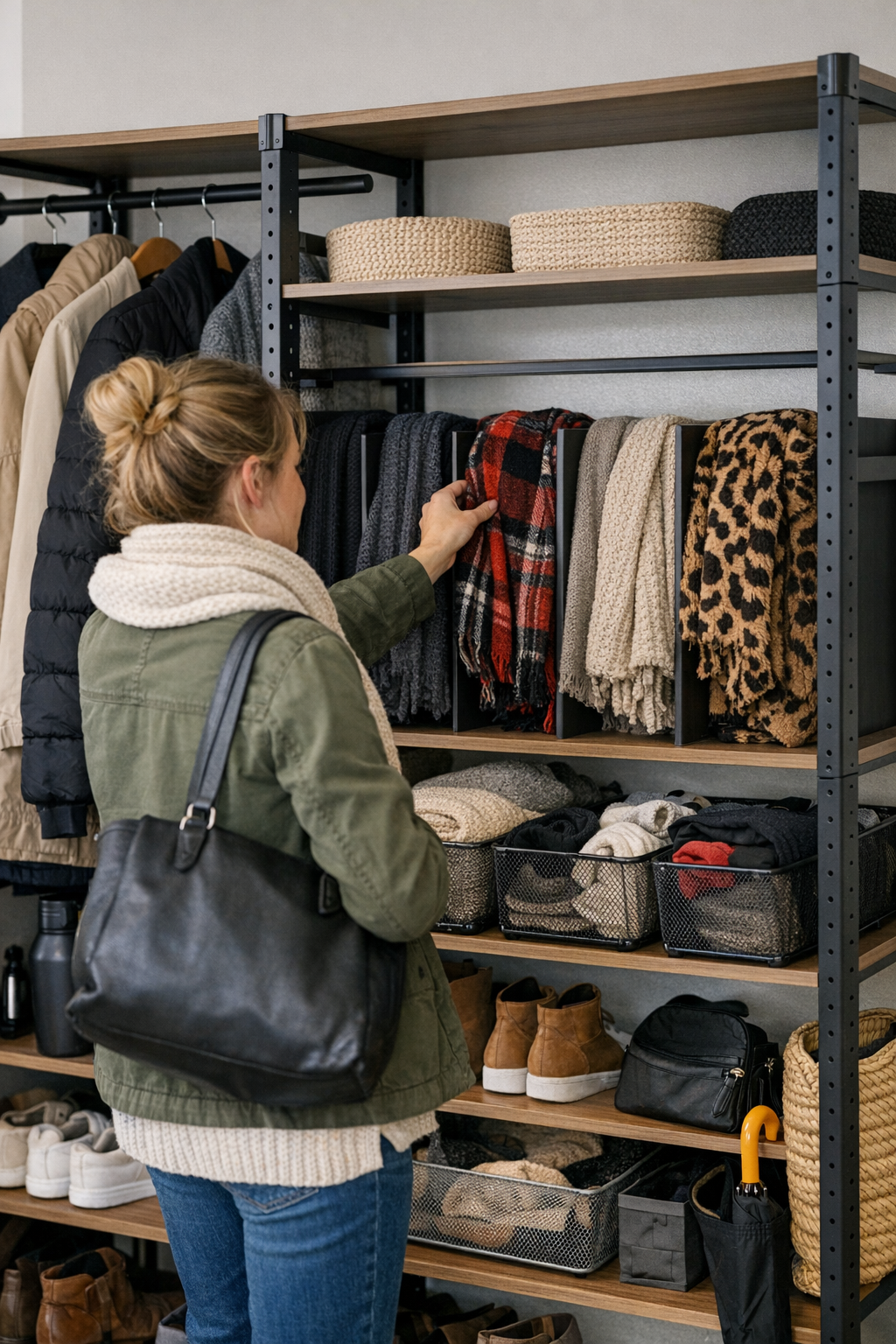
Here’s what changed in my own routine: I added narrow, open dividers to split out each category. No more perfect rows of matching bins—just clear places for things to return. The reset became less effortful—almost automatic.
Counterintuitively, it was shrinking bin width by a few inches that created enough space for a new divider. Suddenly, everything had a place. The shelf lines stayed straight, and the weekly pile-up on the floor disappeared. What I noticed most wasn’t how the closet looked, but how it felt—lighter, even on the busiest days.
There’s something to be said for how a room meets you after a long day. Clutter may hide behind a beautiful container for a while, but function always finds its way into the light.
Sometimes making room for a simple divider does more than any matching basket could.
These thoughts came together slowly, in the half-hour after putting away groceries.