When Storage Fails, Clutter Quietly Takes Over
Effective storage closes the loop by fitting routines, keeping categories stable, and making resets effortless to prevent clutter and slowdowns.
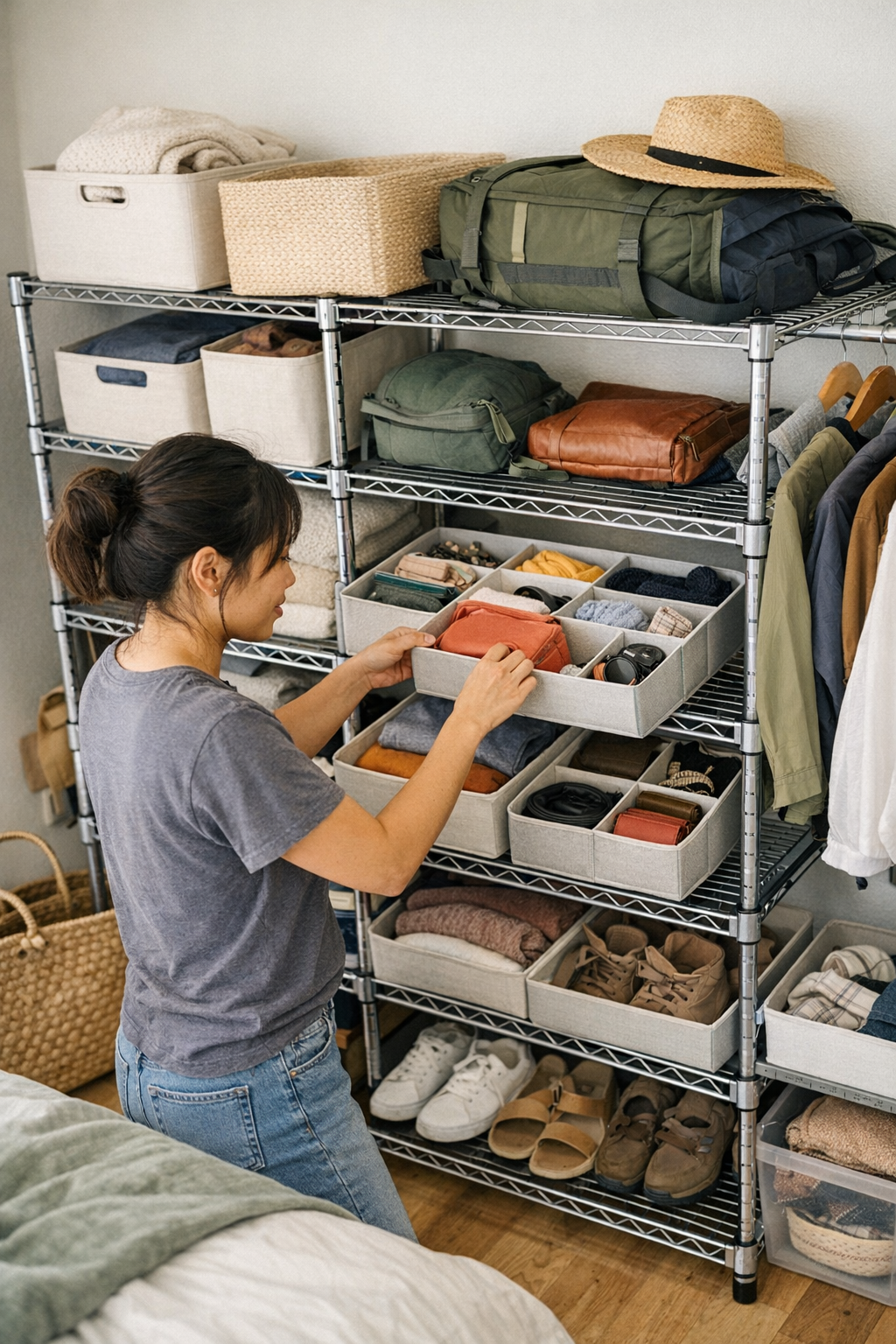
It always feels like a quiet triumph at first—the sight of tidy rows, baskets aligned, and everything folded just so. There’s a sense of relief in that surface order, a small moment where you believe you’ve finally tamed the chaos. That feeling holds for a while. But routines speed up, life asks for more, and somewhere in the rush, the line between order and disorder quietly dissolves. Storage, I’ve found, is less about how it looks and more about how it holds up to real, daily living.
What Looks Organized Isn’t Always Ready
A closet can look perfect when nothing in it is moving. Shirts stand in careful stacks; baskets perch neatly on shelves. But what happens when you’re late, pulling things in a hurry, or sharing space with someone else? You don’t notice it immediately, but you feel it.
Soon, soft piles tip over. Socks and belts, once carefully separated, begin to tangle beneath the surface. You reach for something and have to dig. An extra step here, a rescue of a lost item there—the setup that worked in stillness now breaks down under the smallest pressure. I’ve seen it in my own space: what photographed so neatly on Sunday begins to falter by the following Thursday.
Small Frictions Signal Bigger Problems
It isn’t just about mess. It’s about the space beginning to resist you. Maybe it’s the deep shelf where backup items gather and multiply, or a bin so wide that categories quietly blend. In a shared closet, the back zone becomes a drop-spot for whatever you don’t want to deal with today. Day by day, reset takes longer, the floor becomes a temporary landing pad, and the order you hoped for feels just out of reach.
There’s a pause here, a moment to notice that the setup isn’t really supporting your habits—it’s quietly demanding more work from you instead.
When Storage Matches Routine, Order Feels Effortless
I remember switching out deep bins for shallow containers divided just enough to match what I actually use. Suddenly, everything returned to its spot in one motion. The chaos didn’t disappear, but it stopped spreading. Two weeks went by, and the shelf lines never collapsed the way they used to.
This is the gentle shift—a realization that resets can be nearly invisible when storage matches real routines. It’s less about labeling everything, more about seeing what you reach for, where things land after use, and letting your system adjust to you.
Letting Practicality Catch Up With Aspiration
A space ready for daily life doesn’t always look like a magazine spread. It’s a shelf where nothing leans, a sectioned box that quietly contains drift, a divided bin that reminds you where things go each time. When that happens, order becomes easier to keep than to lose. The work of staying organized shifts from discipline to design.
I think about it now whenever I notice something sliding out of place. The answer isn’t more effort; it’s a softer kind of noticing—and a willingness to let your space grow with your habits, not against them.
These thoughts came together while reworking a home closet that just wouldn’t stay straight.



