When Storage Feels Like a Maze at Home
Well-organized storage works long-term only if it makes movement and return easy, not just maximizes order on day one.
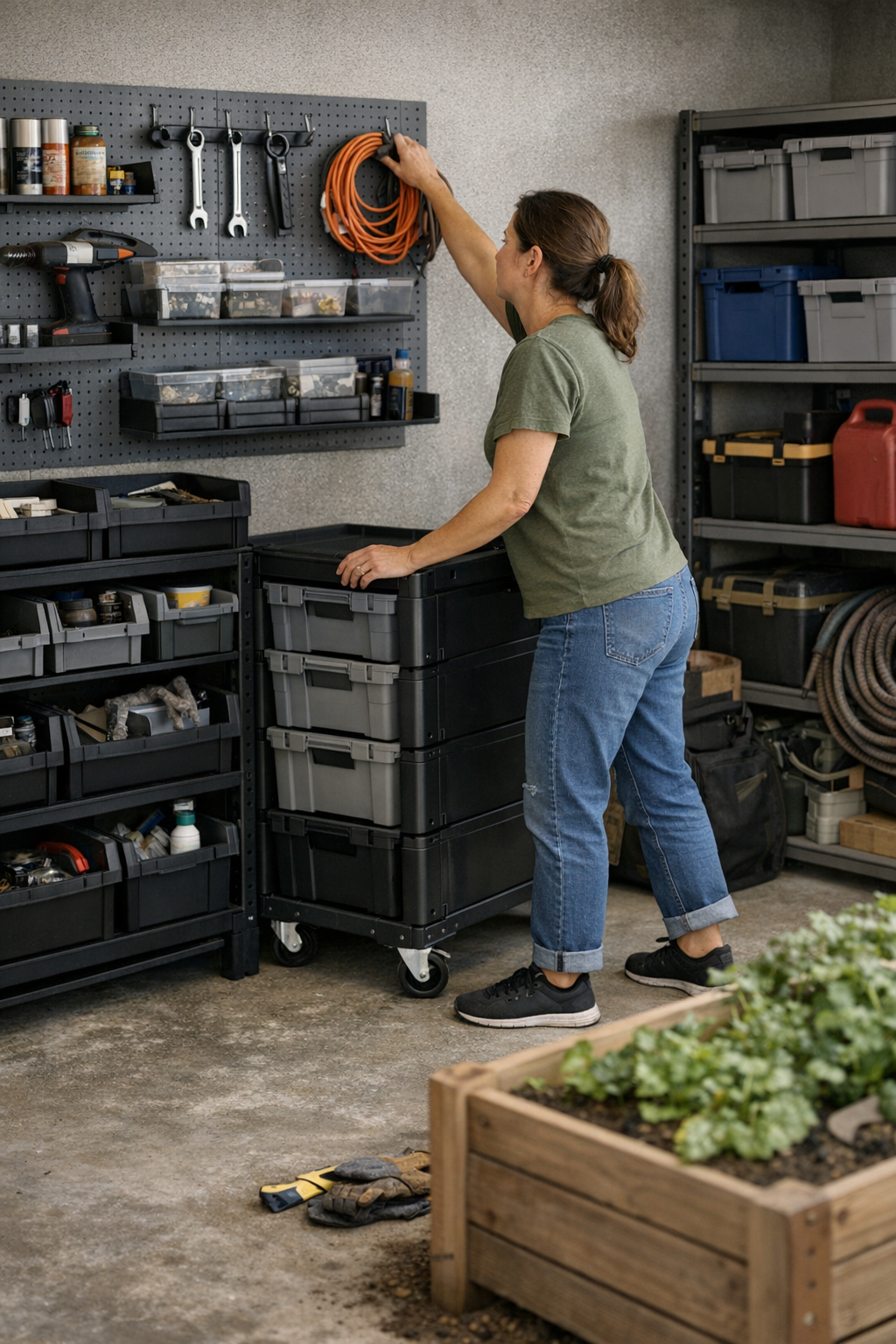
There’s something oddly hypnotic about the moment right after you finish arranging a workshop or garage space—lined-up bins, every shelf filled just so, not a stray tool in sight. It’s the high-gloss satisfaction of order, and for a while, it feels like the work itself. But then comes the moment you try to flow back into your routine.
That’s when you notice what wasn’t obvious at first. A storage system—modular, mobile, wall-mounted, or floor-based—can look like everything you dreamed of, until a rolling cart blocks the fastest path or you have to twist around a bench just to put something away. What seemed like efficiency becomes subtle friction beneath your feet.
You don’t notice it immediately.
But you feel it.
The Real Test Isn’t the First Reset
It’s easy to love the shape of order—there’s comfort in rigid lines and predictable slots. Yet the real test of a garage or workshop system happens far from the weekend’s organizing burst.
Picture every wall lined with shelves and bins, each container perfectly placed—until your hands are full and one pathway is blocked. Suddenly, the smallest detours matter.
Dead corners emerge, spots you start avoiding. If a tray you use daily gets tucked behind a rolling cart or mobile unit, the repetition wears you down. You spend more time shuffling items than actually resetting—always one extra step, one extra reach.
What Looks Finished Can Still Get In Your Way
There’s a quiet disconnect between what looks settled and what actually flows.
Those last few inches squeezed in for extra hooks, the bench pushed just past the door’s swing—they promise maximum storage capacity. But in real use, the cost is subtle. Maybe it’s bumping a drawer or mentally tallying how many times you’ve moved the same bin twice in ten minutes.
Oddly, the more “done” a space seems, the more it can trap you. It’s not clutter as much as resistance—a feeling that every routine return is heavier than it should be. A perfectly slotted space becomes rigid, not flexible, and the labor of working turns into the labor of re-navigating.
Clearing a Path Is Its Own Kind of Organization
Something changes the first time you decide to value movement and space over storage capacity. In my own garage, clearing half a walkway behind the main rolling cart felt counterintuitive at first. It was only a narrow stretch, but suddenly every step felt lighter.
You notice the difference after a project, when resetting a tool feels simpler, unburdened by awkward detours. The energy saved doesn’t add to “productivity,” it simply brings quiet relief. Workflows breathe.
Here’s what quietly surprised me: the best organization came not from filling every shelf to the brim, but from leaving room to move. It’s not about minimalism, but about how clear paths invite you back.
If your routine involves circling obstructions or moving the same items repeatedly, maybe your system isn’t serving you as well as it could.
Sometimes, clearing a path is the most practical order you can keep.
That’s usually when a space starts to feel useful again—not from what you’ve slotted into place, but from how easily you can start the next task, and return.
These thoughts came together while standing in the quiet, mid-reset, among half-moved bins and one open pathway.



