When Storage Fits Life’s Everyday Flow
Storage that fits habits reduces blocked routes and overflow, making outdoor zones easier to maintain and keeping order with less effort.
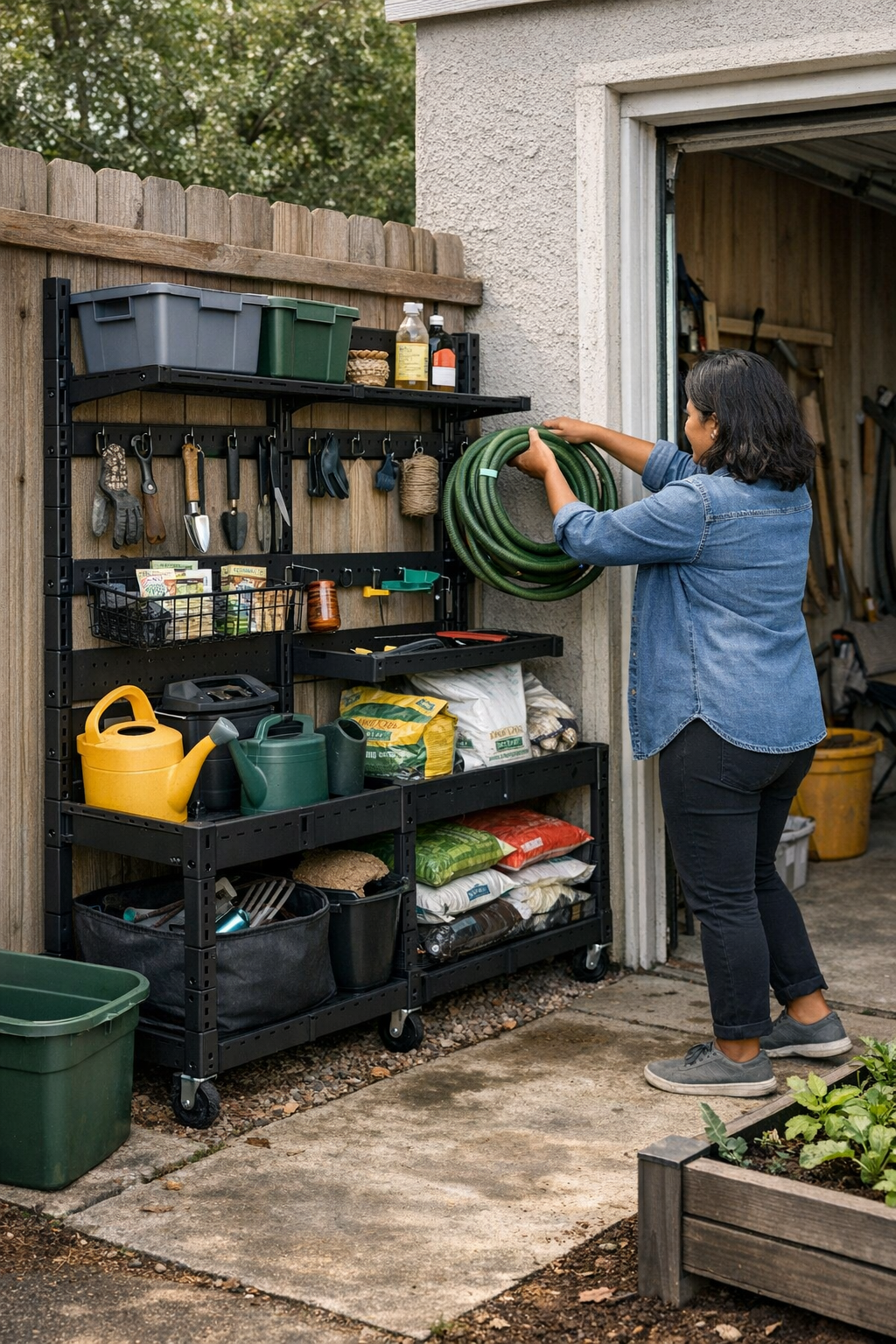
There’s a feeling when a space looks neatly organized—the bins are stacked, the floor is clear, and there’s a gentle hush of order. But over time, even the most carefully laid out outdoor storage can quietly go sideways. It happens bit by bit, almost invisibly: the daily rhythms, the quick drop-offs after school or gardening, the things you’re certain you’ll “put back” later. Suddenly, the tidy setup turns into an obstacle course, and walking through it feels like tiptoeing through landmines of clutter.
I kept thinking about this every time I glanced at our side yard, meant to be shared real estate for shovels, muddy boots, toys, and whatever else needed a convenient place to land. The right storage promised to make life easier. Sometimes, it did. Mostly, I saw how the space itself nudged things back out of place as quickly as we “fixed” them.
The Way Movement Shapes Clutter
If you watch long enough, a pattern emerges: stuff always migrates toward the easiest spot to drop. Floor bins fill first, then pile up at entry points, and suddenly the walking lane shrinks to a tightrope. You don’t notice it immediately.
But you feel it.
I started to see that the type of storage—wall-mounted, modular, or just a big old bin by the gate—changed the way clutter spread. Floor-based setups made tidying a regular exercise in shifting things from one impromptu pile to another. Modular racks offered more flexibility, but if the sections weren’t distinct, it was the same game—just spread out over more surface.
Watching Routine Win (Or Lose) the Battle
One rainy weekend, the old problems returned: bins jammed the gate, soccer balls rolled into the rosemary, and shovels became something to dodge. It wasn’t the volume that stumped us, just the way things landed after use.
That was the part I kept coming back to.
Swapping the jumble for a segmented wall rack changed the script. Every hook and shelf seemed to suggest a natural “home” for what returned. Play gear and tools each had their place, and over a few weekends, the dumping stopped. Paths widened again, not because we stored less, but because everything had a defined stop on its route back in.
The Shift That Stuck
Storage isn’t about maximizing what you can pack away; it’s about how quietly things return to place. The most useful setups I’ve lived with didn’t demand constant sorting or anxious check-ins. They just made putting things back slightly easier than leaving them astray.
It’s a small difference. But it’s the one that held up, even as the yard’s purpose shifted with the seasons and the kids’ afternoons changed.
If you let the way you actually move through the space inform the setup, the place finds its own steady rhythm.
These notes came to me after rethinking our space, along with some low-key ideas I kept here: http://www.tidyyard.myshopify.com



