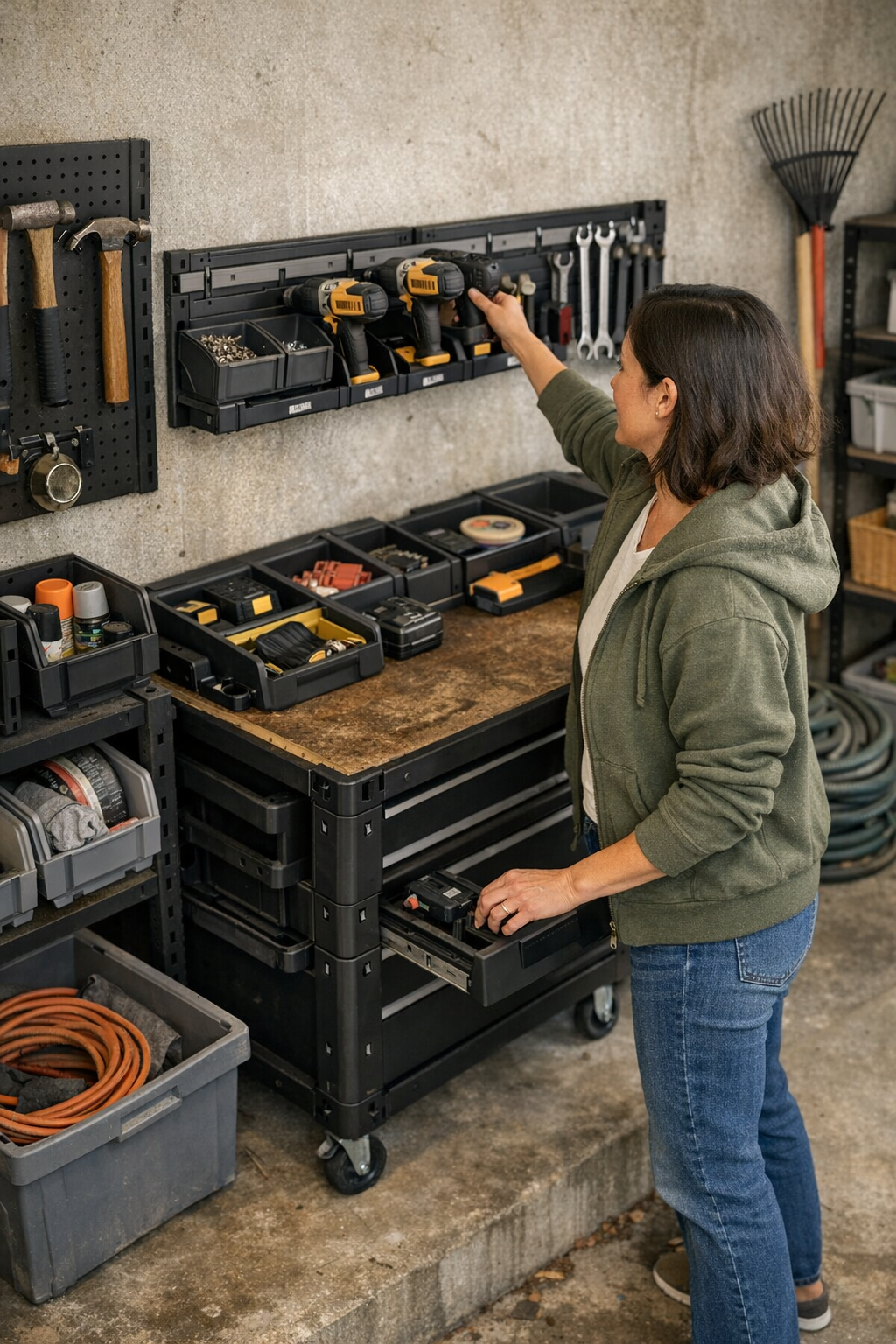
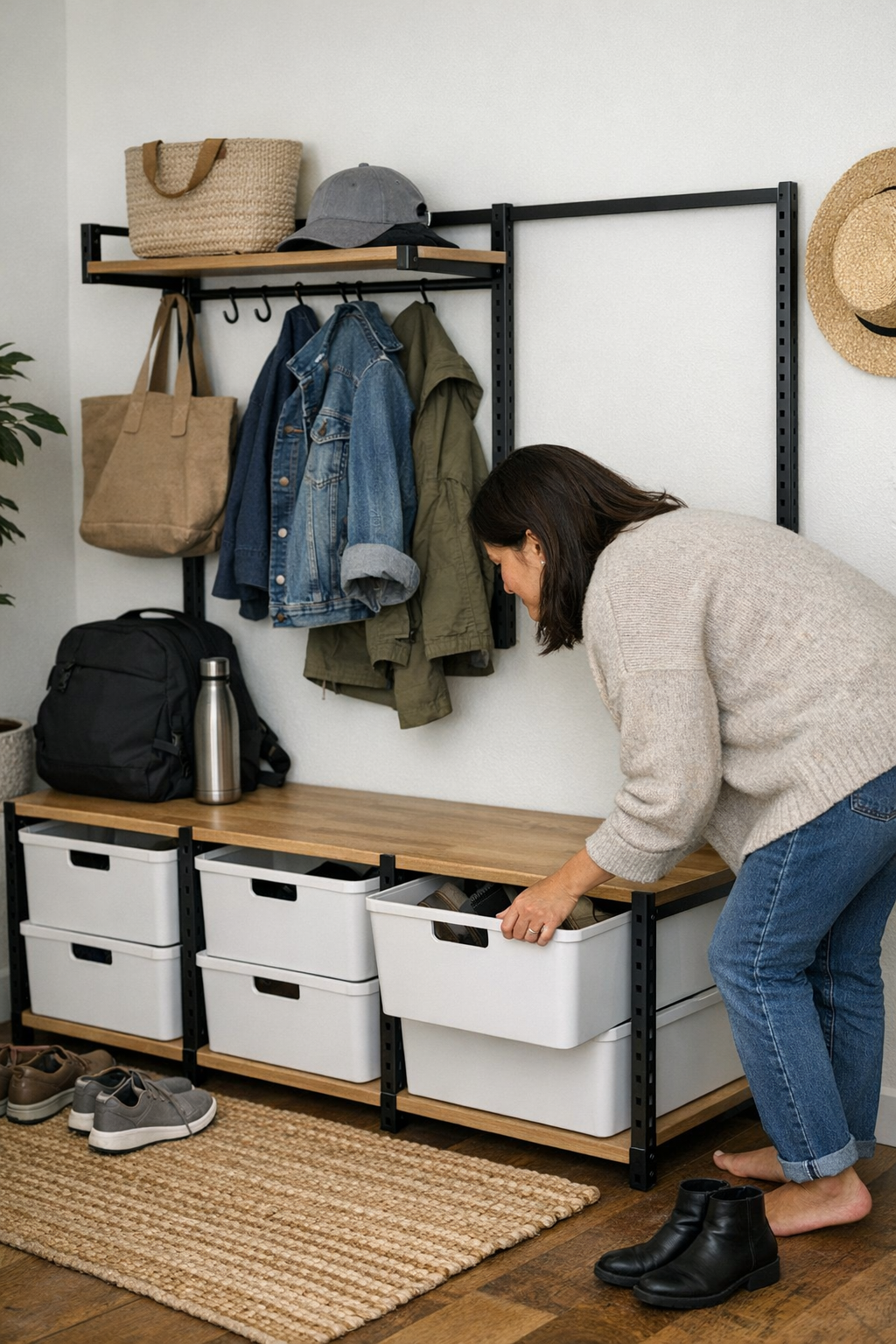
When Storage Flexibility Shapes Everyday Flow
Flexible storage setups enable smoother daily movement, faster resets, and less wasted space than rigid, fixed arrangements in garages and workshops.
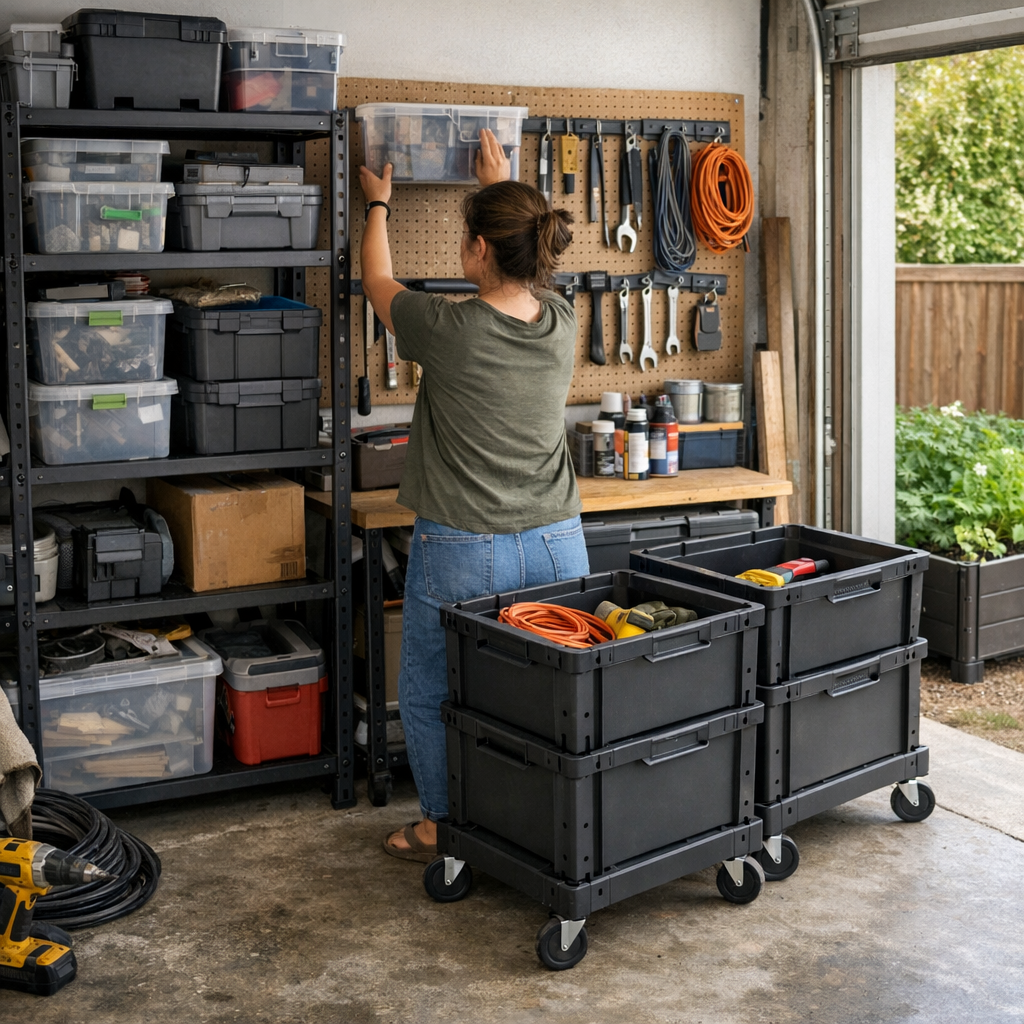
There’s a particular moment that sneaks up on you in a small workspace—whether it’s a garage setup, a workshop corner, or a backyard utility area. After you’ve aligned the shelves, stacked the bins, and given everything its perfect spot on the wall or floor, it feels finished. It feels right. But then real life stirs—projects grow, tools migrate, someone else squeezes through to grab something—and suddenly, neatness becomes something else: an obstacle.
This subtle tension between flexibility and rigidity is rarely obvious at first. The rows of matching boxes give a sense of calm order. The words “storage solution” seem to promise just that. But the real test comes later, in the repetition—the many times you reach, return, and repeat at your modular or mobile storage zones.
The Slow Unraveling of Order
You don’t notice it immediately.
But you feel it. A shelf that once looked inviting now requires a silent negotiation—boxes stacked in front of boxes, a tight corner waiting to trip you up, tools hidden behind a tidy exterior.
It happens gradually, in small daily tasks. A wheeled cart pinned by an off-center bin, a shelf’s contents tumbling into a neighbor’s space, that familiar sense of “where did I put…?” returning again and again.
Sometimes a small decision—like moving a rack from wall-mounted to wheels—shifts the dynamic. What was static now has give: you roll it aside, reclaim a walkway, dodge the old shuffle. The workspace breathes a little easier.
Why Fixed Setups Feel Like They’re Working (Until They Don’t)
There’s real comfort in symmetry, especially in a small workspace. At the start, it’s a relief—shelves lining the wall, bins labeled, a clear surface ready for action. The space glows with the satisfaction of order.
But projects don’t stay put. Supplies pile up, someone returns a tool to the wrong spot, and daily adjustments chip away at that symmetry. I’ve seen it happen often—in days, the once-pristine shelf becomes the catch-all for overflow. Corners gather items meant for “just a minute,” until the next reset.
There’s a gap between what looks organized and what actually stays useful in real use—whether wall-mounted or floor-based setups.
Building Room for Change
At some point, you notice it’s not just about having enough storage, but whether the space can keep flowing as needs change.
The subtle trick: mobile setups only work if there’s a place to return to—a zone, a line, a sense of boundaries, even if loosely defined. Otherwise, things drift, cluster, and that flexibility turns on itself.
Maybe the most practical shift is admitting the best order is one you can come back to, again and again, with as little friction as possible in returning tools or materials. Sometimes that means wheels on a heavy shelf; sometimes, just clearing a path in a tight garage setup so returns are easy.
The feeling of a space that accepts and absorbs change—that’s the real goal. It can’t be rushed. But once it’s in place, work finds its own pace again.
It’s something I noticed while quietly rearranging corners of my workshop, reflecting as the floor finally cleared.