When Storage Flow Shapes Everyday Home Life
A closed loop storage lets you retrieve and return items in one motion, preventing clutter buildup by removing hidden barriers.
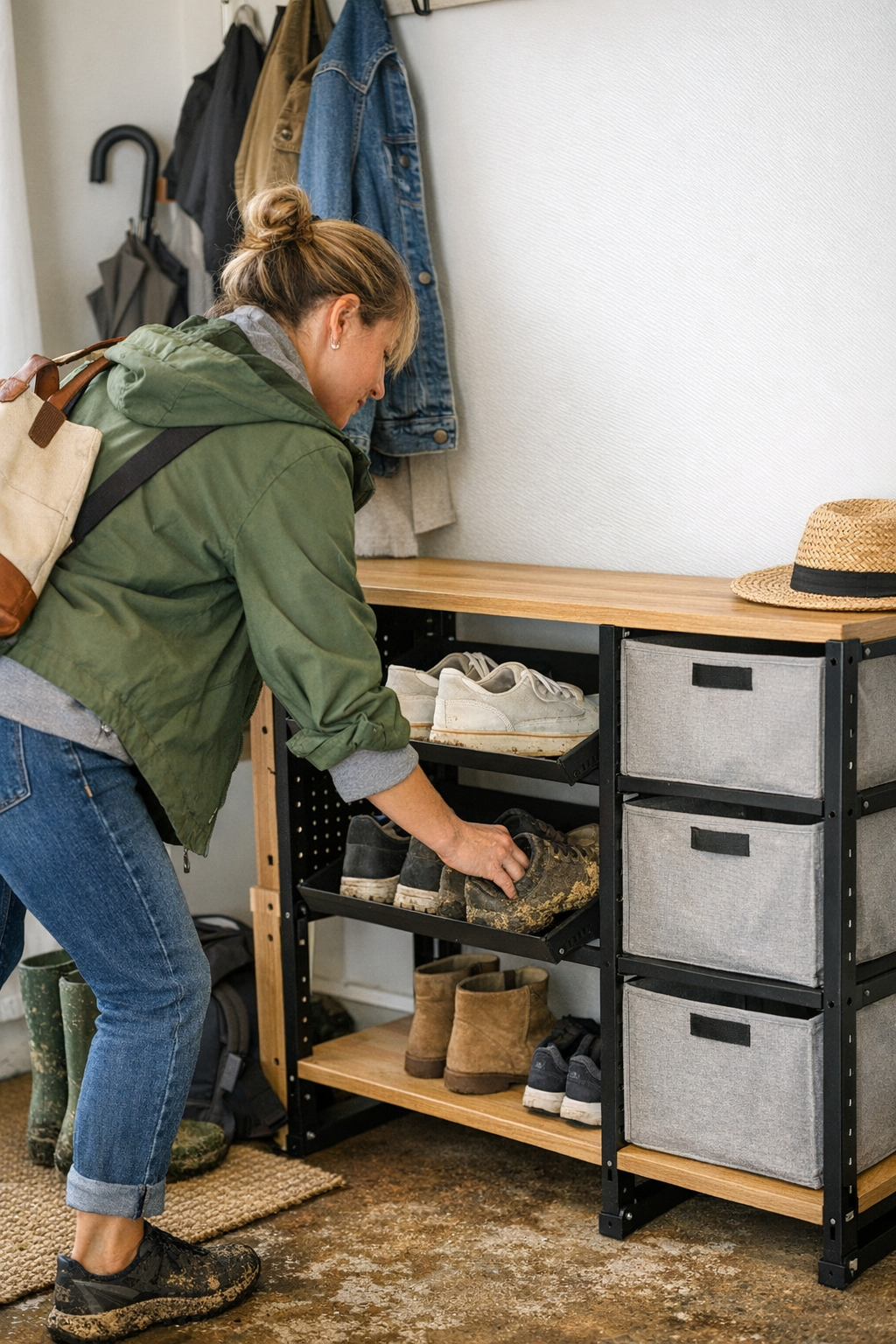
It’s easy to mistake neatness for order—at least, until the cracks start to show. There’s a certain comfort in lining up baskets beneath a bench, sliding a pair of shoes just so, and believing the system will hold. Most days, that illusion lasts long enough. The entryway looks ready for anything: serene and organized.
But organization with friction tells a different story. You don’t notice it immediately.
Still, in the details, something starts to falter. A bin that won’t quite slide out, a pile that drifts off its mark, a shoe left stranded near the door. Little things, really—until the routine begins to fracture and you find yourself drawn away from the space you once relied on.
The False Calm of Bins and Boxes
Two benches can look equally pristine on their first day, each promising order. For a while, the difference is invisible.
But the smallest discomforts accumulate. Every time you have to tug out a heavy basket, nudge aside a pair of boots, or wrestle a lid, your effort adds up. The flow of coming and going breaks—subtly at first, then more insistently.
You don’t realize how quickly this friction plants itself in your routine. Until one afternoon, arms full of groceries, you reach to stow muddy sneakers and meet a tangled mess—shoes hanging halfway out, baskets overflowing, and a space that’s suddenly more obstacle course than sanctuary.
When Routines Stumble, So Does the Space
A closed-loop storage setup isn’t about perfection—it’s about ease. This realization came one morning after replacing deep bins with open, sloped shelves. Suddenly, the motion became automatic: step in, reach, place shoes, move on. No extra hands needed, no bin to slide back in place.
It was a subtle difference. But it changed the rhythm of the house.
Less visible clutter, fewer excuses. Each person’s shoes landed in their own spot, accessible and obvious—the sort of setup that refilled itself without effort. It’s a quiet relief, not having to reset the area at the end of each day.
Sometimes these systems show their strengths only after weeks of trial and error—a dance between visual tidiness and practical flow.
The Ripple Effects of Hidden Barriers
Not all routines need the same answer. Open cubbies work for quick returns, but can look untidy; solid bins hide messes, but slow you down. It’s never really about what seems neatest. Rather, it’s about knowing where tiny roadblocks creep in and quietly rearrange your habits.
A real-life entryway proves the point, silently collecting stray cleats, lost mittens, and shoes that never quite find their way home. When a system asks for extra steps, it starts to resist regular use—and that’s how piles begin to grow.
If restoring order feels like a project instead of a pause, the loop has already broken. You feel it.
Sometimes, a gentle shift—a simpler shelf, a new routine—is all it takes to reset the flow. The aim isn’t perfection; it’s trusting your space to support daily life, not just a sweeping weekend overhaul.
Organization, it turns out, is less about appearance and more about what goes unseen: all those tiny moments, easy or tangled, that make up every day.
I started noticing these patterns while rearranging my own entryway—thoughts that still linger, waiting for whatever comes next.
These thoughts came together while working on a small personal project.



