When Storage Furniture Starts to Show Its True Colors
Easy-to-assemble storage furniture keeps long-term order only if it resists sagging, shifting, and clutter after daily use.

It’s not just about storage—it’s about how easily life flows and why the smallest upgrade matters more than you think.
The little messes usually sneak up on you. The reading pile that leans, game boxes shuffling, the persistent overflow on that one shelf—none of them demand attention at first. It’s only after weeks of reaching, tidying, and resetting that you notice how something so small keeps nudging your day off balance. The promise of “easy-to-assemble storage” sounded good when you unboxed it. It held up well—until your rhythms made clear what actually holds, and what quietly lets you down.
The Quiet Failures of What Seemed Good Enough
You don’t notice it immediately.
When new shelves go up, everything looks crisp and orderly. Surfaces shine. Categories are set: one spot for puzzles, another for books and remotes. It seems like the mess, for once, might be tamed.
But you feel it.
Daily life returns, and soon, the edge books start to sag forward. Bins nudge out of line. A stack that was tidy after assembly now tips, and that “good enough” feeling slowly wears thin. Each night, you put things back and sense how the structure lets the little messes slip in.
Where Convenience Fades, Friction Grows
There’s a hidden cost for choosing speed over stability.
Easy-assembly shelves win us over with simplicity. Fast to set up, flexible to move around. But when the routine settles—the constant reach-ins, the unthinking returns, the days when being in a hurry means less careful stacking—weakness shows. Shelves flex. The middle sags a bit. Objects wander in small increments.
What started as a shortcut for your organization becomes slow friction: one more thing not working as smoothly as your mind hoped. A moment spent realigning a bin, a book you find on the floor for the fourth night running. It settles in as a kind of low-grade distraction. Not urgent, but just enough to notice—when you let yourself pause.
A Subtle Shift: When Everything Finds Its Place
Sometimes, changing just one thing resets the whole rhythm.
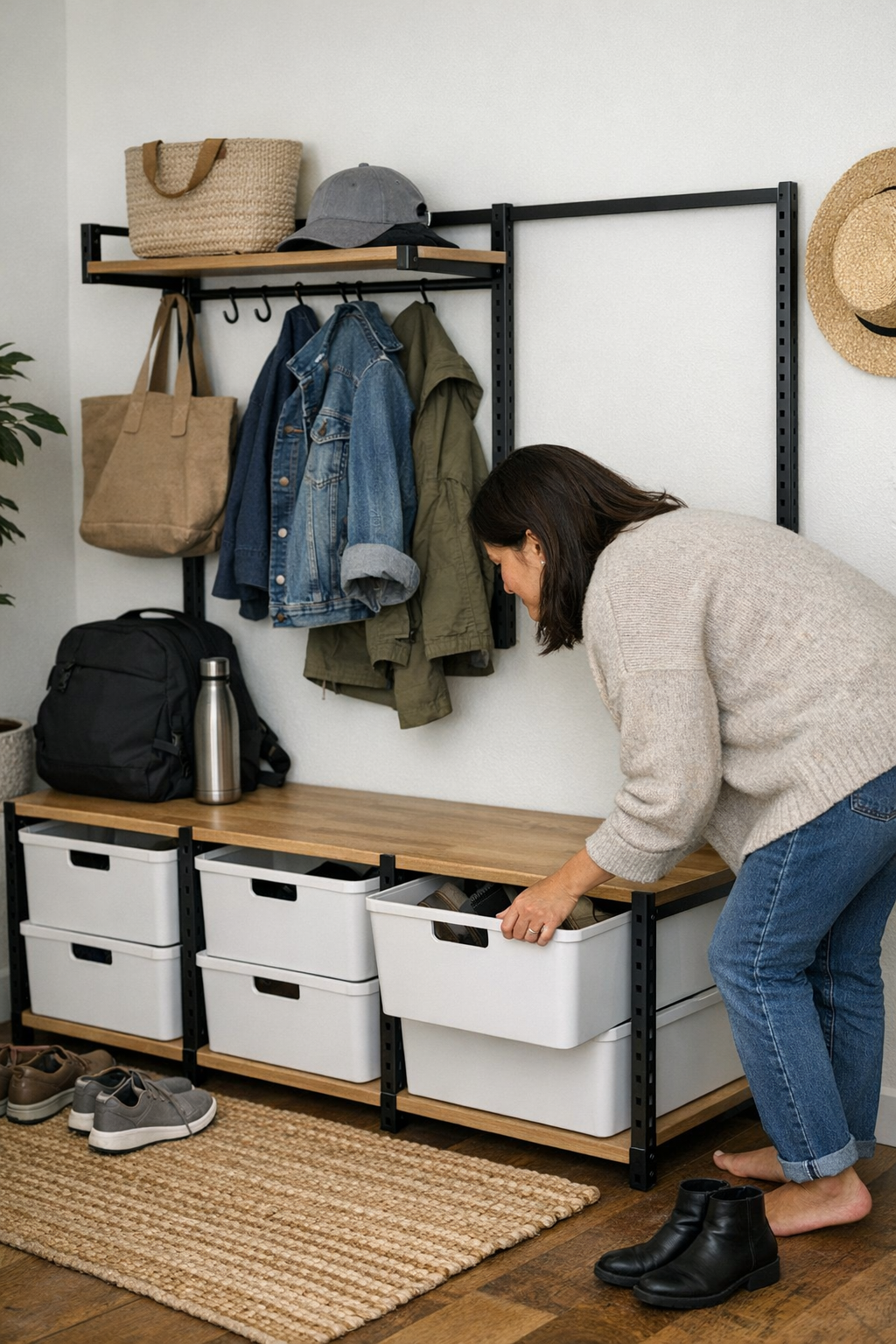
In my own living room, I swapped a swaying bookcase for a midweight frame with a simple center brace. There was nothing flashy about it. Yet the shelves no longer leaned, and bins stayed put. Books, for once, stood upright after every return. I realized how easy it became to keep things in place, how much lighter the reset felt at the end of each day.
It was only a small practical shift—a single metal bar running below the midpoint. But it changed the experience from perpetual micro-corrections to one smooth, dependable motion. Life, subtly, got gentler.
And sometimes, it’s these quiet supports that matter long after first impressions fade.
These thoughts came together while working on a small personal project.