When Storage Matches the Flow of Everyday Life
Organizing storage by daily action, not just category, reduces clutter, saves time, and makes routines smoother after repeated use.
You don’t usually notice how well your home is organized until you’re running late. Suddenly, a drawer jams, a sock is missing, and the morning scurries away in an avalanche of misplaced items. It’s not chaos—not exactly—but it leaves you out of step before the day has even started.
The way we set up shelves, bins, and baskets shapes these moments more than we realize. Not just by reducing clutter, but by smoothing (or tripping up) the tiny rituals woven into our days. Somewhere between “organized” and “actually useful” is a difference that only becomes obvious with time.
Categories Look Good… Until Routine Hits
It always feels hopeful at first. Neatly labeled containers—socks in one bin, ties in another, pens corralled somewhere nearby. There’s pride in that order, rows of things lined up the way you imagine in glossy magazine photos.
You don’t notice it immediately. But you feel it.
A few days go by. Then routines pile up, overlaps happen, and what once seemed organized doesn’t seem to fit the shape of your life. You start pulling out bin after bin just to complete a simple task. Surfaces get a little crowded, a random item or two left behind as you hurry on. The categories are still correct, but the flow is gone.
It’s even sharper on a rushed morning, or when a family member can’t find something basic—keys, an umbrella—trapped behind other baskets. That’s when organization turns into an obstacle course.
What If Organization Followed How You Move?
At some point, I stopped sorting stuff solely by category. Instead, I started paying closer attention to the choreography of the day—the repeated paths from one moment to the next.
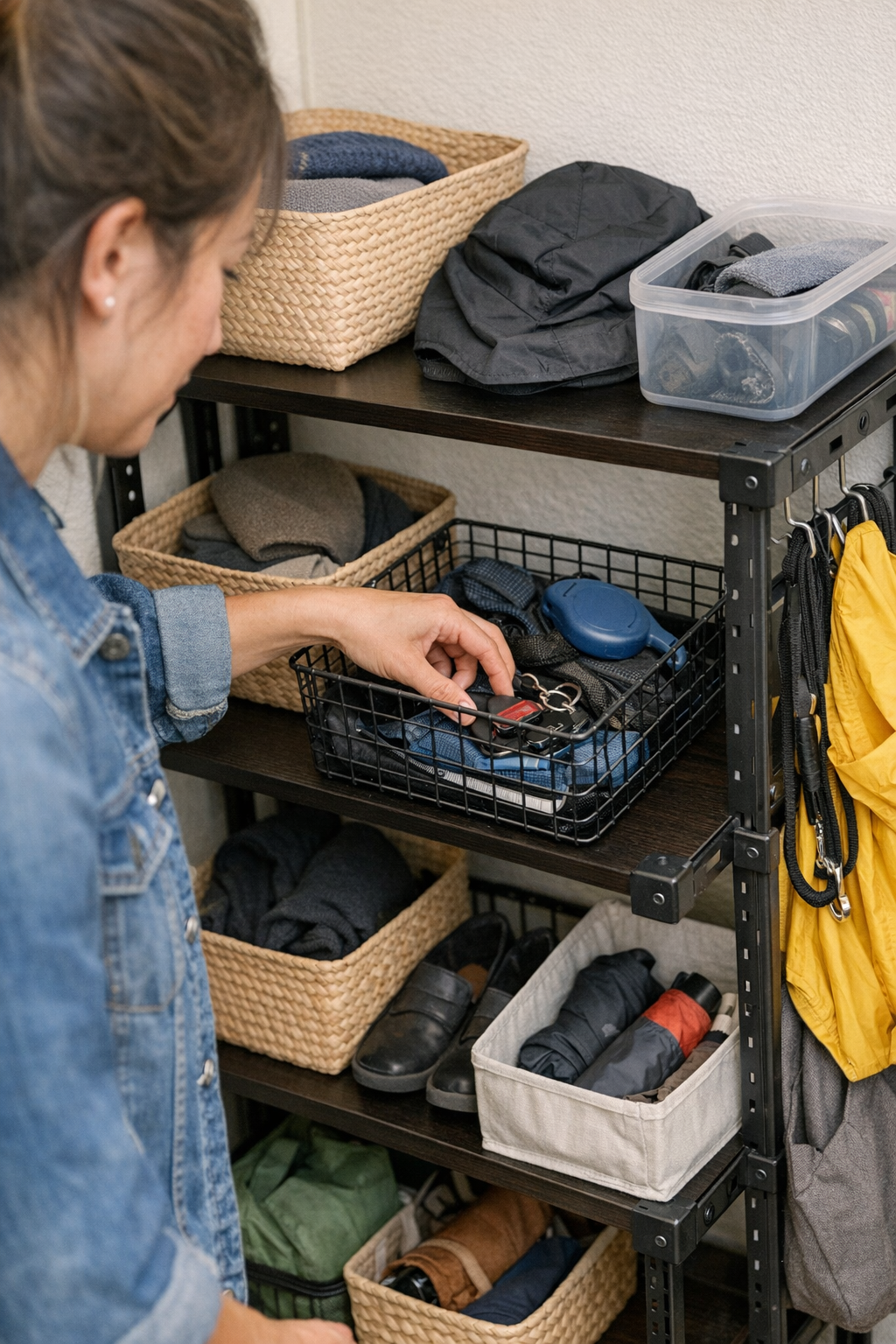
Small change, big shift: moving those “out-the-door” essentials (keys, leash, sunglasses) into one mid-shelf basket, right where my hand always reaches before leaving. Extra-tall bins, once stationed up front, moved off to the corners or higher shelves. Suddenly, things I reached for every day were always exactly where I needed them. The shelf line stayed clear, resets almost automatic.
There’s a kind of relief in this. Not needing to search, not dealing with stray gloves hiding under taller boxes, not cleaning up mini piles in the middle of the week. It wasn’t just more organized, but less fragile—easier for anyone else in the house to follow, too.
Sometimes, perspective shifts in a moment: a chaotic morning collapsing into an easy one, all because storage quietly got out of the way.
Blur the Lines: Let Storage Adapt to You
Over time, something subtle changes. The lines between “this belongs here” and “this is where I use it” blur just enough. Shelves and bins reshuffle as seasons and routines evolve. It becomes less about keeping strict categories and more about making resets gentle and quick.
Open baskets turn out to be easier for routine patterns—they invite a quick grab-and-go, and returning things is nearly as simple. Labels help less than expected, unless you’re sharing the space (in which case, they’re quietly invaluable).
And maybe the most practical thing: the livelier your patterns, the more you realize that storage should flex alongside real life. The main shelf might shift, a basket slides from one side to the other, and every so often you notice: less effort, a little more calm, and a home that echoes the way you actually live.
Sometimes, even a single change shows its worth on a messy weekday morning, when everything just lines up.
That’s when you see the difference.
These reflections grew out of rethinking a closet while moving into a new place.



