When Storage Meets the Rhythm of Everyday Yard Work
Real-world yard organization succeeds when storage fits task endpoints, enabling quick returns and low clutter by matching repeated patterns.
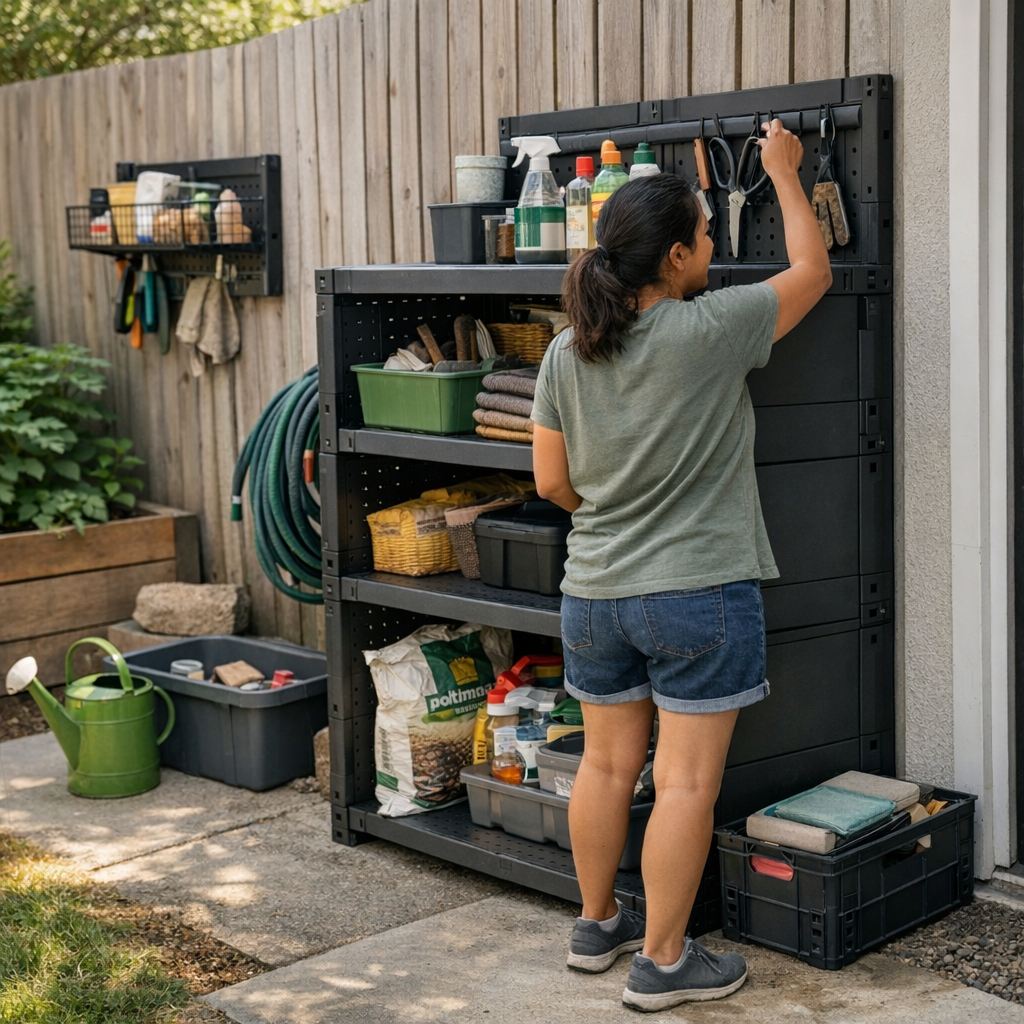
There’s a quiet kind of comfort in stepping outside and seeing everything where it belongs—not necessarily perfectly arranged, but easy to access. I notice this most on busy days, when the back gate keeps swinging shut and tools or gear land within arm’s reach instead of hidden away in bins a few steps out of the way.
It’s the difference between a backyard that naturally tidies itself after use and one that demands a weekend’s worth of reset work. This isn’t about having the “right” organizer; it’s about whether the setup matches how you return to the space, not just how you leave it.
Tiny Detours, Big Impact
I started with typical storage options—cabinets, deck boxes, and even a row of wall hooks. The theory promised order, but in practice, mess crept in. The odd thing is you don’t notice right away. One afternoon a glove was left on the patio edge. Soon after, a trowel balanced on a fence post. Gradually, items settled where routines actually ended, not where I originally imagined they would.
The smallest detours proved the most punishing. A cabinet that’s only a few steps off the main path became a dead zone. What I had thought was a problem with setup was really a problem of movement and access. That realization kept drawing me back.
Clutter Isn’t About the Bins
When a space serves multiple purposes—a walkway that’s also where kids drop gear, or a lawn used as a workspace—daily use patterns expose where the setup falls short. You’ll find bins full, yet the path still cluttered. That mismatch adds friction each time something is put away.
What made things smoothly manageable was noticing which spots caught items in one natural motion. Wall hooks placed by the exit gathered tools and gloves simply because they stood right in the way home. The storage “system” succeeded not because of size, but because it was present where people naturally stopped.
When the Reset Becomes Automatic
During a slow season, I moved a main storage rack from the far fence—always blocked by the mower and half-forgotten—to just outside the patio door. The difference was immediate. That short stretch—about seven feet—made putting away everyday tools almost automatic.
It turns out that setting up outdoor storage isn’t about organizing a static space. It’s about configuring the area to meet you in motion, repeatedly. You feel this most when dropping something off feels as casual as walking inside. Clutter still appears occasionally, but it’s lighter and easier to clear.
These thoughts came together while tinkering with my own small backyard, if you’re curious: http://www.tidyyard.myshopify.com