When Storage Shapes the Flow of Everyday Yard Life
Choosing outdoor storage for small yards depends on daily use, return flow, and routines. The right setup fits movement and avoids spillover.
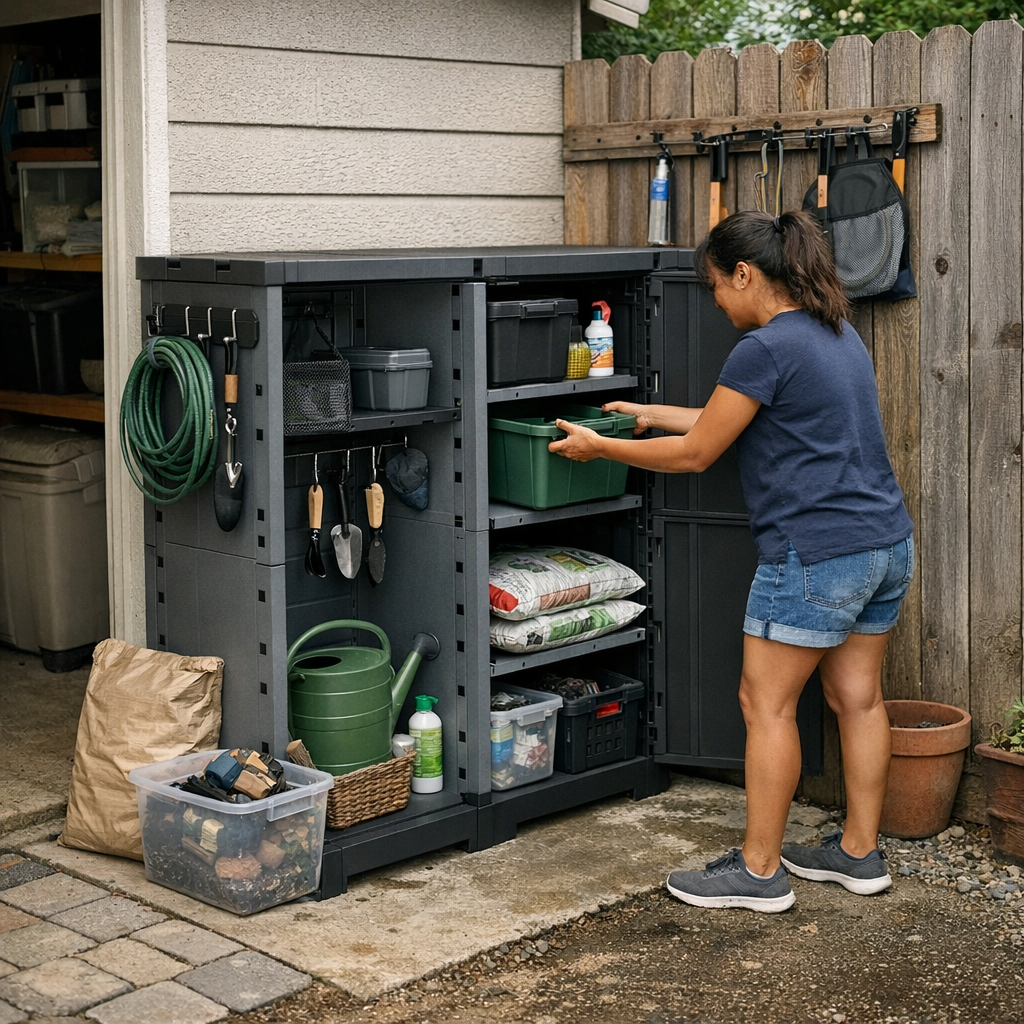
There’s a subtle tension that comes with any small outdoor space. You step outside expecting familiar paths—knowing where the hose coils, where the kids’ bikes get parked after sundown—and hoping for an order that feels natural, not forced. But in these tight yards, the things you want to keep and the room you actually have rarely fall into easy balance.
Storage has never been just about shelves or bins themselves. It’s about how those choices shape your movement—how quickly you can put away a trowel, or whether there’s a patch of ground free to step on without asking permission. Small yards call for storage solutions that almost disappear into daily routine, yet those are surprisingly hard to find.
How Storage Settles Into Your Patterns
A wall rack often seems like the best bet. Everything up, nothing spilled. You don’t notice it immediately, but as soon as needs shift—new sports gear added, cold-weather tools swapped out for sprinklers—gravity does its quiet work. Loose items start to collect on the floor where they don’t fit, and yesterday’s neat arrangement feels slightly off.
Sometimes I’d try to force a reset: shuffle the bins, stack the shovels tighter. But it’s really the daily rhythm that determines the outcome. Do I actually hang things back up after use? Can someone else put things away without being told? If the return flow is even a little awkward, the system breaks down—slowly, almost invisibly.
The Hidden Cost of Floor Space
There’s a particular relief in having enough room to move without stepping sideways. But when floor storage starts creeping into the walkways, its convenience feels less like progress and more like a trade-off. I’ve watched a single container edge into my walking path until getting to the compost bin turned into an obstacle course.
Floor units swallow overflow, but the cost is always the same: valuable ground gradually lost to project leftovers. The yard stops feeling like mine when I’m working around storage instead of with it. Most setups look tidy from a distance, in the planning stage—but less so after a month of daily use.
Small Adjustments, Lasting Ease
Mobility sounds like freedom—modular sheds, rolling bins, storage that adapts to the seasons. At first, I thought I’d rearrange everything regularly as needs shifted. The truth is, unless moving a unit is as simple as moving a watering can, it just settles in. Habit beats intention every time.
That was the part I kept coming back to. The best storage solution fits where things actually land after a day’s use, not just where I planned them to go. When storage matches my daily flow—paths clear, garden shears back in the same spot—resetting the space stops feeling like a chore. It becomes just the next simple step.