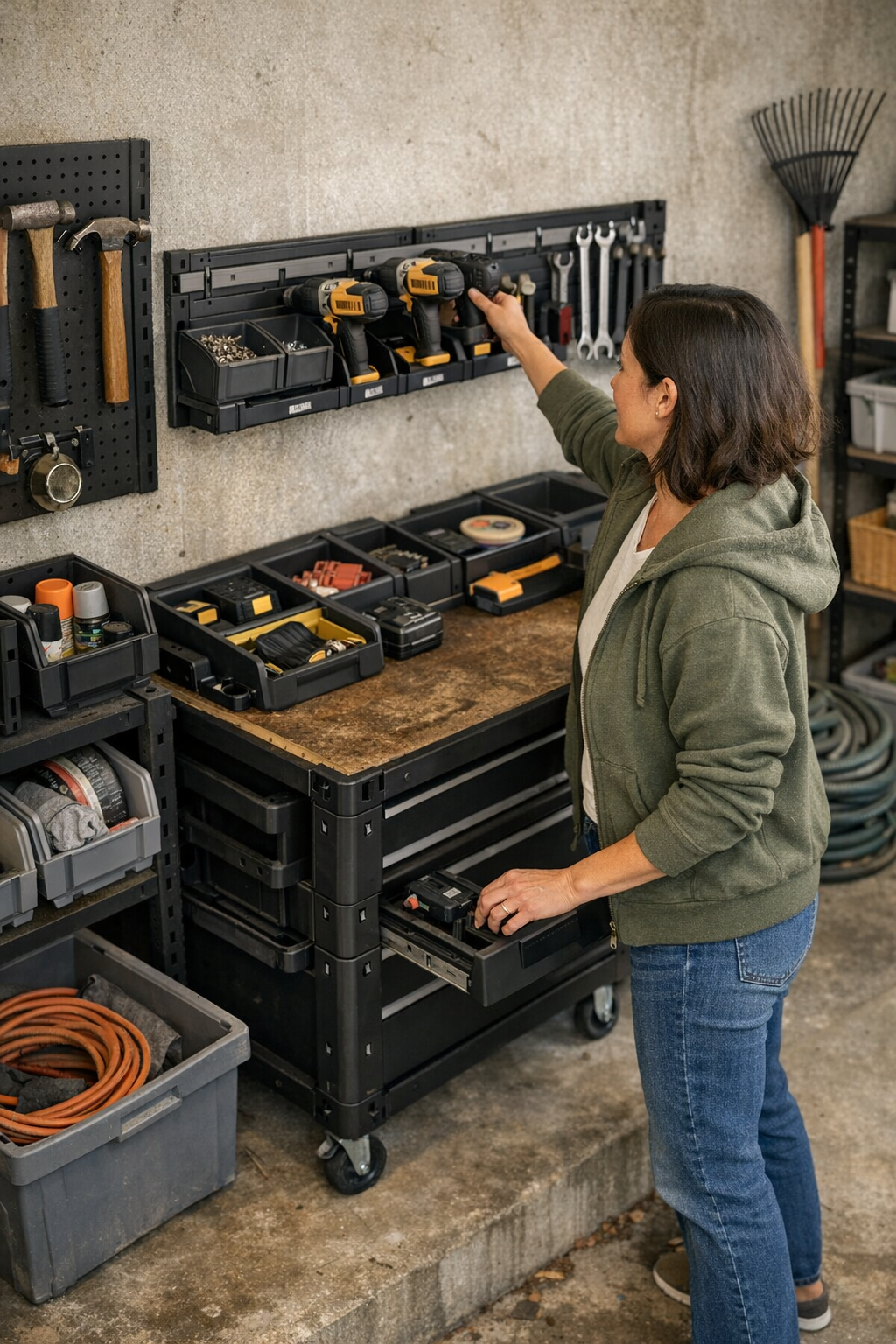
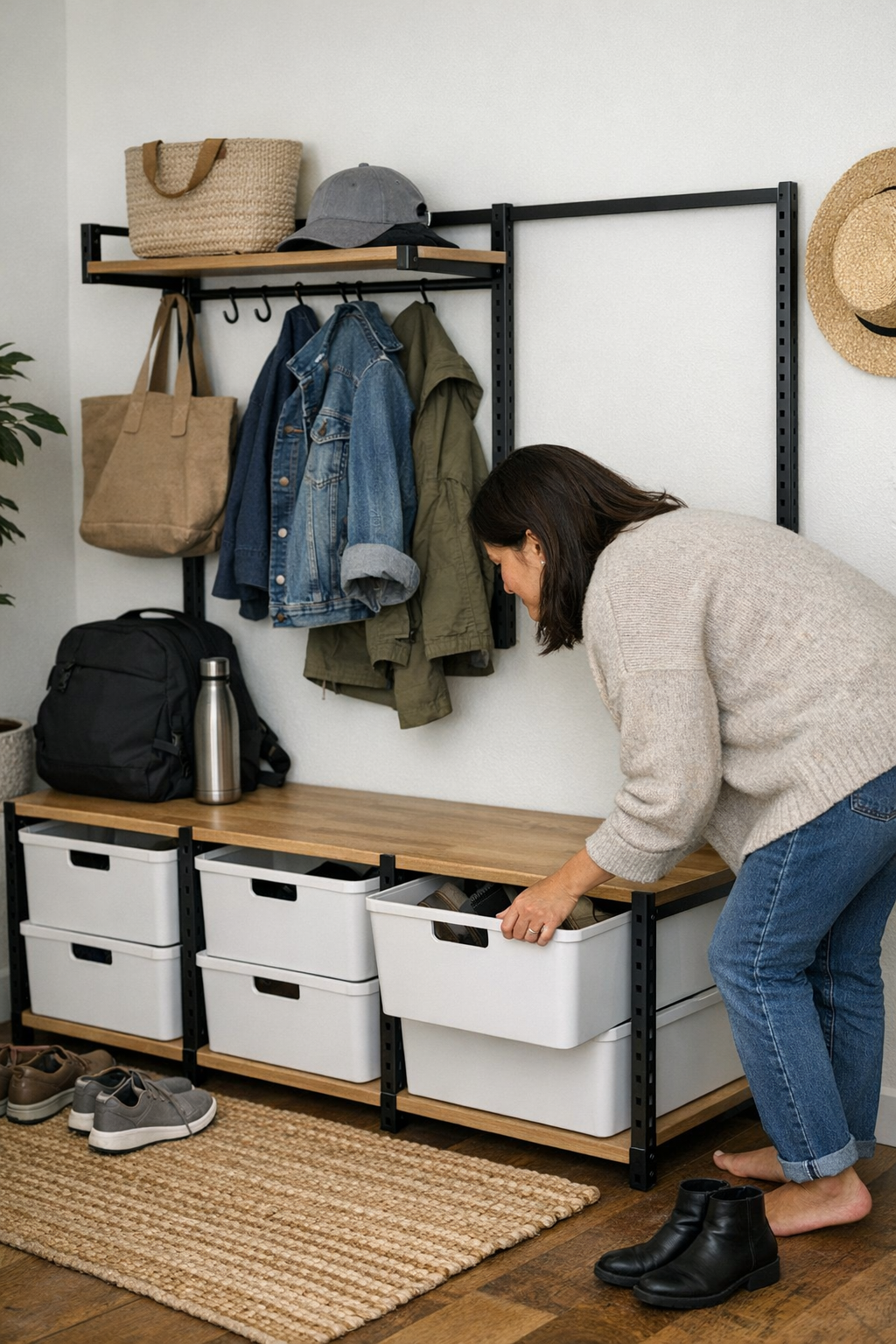
When Storage Shifts, Flexibility Becomes Essential
A modular storage system’s advantage shows as tasks shift, reducing friction and keeping the workspace efficient with less reshuffling over time.
There’s a quiet satisfaction in a newly organized space—the sense of control, the neatly labeled bins, the rows of shelves lined up as if they’ll stay that way forever. A wall of shiny storage feels like hitting reset in life, a momentary breath before the messy reality of daily routines takes hold.
But order has a way of revealing its limits.
What Looks Tidy Isn’t Always Effortless
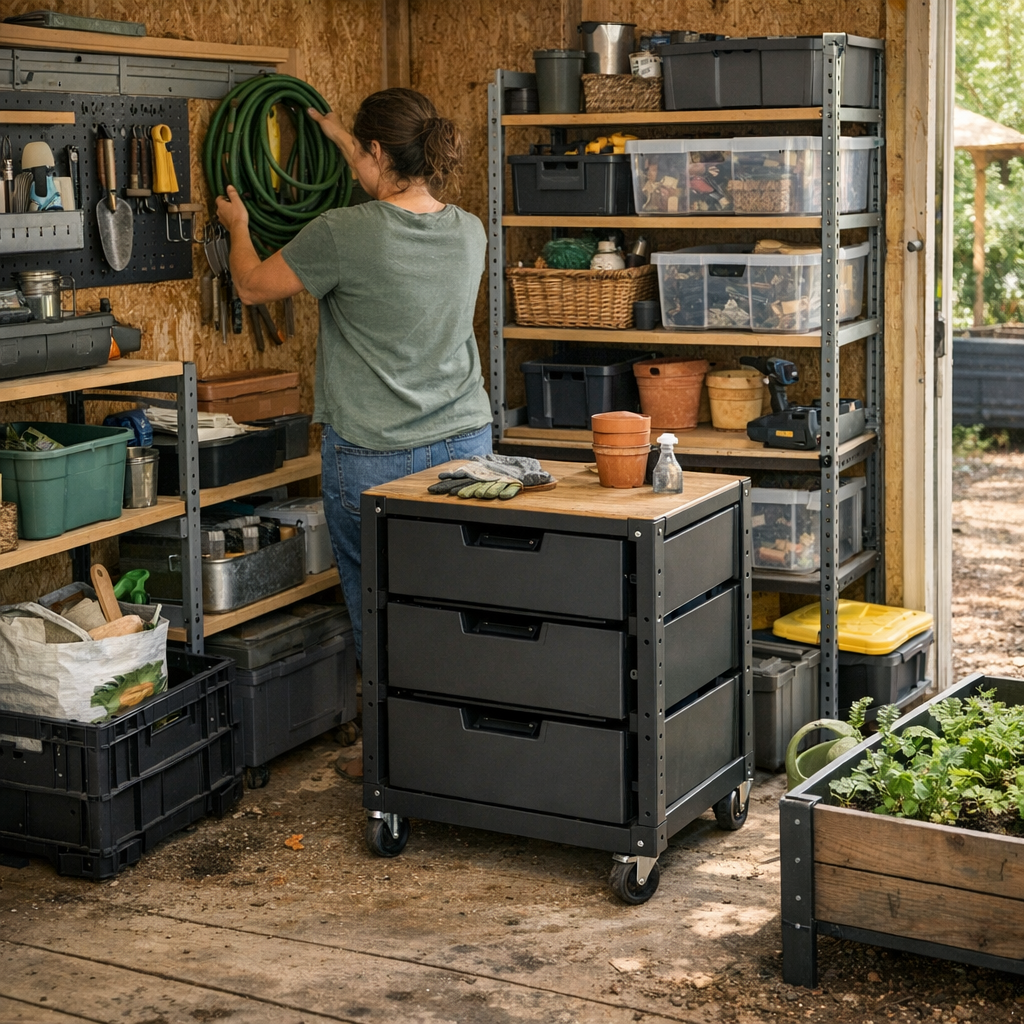
At first, the layout seems flawless. Carts in formation, a rake where the rake belongs, boxes squared against the wall. You don’t notice what’s missing at the start.
Only after a week of use does the friction creep in—a jammed wheel, a shortcut that’s now blocked, bins filling with odds and ends that no longer have a clear category. What was supposed to bring clarity slowly becomes a complication.
You don’t notice it right away.
But you feel it.
Change Finds the Weak Spots
Real organization isn’t about static perfection. It’s about how a space responds the first time you need to switch things up. Maybe it’s a new gardening project, maybe just wanting to move freely without shuffling past storage that’s in the way. Each shift puts the system to the test.
Fixed shelves have their appeal, but they rarely flex. The more we expect a space to adapt—new tools, changed routines, shared use—the more obvious those rigid edges become.
A modular shelf or a rolling cart, though a bit less elegant at first, brings subtle relief. Sliding a shelf open or nudging a cart across a clear panel feels almost like possibility returning to the room. Suddenly, there’s air in the system again.
The Difference Between Clean Spaces and Flexible Ones
On slow afternoons, I think about a neighbor’s shed that used to double as both potting bench and tool bay. Perfect the day it was installed; awkward just a month later. Supplies drifted, shortcuts disappeared, and it became easier to leave things out than put them back.
One small change—swapping a fixed rack for a movable shelf—shifted everything. The cart glided out of its corner, opening a flow that made returning tools feel natural again, not a chore. The space didn’t just look better; it worked better. No more bumping against obstacles or feeling slowed by the layout.
It’s often the overlooked spaces—the gap behind a cart, a spare shelf left open—that give the room room to breathe. Organization isn’t about how it looks, but about how little it resists when life shifts direction.
A system that adapts quietly, reshaping itself around the mess of real routines—that’s what lasts. Even if it never looks perfect for long.
Sometimes, the order is in the movement.
These thoughts came together while adjusting my own garage one rainy weekend.