When Storage Stops Slowing You Down at Home
The main failure point in storage is repeated friction and reshuffling in static setups; modular mobile systems enable faster, easier routines.
There’s a quiet satisfaction that comes with a freshly organized garage or workspace. Everything in its place, the floor swept clean, no stray tools rolling around the edges. But that feeling is fragile. Often, the order collapses faster than expected—not with a loud crash, but through slow friction in your daily routines.
It’s tempting to see organization as a finished project. We shuffle modular bins, tighten wall-mounted shelves, and admire the neat lines. But the real test—especially for garage setups, workbenches, or backyard utility areas—is what happens after the system is “done.” That’s when the struggle to access items and reset the space begins to show, and the difference between looking tidy and working well becomes impossible to ignore.
The Subtle Ways Order Slows You Down
You don’t notice it immediately.
At first, static shelves and closed floor-based storage bins seem efficient—until you need to reach for the same tool multiple times. There’s a slow pattern to the friction: bend, unstack, search, return. Each movement adds seconds. Each reset takes slightly more effort than expected.
The day isn’t derailed. But you feel it.
No system feels sluggish at first. But by the second or third return to the shelf, small obstacles reveal themselves. Corners demand detours. Hidden bins require digging. Suddenly, the space that once felt under control is cluttered with minor inefficiencies that slow your flow.
Movement Is Quietly Transformative
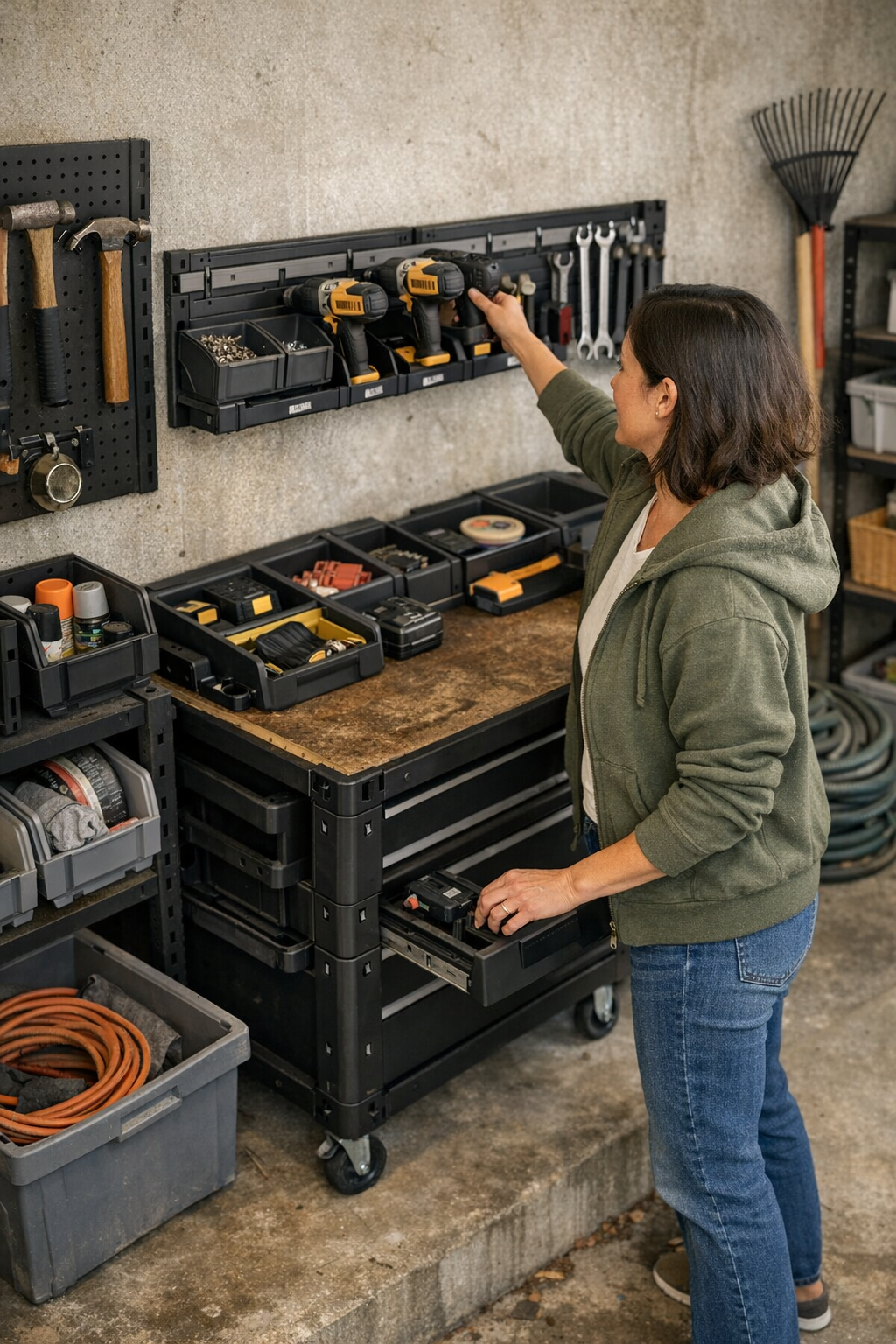
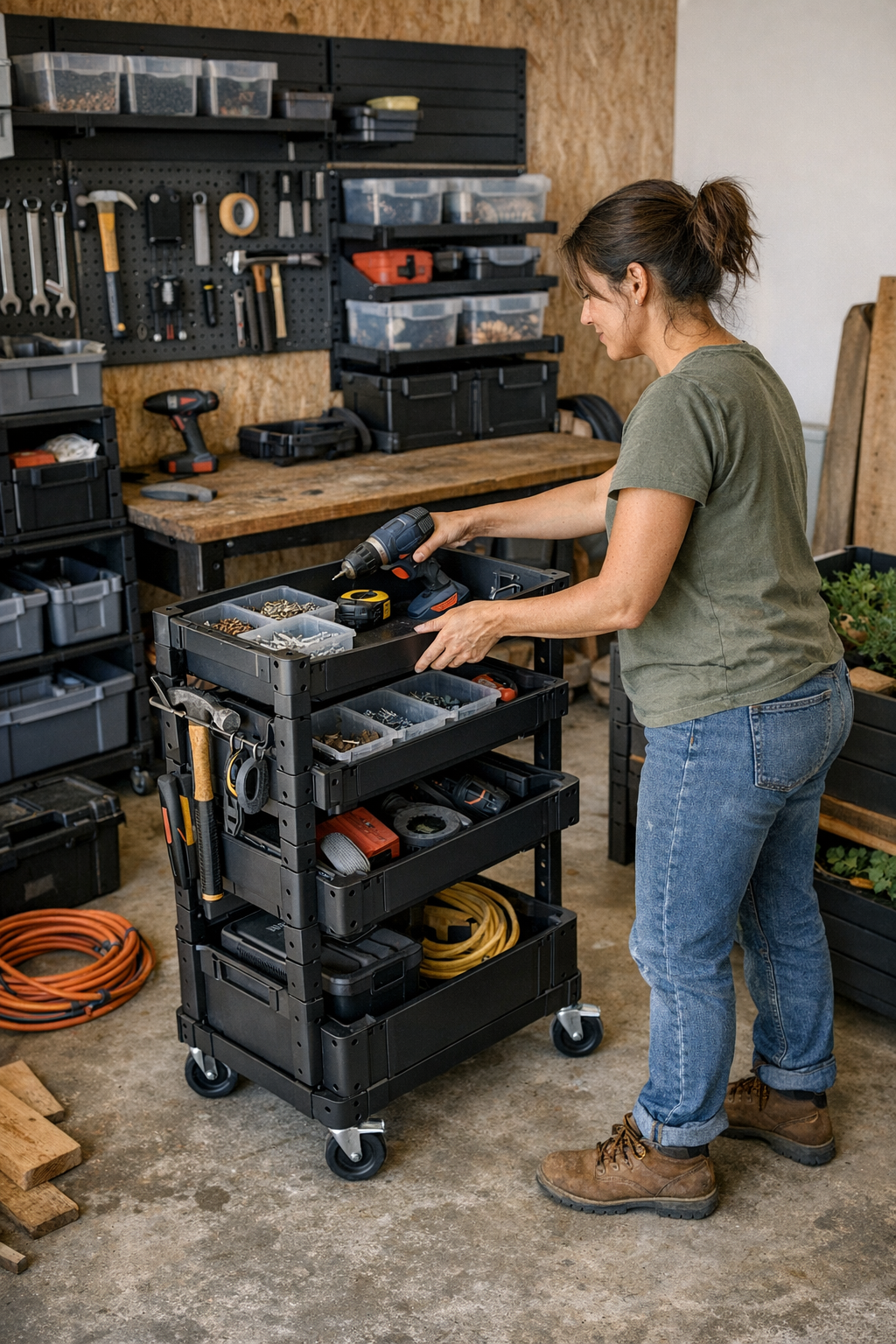
There’s particular satisfaction in mobile storage solutions: a cart that glides beside you, trays that meet your hands at working height. These setups don’t announce themselves with flashy design, but they quietly keep up with the rhythm of your projects.
This shift may seem small, but it changes the entire cadence. Instead of contorting around fixed edges or shuffling boxes on the floor, you simply wheel what’s needed to your working spot. On busy days, this saves more than just energy—it keeps your focus on the work, not on the storage logistics.
I noticed this sharply the first time I stopped crouching or unstacking to reach tools. The mobile cart became less an organizational “solution” and more like a co-worker moving at my pace.
Practicality Shows Up in the Everyday
It’s easy to love the look of order. But in daily use, the most useful setup is the one that demands the least effort—especially on busy days. No hunting. No stubborn resets. Just a simple pivot or slide, and the tool is there.
Ironically, the more organized things look on static shelves or tightly closed towers, the worse they can work when repeated access is needed. Those neat setups can become excuses to delay a project, just to avoid extra shuffling.
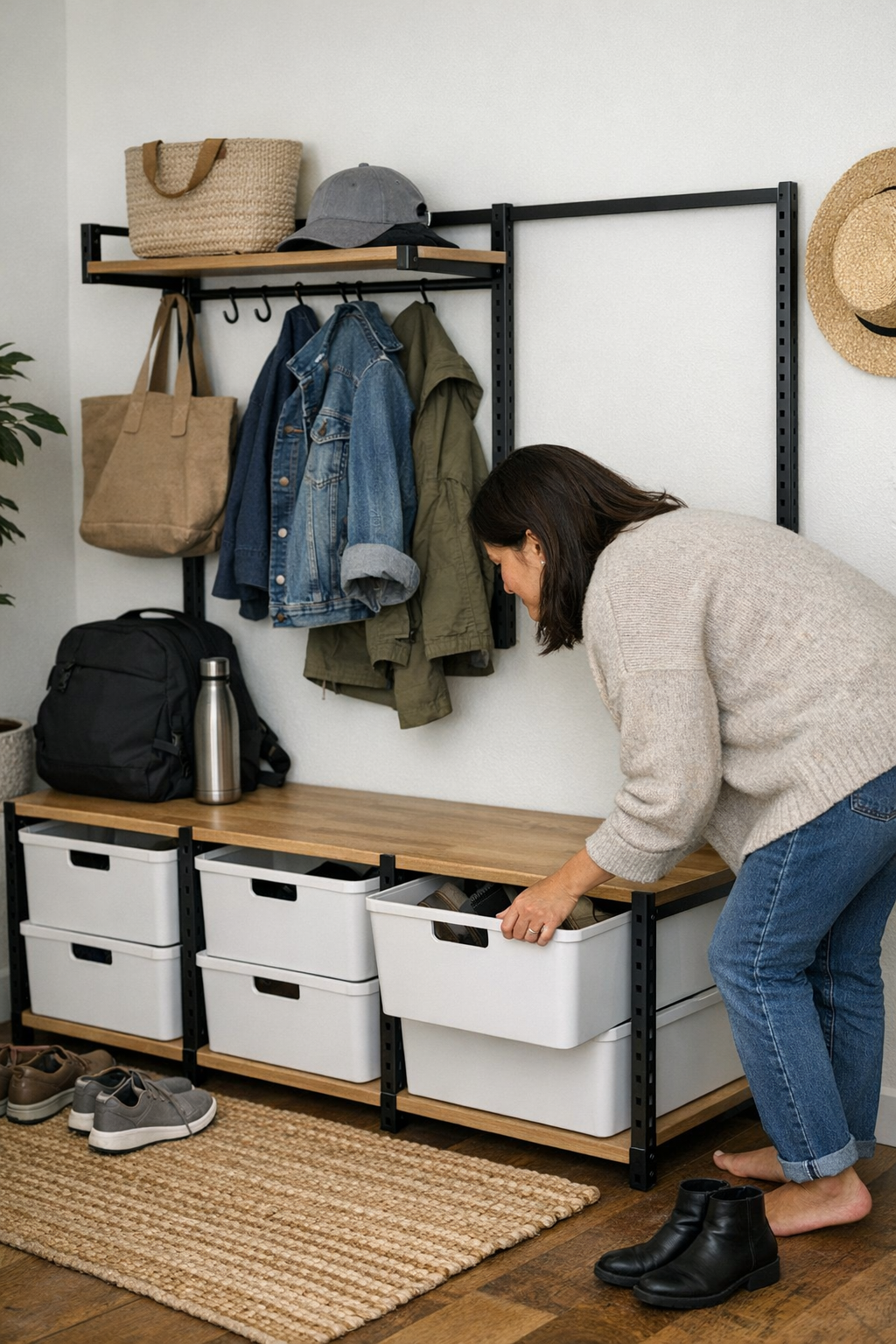
Storing frequently used supplies in slide-out trays at hand-height—where nothing gets buried—does more than speed things up. It removes friction you might not notice until it’s gone.
The quiet lesson: organization isn’t about frozen order. It’s about staying in flow. Real clarity comes from letting your storage move with you, rather than stand in your way.
These reflections came while quietly rearranging my garage after hours, focusing on modular, mobile, and wall-mounted setups tailored for real use.