When Storage Systems Learn to Stay in Place
The secret to reliable modular storage isn’t first-day neatness—it’s whether bins, carts, or containers return home on the first try, every time.
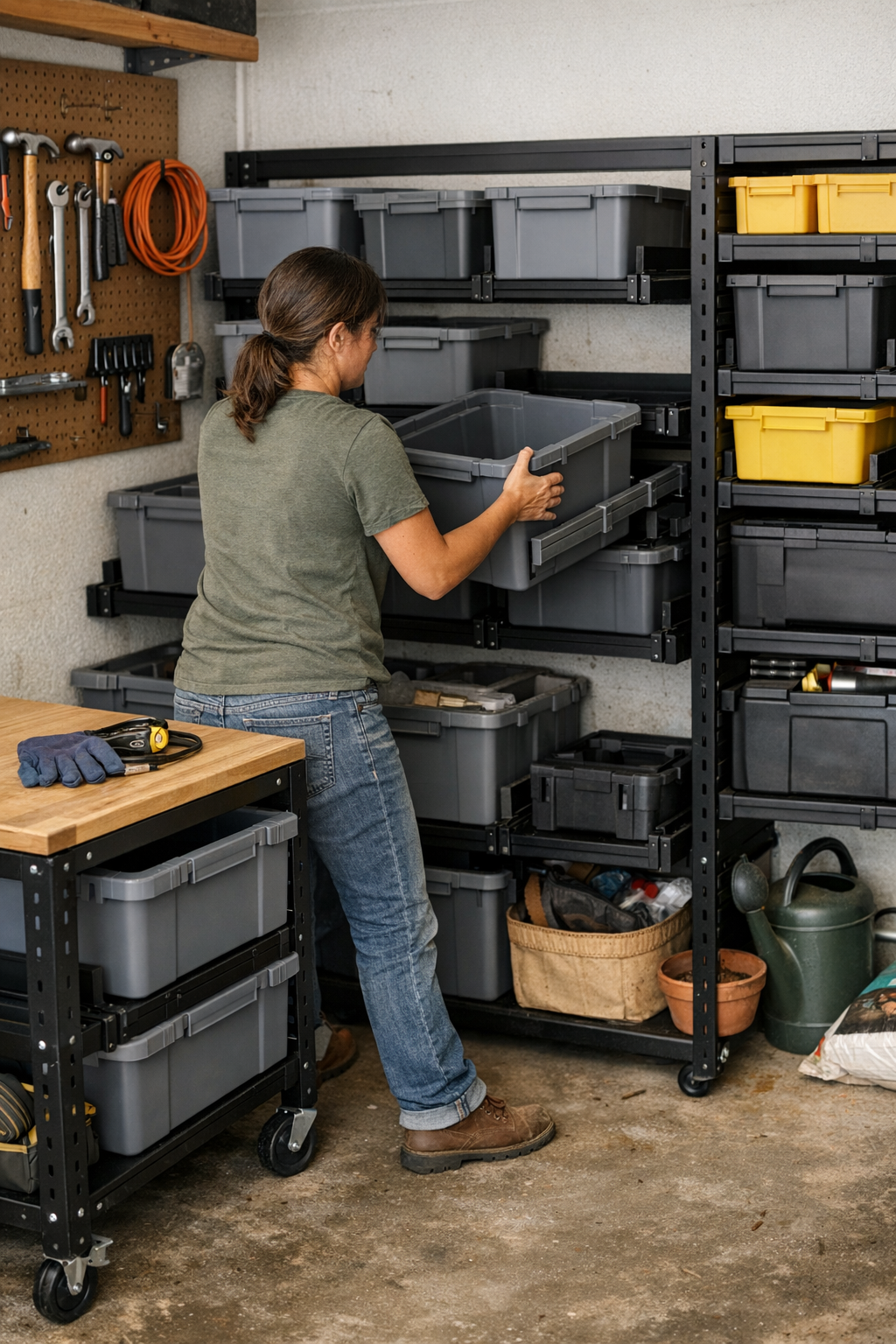
It’s easy to admire a tidy garage or workshop the day you set everything up—a grid of matching bins, rows of crisp modular shelves, and carts ready to roll at a touch. For a moment, at least, it feels like preparation will hold chaos at bay. You stand back and it all looks effortless. But that ease is often temporary.
We rarely think about how things return to their place—the quiet, repeated part of the cycle involving returning, docking, and resetting. This part tends to reveal itself only after the first rush of activity. Bins don’t quite slip into their slots, or a mobile rack never settles exactly where it should. Instead, order begins to erode in subtle ways, friction gathering in corners and pathways almost before we realize it.
The Illusion of Readiness
New storage in a garage or workshop almost always shines in the beginning.
It’s easy to be lured by surface order—the promise that each item has a proper place. For a while, everything glides smoothly. You don’t notice any issues immediately, but gradually you feel them.
After a week or two of real use, certain patterns emerge. A bin is slightly off track. A cart is nudged sideways in a narrow walkway, blocking your next move. It quickly becomes clear the problem is rarely “storage capacity,” but the rhythm of docking itself—how naturally and reliably things return to place when the day is noisy and hands are full.
How Friction Creeps In
Small obstacles accumulate quietly.
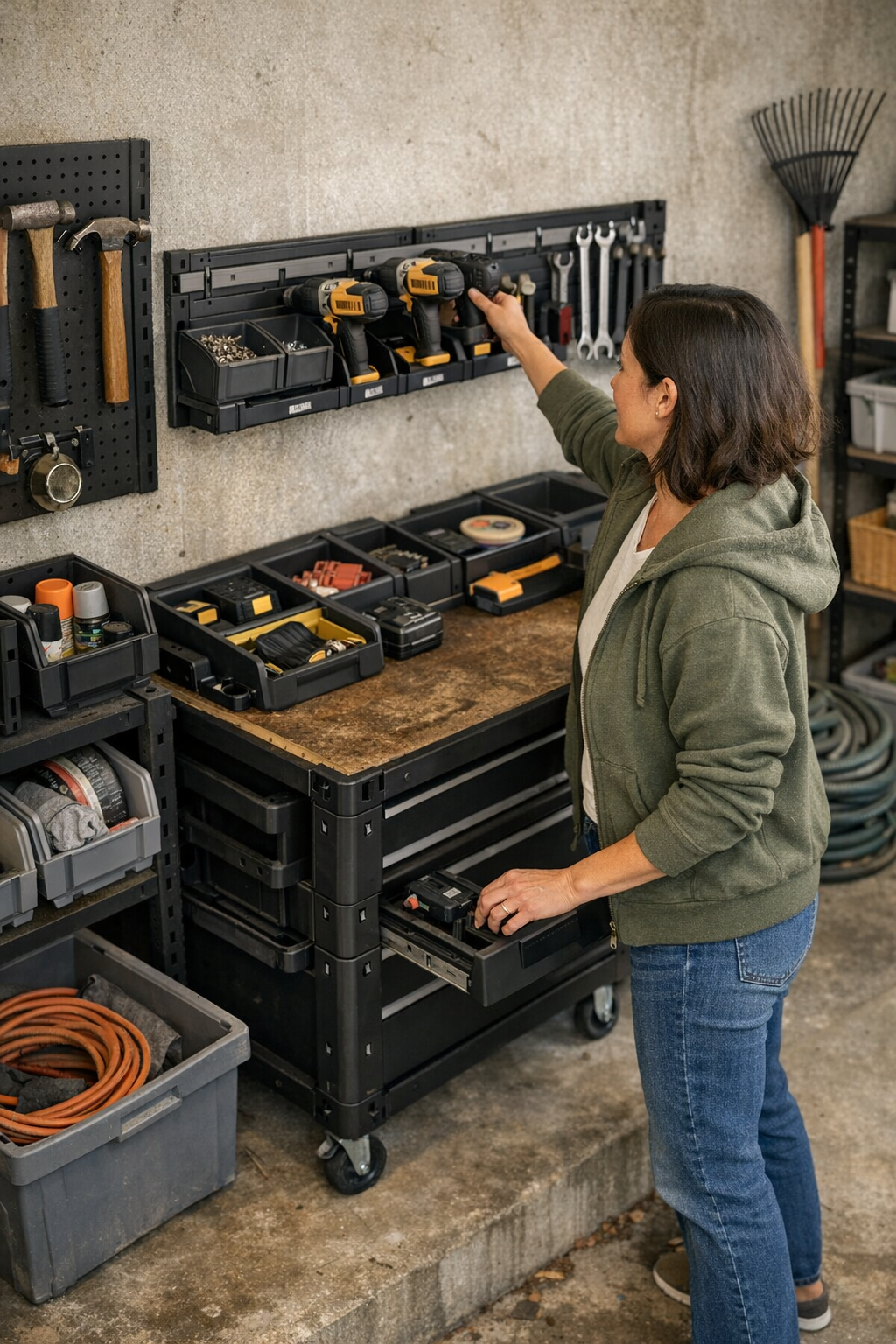
Sometimes it’s a misaligned bin, sometimes a cart angled wrong, sometimes a space that looks organized but feels awkward to move through. I once set up rows of modular bins along a wall—crisp and lined up perfectly. But over several days the system betrayed itself. Bins never quite landed in their places without a careful nudge. The cart always blocked just a little too much floor space. What started as a smooth routine became a ritual of small corrections and minor hesitations.
No one plans for disorder. It drifts in through repeated actions that never quite land right. Blocked footpaths and awkwardly angled containers become the rule, not the exception in many garage, workshop, or backyard utility setups.
When Guidance Makes a Space Feel Effortless
Something changes when there’s a physical guide—a rail stop, molded channels, or dedicated docking bays.
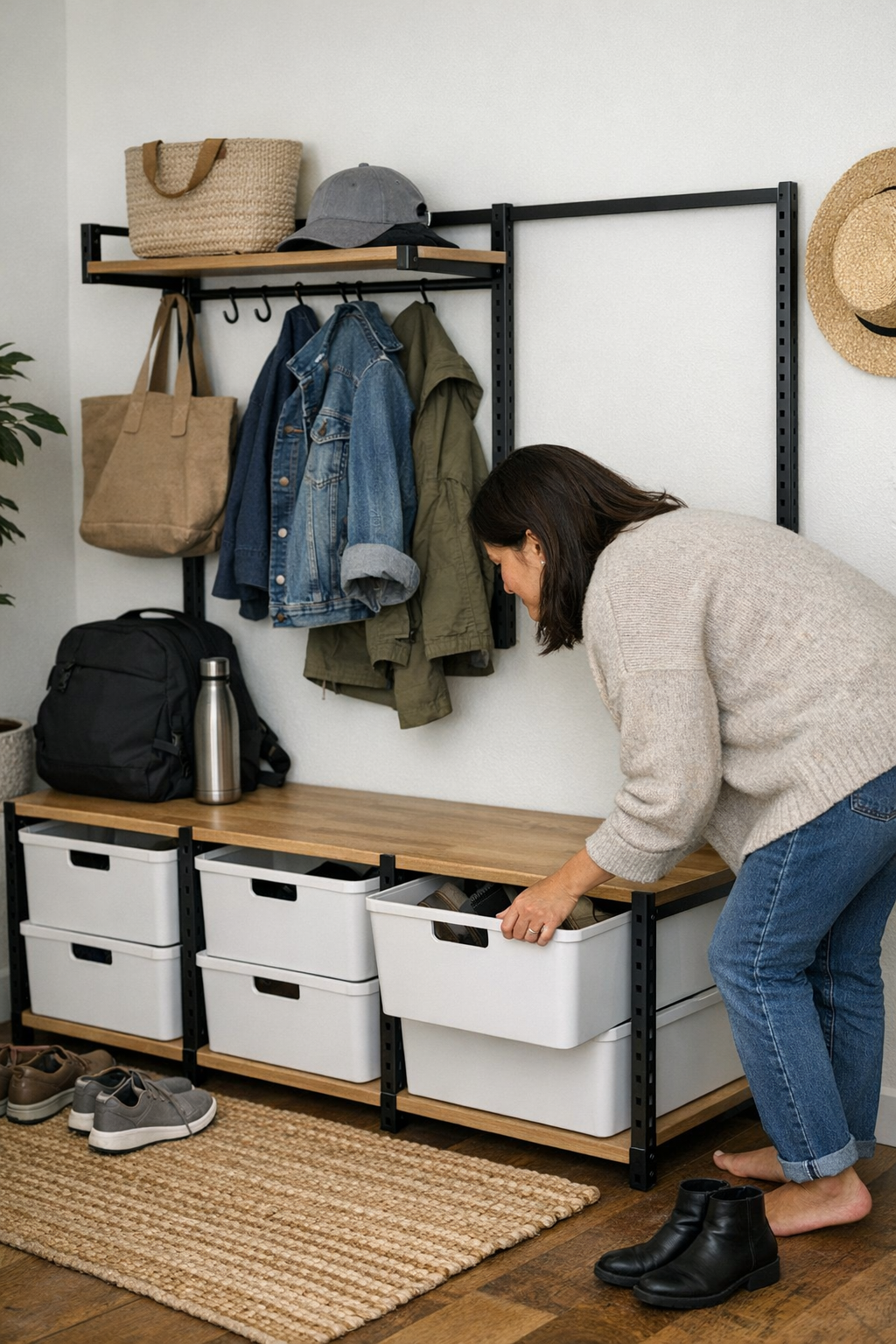
This guidance is subtle and almost invisible until you feel it in motion. A bin lands with a simple push, never needing a second look. The cart glides back and settles exactly where it belongs. There’s a real sense of flow: returning items no longer demand your full attention. Your mind can wander, free again.
Maybe this is the real benefit of physical guides for wall-mounted or mobile storage—not perfection, but clarity. The reset becomes automatic. Even a simple bolt-on stop or magnetic strip can transform how you move within your space. It’s less about how it looks and more about how at ease you feel resetting after hard use. The difference isn’t always immediate, but it builds over time and matters.
There’s a comfort in seeing order return, again and again, with less effort than before.
Finding that subtle line between order and use is something I keep thinking about, especially on evenings when I wander out to the garage and notice that, without direct attention, everything seems to find its way home anyway.
These thoughts came together while untangling my own corner of the world, and you can see what I mean here.