When Storage Systems Shape Daily Household Flow
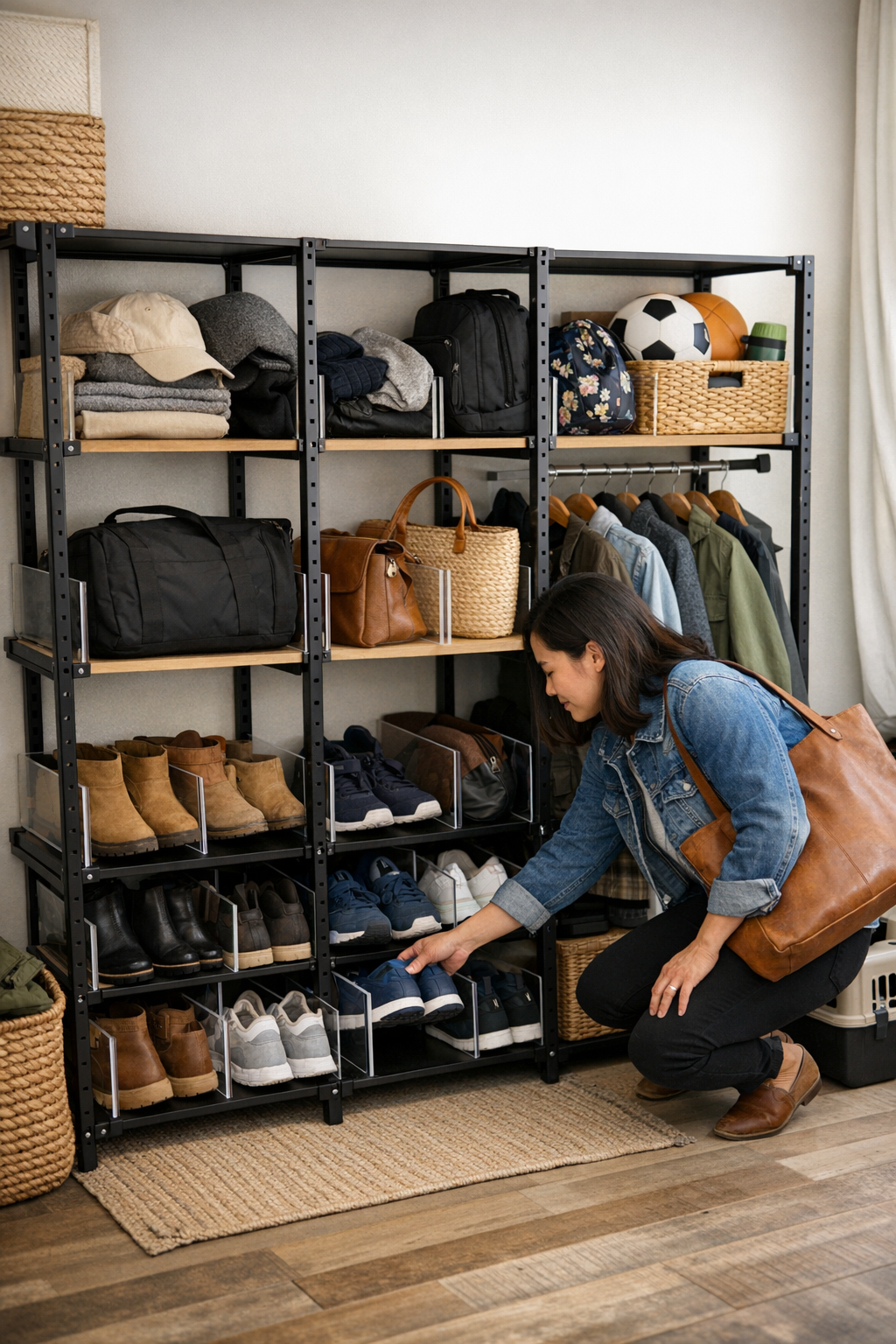
Clear storage systems with fixed dividers maintain order and speed resets better than baskets, keeping categories clear despite daily use.
There’s a certain hope that comes with a fresh set of matching bins lined up along open shelving. For a little while, the room feels lighter and the world seems more manageable. But that calm is fragile—easily upended by a single hurried morning or a week that doesn’t go as planned.
Most of us don’t realize how quietly storage choices color our routines until the bins start overflowing or categories blur into chaos. A closet that looked organized on Sunday evening quietly unravels by Thursday. You hardly notice it happening; you just feel, somehow, that things are harder to put away.
Where the Illusion Begins
You don’t notice it immediately, but you feel it.
Stacking baskets or bins delivers a promise of order, at least at first. They’re pleasing to the eye — all uniform and contained. They let us pretend every item has a simple place to land.
But daily life tends to resist the systems we create in quiet moments. Shoes drift into the bag zone, scarves spill over unseen boundaries. The front row of baskets becomes a traffic jam, hiding whatever has been pressed to the back. And in households where everyone’s rushing, it takes just two or three days for the system to slip.
There’s a subtle frustration buried in every attempt to return a stray mitten or a collapsing shopping bag. The closet starts to feel like it’s working against you.
The Small Shift That Changes Everything
My own closet once looked “finished” with matching bins and lined baskets. At first, it did feel like a solution. Each thing, in its own basket, lined up and clean.
But a busy week — one with wet boots, forgotten backpacks, and early morning scrambles — proved otherwise. Soon, I was dumping bins to find what I needed. Gloves mingled with dog leashes, hats lost their home, and shoes pooled at the bottom shelf.
It wasn’t until I tried a new approach — fixed dividers separating each category — that the feeling shifted. Suddenly, putting things back became smooth. There was no need to rearrange multiple baskets just to return a bag or a pair of sneakers. Everything stayed visible and in place; the boundaries held even as the days stacked with plans.
It was a small change, but the effect was out of proportion: less time searching, almost no re-sorting, an end to that slow slide toward mess.
What Lasts and Why It Matters
Real-life order isn’t about hiding things — it’s about creating boundaries that stand up to daily routines. Clear systems, with their fixed dividers and defined zones, absorb the reality of busy hands and repeat use. Where baskets disguise clutter, dividers maintain the line between easy and effortful.
When the structure itself keeps roles for each thing, resets are more predictable, less draining. There’s a quiet relief in returning something to its defined space, knowing you won’t have to upend everything next time. The closet feels lighter — easier to trust, somehow — when access is immediate and restoring order doesn’t require starting over.
Surface neatness rarely lasts on its own. But structure that respects our actual habits makes even ordinary storage feel unusually welcoming.
Sometimes, it’s the smallest boundaries that bring daily life back into rhythm.
These reflections developed during a recent reorganization of my own entry closet.



