When Storage Towers Shape Daily Household Flow
Tall slim storage towers convert blank walls into useful storage, but shelf height and access shape real, lasting organization.
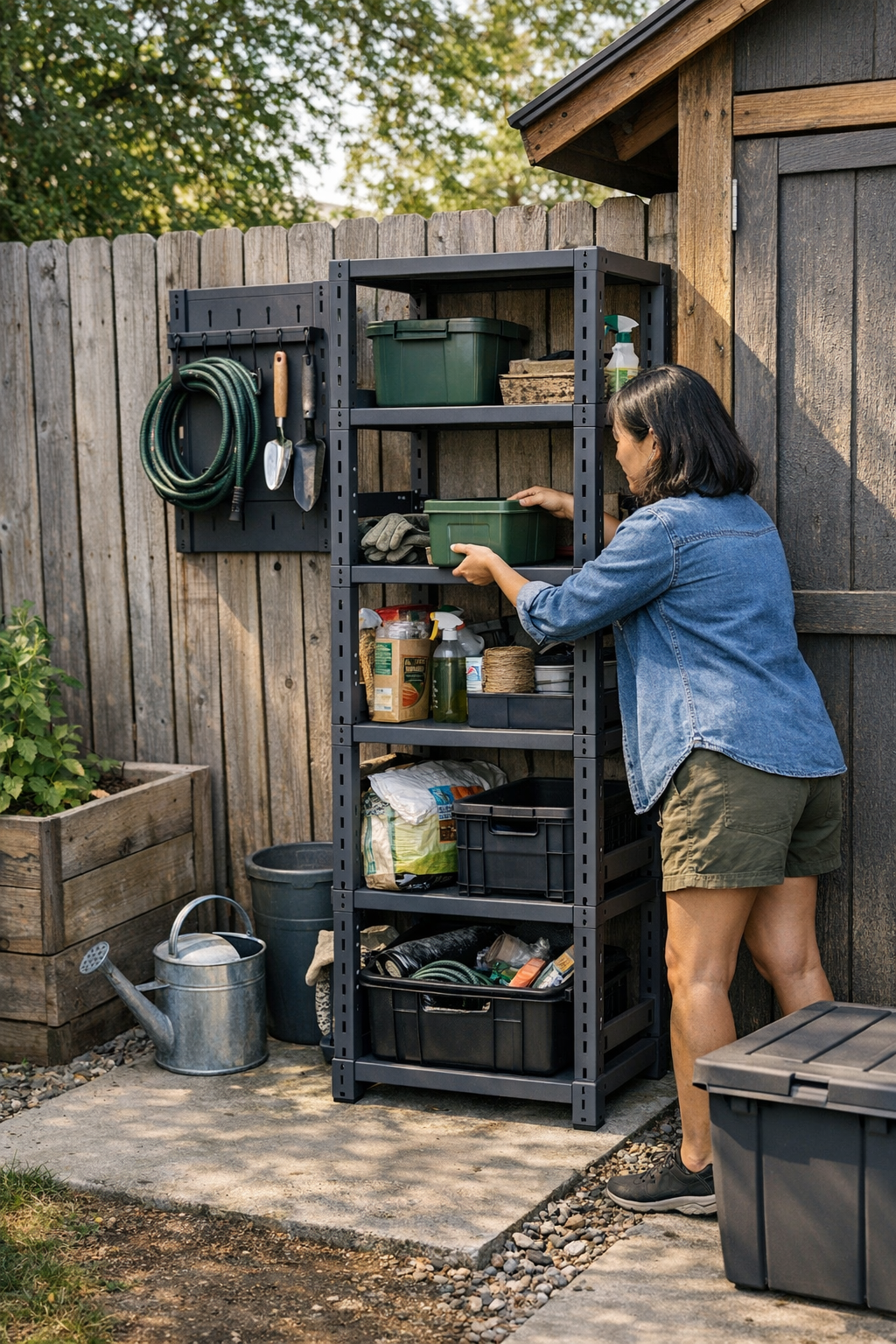
A blank wall holds a certain promise. I thought a tall, slim storage tower would make the most of a narrow space—tucked between the hallway and the coat closet, just enough room for stray shoes, grocery bags, and whatever else came home with us. At first, everything fit in neatly, upright and visible. Only later did the friction become clear—not in chaos, but in a slow drift: items ending up on the wrong shelf, a small pile forming at the bottom, and an untouched row far overhead.
You don’t notice it right away. But you feel it.
What Never Stays Where You Put It
The quiet collapse shows up around day three. Lower shelves begin to sag under a tangle of boots and school bags. Top shelves collect dust, a forgotten hat, or a manual you only needed once. From a distance, the system looks calm—almost presentable—but category lines blur, and a few rushed mornings confirm what you’ve started to see: reaching for what you need means pushing something else aside.
That was the part I kept coming back to. How little you notice this friction until the small routines—leaving, returning—take an extra minute, or the hallway narrows because a bag has spilled onto the floor.
When the Setup Feels More Like Friction
Some towers seem to multiply capacity but actually create dead zones—those unreachable spots, packed tight or just slightly out of natural reach. Adjustable shelves help, but the default layouts rarely align with where your hand actually wants to go.
I didn’t change anything at first—just worked around the tower’s static shelves, pulling the same shoes from the crowded lower pile every morning. One weekend, I lowered a shelf, creating a halfway spot between stretching up and crouching down. The change was modest but noticeable: a sudden ease. The crowded lower zone cleared, and the top row stopped pretending to be functional storage.
Sometimes a small adjustment—less about maximizing capacity and more about matching your real routine—makes all the difference between simply “returning” things and constantly “re-arranging” them.
A Routine That Doesn’t Fight Back
Living with a storage tower means living with its small habits, not just its footprint. The best arrangement is rarely the one you start with. Over time, I found that the shelf I could reach in one smooth motion did more than any organization trick: it kept things moving through the space, rather than stuck.
Order isn’t what you see in the stillness right after setup. It’s whether you find yourself making the same small fixes over and over—or whether, quietly, there’s nothing left to reset.
If you ever want to see what I mean, this is where I found mine: http://www.gridry.myshopify.com



