When Storage Zones Lose Their Purpose, Chaos Creeps In
A storage system becomes truly useful when zone roles stay clear and return routines are easy, reducing overflow and keeping movement smooth.
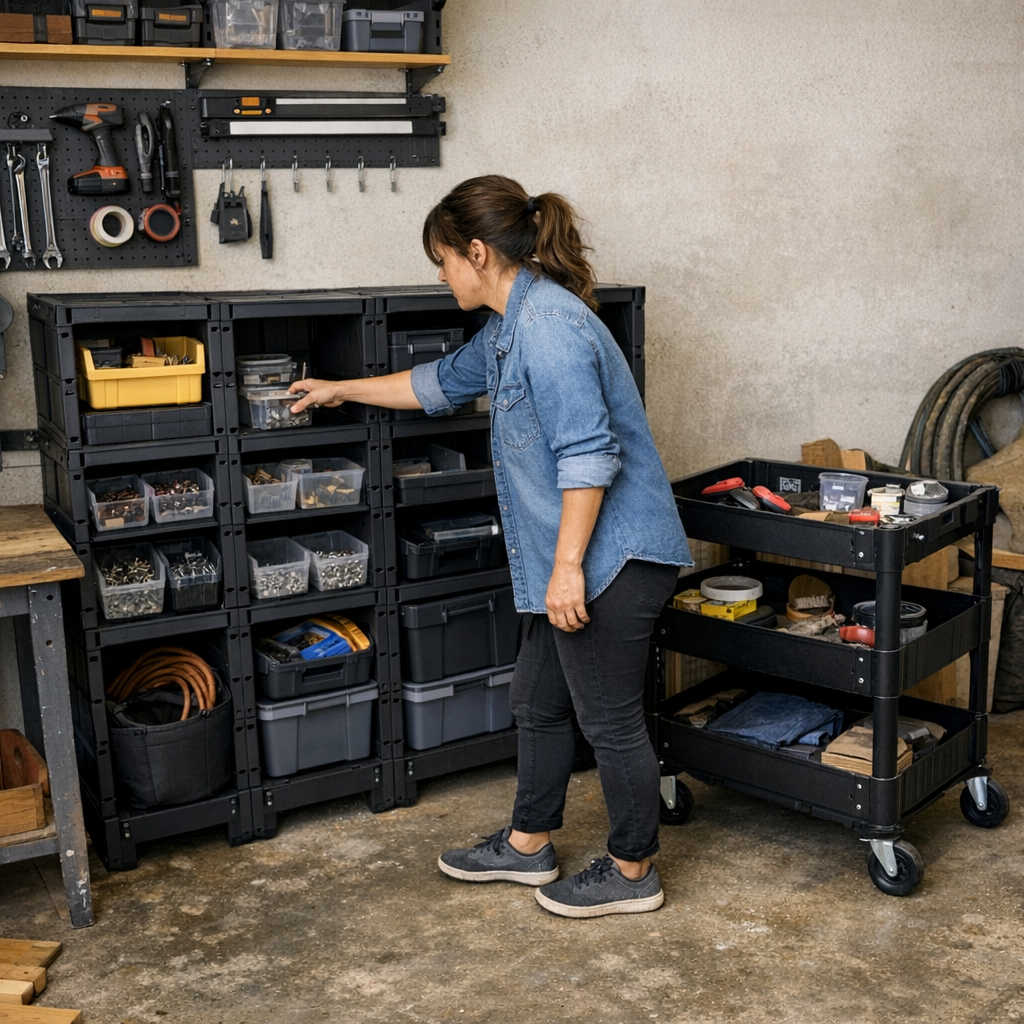
Some mess slowly builds up, almost unnoticeably, until one day you feel its weight—tools lingering in the wrong corners, a project stalling for want of a part you know you have. Organization doesn’t usually fall apart all at once. It drifts quietly in the hours between our good intentions and the reality of daily use. That’s the difference between setups that only look neat, and systems that genuinely stay out of your way in garages, workshops, and small workspaces.
The heart of it all is clarity—especially with storage, whether modular wall-mounted units, mobile carts, or floor-based cubes. So much depends on whether things quietly find their way back home after use.
The Space Between Intention and Habit
At first glance, it’s easy to be fooled. Two walls lined with tidy hooks or cubes look equally promising when everything is freshly put away. The energy of a new system is almost calming.
But order proves itself over time. The real test isn’t after a deep clean, but after a stretch of full, real work—when three projects overlap and fatigue sets in. You don’t notice the slip immediately.
But you feel it. The return flow, the simple rhythm of “use and return,” quietly unravels the moment a landing spot isn’t obvious or the path back isn’t short enough to become habit. That’s when tools start gathering in the wrong place—a “temporary” pile on a cart here, a missed spot in a wall unit there. Over a few days, even clever-looking modular systems become obstacles instead of helpers.
The Shape of Friction
There’s a certain day in every garage or workshop when surfaces become holding zones—carts covered in stray hardware, bins mixed up mid-task, and that creeping frustration of “where did that go?” It happened in my own garage. Storage cubes worked on paper, but three project cycles later, most of my clamps were living on the cart instead of their dedicated spots.
This is friction, subtle but real. The setup looked fine for photos, but couldn’t defend itself against the turbulence of real use. Movement slowed, resetting the workspace took longer, and what was once “organized” began to feel heavy.
So I shifted—not with more rigid rules, but by clarifying the roles: tools only stayed on the cart while in use; everything else returned to the wall cubes immediately. I left soft reminders, not for strictness, but to guard the boundary between “in progress” and “put away.” It wasn’t about looking tidy—it was about making returns so simple that nobody had to think about them.
Overnight, the friction faded. Space stayed ready, not just clean.
The Quiet Cost of Blurred Lines
Blended zones and flexible groupings sound adaptable on paper. But in practice, they invite confusion. The more a space can become “anything,” the easier it is for clutter to spread. Labels don’t help if overflow is built into the flow of things.
It’s a gentle, invisible cost: resets get longer, piles grow, and before long, the very tools meant to speed you up start slowing you down. If putting a wrench back is even a little more complicated than leaving it nearby, that’s usually what happens.
A layout that quietly guides tools home, time after time, makes the difference. Not just in how things look, but in how little effort it takes to maintain order. The best organization is invisible—until the day it slips.
It’s strange how often we notice organization most keenly only after its absence lags in the room.
These thoughts came together while I was quietly sorting out a cluttered cart in my own workshop.



