When the Blade Wears Down, So Does Your Patience
Choosing a rigid, wide scraper blade for adhesive removal reduces vibration, fatigue, and cleanup time, improving quality on long jobs.
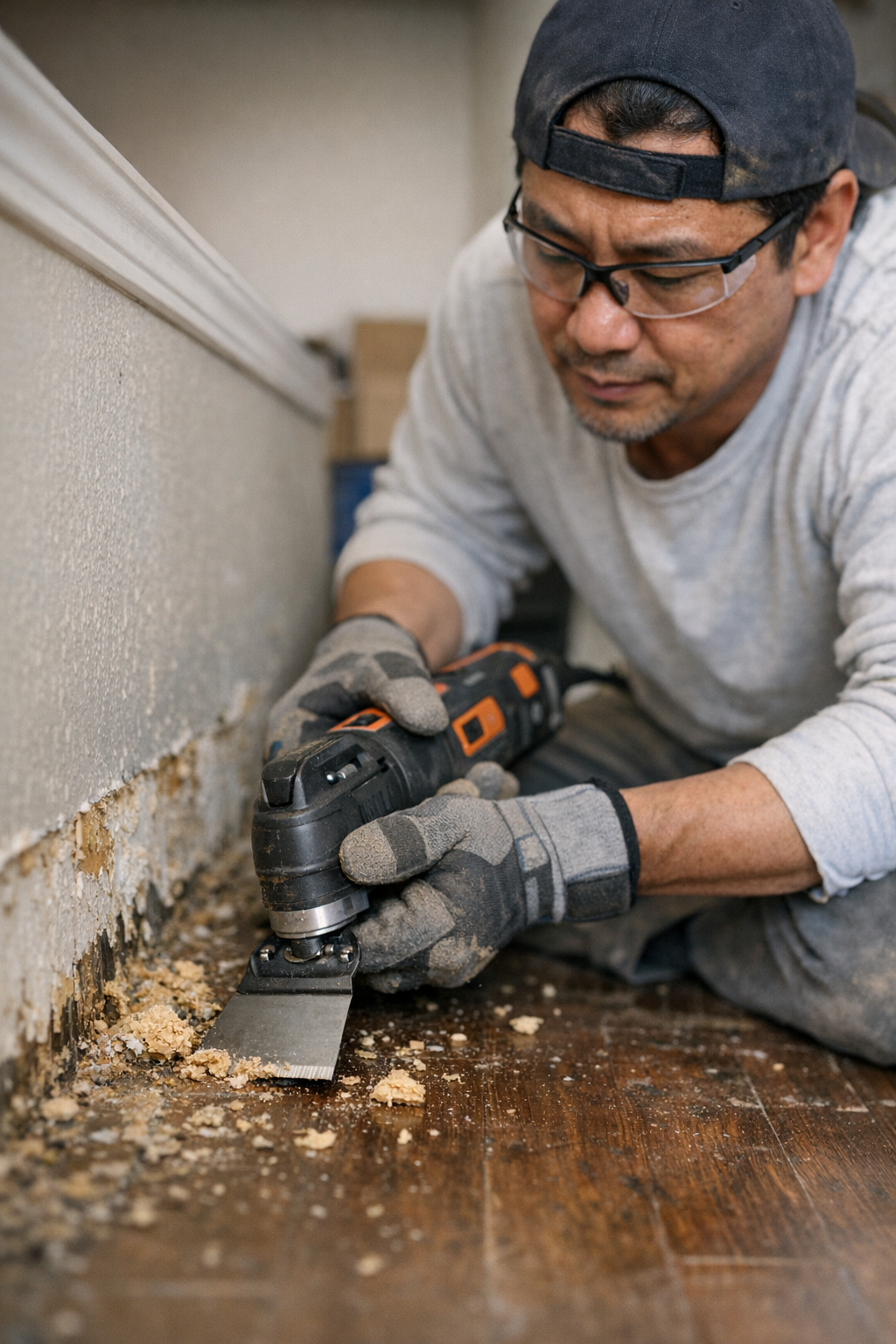
You rarely think about the blade at the end of your oscillating tool—not until your wrist aches or a stubborn patch of glue refuses to budge. It’s easy to assume that any sharp edge will do when scraping up old adhesive, but somewhere between the first swipe and the hundredth, the details begin to matter.
There’s a gentle difference between an easy start and a tough finish—and often, that difference is just the blade.
What Feels Easy, Then Starts to Fight Back
At the beginning of a cleanup job, there’s optimism. Most blades look more or less the same, and for a time, nearly all of them get the work done. Early on, the adhesive is soft, the tool is steady, and it’s tempting to believe the smallest details won’t add up.
You don’t notice it immediately.
But resistance has a way of creeping in. Old adhesive gums up, the edge dulls, and vibration crawls up your arm. Suddenly, that standard blade seems slower, messier—like it’s making the work multiply rather than disappear.
Small Differences, Seen in the Long Run
The truth is, not all blades are alike. Watching someone chase persistent glue with a flexible, universal blade, you see it—the tool starts to skid, wrist fatigue sets in, and each stroke feels less predictable.
A rigid scraper blade, built with removal in mind, keeps control sharper and pressure evenly spread. It skims up the mess in one piece, rather than streaking or smearing it across the old paint. There’s a quiet relief in that difference. The cleanup goes from a battle to a rhythm you can settle into.
You feel it after an hour, even if you missed it at the start.
When Experience Changes Your Approach
I remember, during one particularly long run of clearing old carpet glue from office baseboards, how switching to a wider rigid scraper felt like flipping a switch. The stubborn spots pulled up with less fuss, and the handle stopped buzzing so hard in my palm. Maybe it was spreading the effort, or shaving off those extra strokes per panel—but there was less surface damage, less frustration at the end.
It’s a kind of refresh. A reminder that sometimes small investments—like matching blade to adhesive and surface—return bigger dividends in comfort and quality than we imagine. Noticing what the right tool does is quieter than noticing what the wrong tool does, but it lingers longer.
Every panel went quicker. My hands thanked me later.
Quiet choices shape the work in ways we only notice when things go wrong—or, sometimes, when everything runs smooth. Somewhere in the messy middle is where you realize what a difference it makes.
These reflections came together while prepping for another late-night paint job—helped along by the right kind of blade.



