When the Saw Slows Down: A Deck Builder’s Quiet Struggle
Cutting speed differences in circular saws appear after repeated cuts; steady motor RPM and low-friction baseplates reduce sanding and recuts.
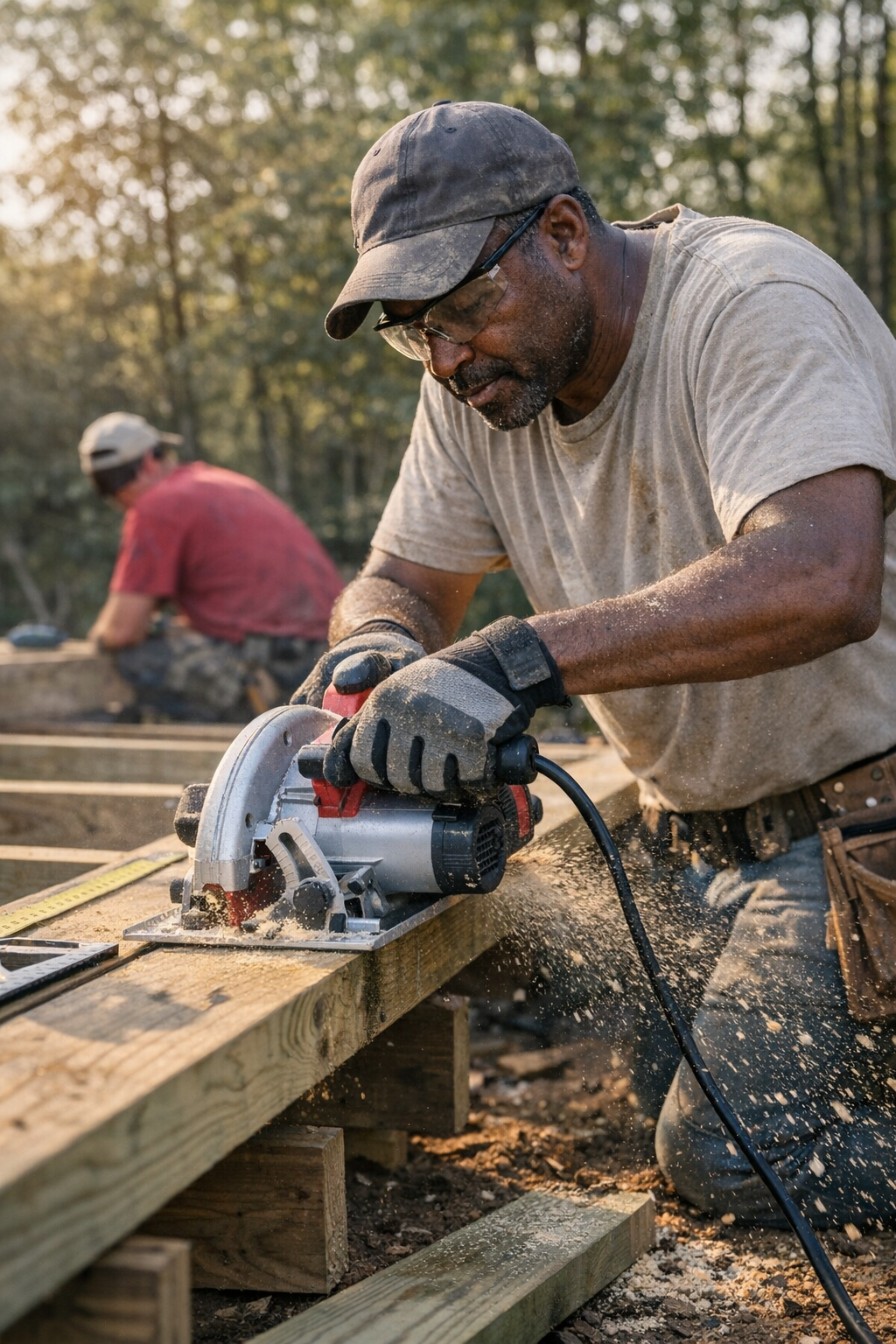
There’s a certain quiet rhythm to building—until something small snaps it. Often, it’s not a mistake you notice right away. A task that begins cleanly, almost effortlessly, turns slow and difficult as the day draws on. Like a circular saw that seemed just fine in the morning, but now stalls, strains, and turns each board into a lesson in patience.
That difference in pace doesn’t jump out at first. But you feel it.
We trust the numbers—RPMs, blade sizes, what the box claims. On the surface, circular saws can look interchangeable. But by the time you’re deep into a long deck build, the gap between them feels wider with every cut that gets a little rougher, every board that needs more sanding to hide torn fibers. At first, it almost doesn’t matter which tool you picked. Only after dozens of boards is the choice sharpened by friction, by accumulating sawdust, by the heat inside the motor and the ache in your hand.
More Than Just Specs on the Box
A set of numbers rarely captures what it’s like when resistance creeps in. Sure, the specs line up: two saws, same RPM, same blade. Morning light, straight runs, and everything seems possible.
Then, as moisture seeps from deck boards and old knots reappear, a story unfolds that isn’t in the manual. One saw keeps a steady sound, chips flying cleanly past the same framing blade. The other begins to bog down—marks the wood, shakes a bit in the hand, and leaves behind edges that need twice the cleanup.
You don’t notice it immediately.
But you do, eventually, when you’re thinking about the time lost to sanding, about how the work pace used to feel simpler, lighter.
The Slow Drift Into Frustration
By the late afternoon, things change even more. The air is thicker. Fresh lumber, rough edges, a deadline brushing up against fatigue.
A saw you trusted in the first hour now forces you to lean harder, pressing through corners where the blade should glide. Its motor stutters, vibration spreading through your wrist, and you catch yourself dreading every sticky knot, every uneven finish.
You pause—a small moment—and realize the hardest part isn’t just the wood or the tools. It’s how little shifts in performance, unnoticed, add up over hours. Suddenly, you’re spending more time cleaning up mistakes than making progress.
That’s where the real difference lives. Not in the opening lap, but in the last stretch, where the right tool holds pace and the wrong tool quietly drags time out, one splinter at a time.
Quiet Upgrades, Subtle Gains
Sometimes, it just takes a small shift—a baseplate that glides easier, a saw that holds a steadier note under pressure. In my case, the difference was obvious after swapping out a slightly heavier saw for one with less friction beneath it. Just a smoother ride. Cuts that took 21 seconds before dropped to 15. Fewer burn marks, fewer rough ends. Suddenly, the piles stacked faster and the work felt less like a contest with the material and more like the task I remembered.
It isn’t something you brag about or even talk about much. But it lingers: that low hum of a motor in sync with your movement, the edge left smooth without another round of sanding. Sometimes the right choice is less about power or price and more about how a tool carries you through the longest part of the day.
Quietly, you see—staying in rhythm matters more than you think.
These thoughts came together while building a small deck, noticing how some tools seem to work with you, not just for you. Read more on the quiet impact of details here.