When the Small Mat Fails: Quiet Struggles of Daily Cleanup
A larger, well-placed litter mat traps more grit, reducing cleanup frequency and stress by limiting litter spread in busy or small homes.
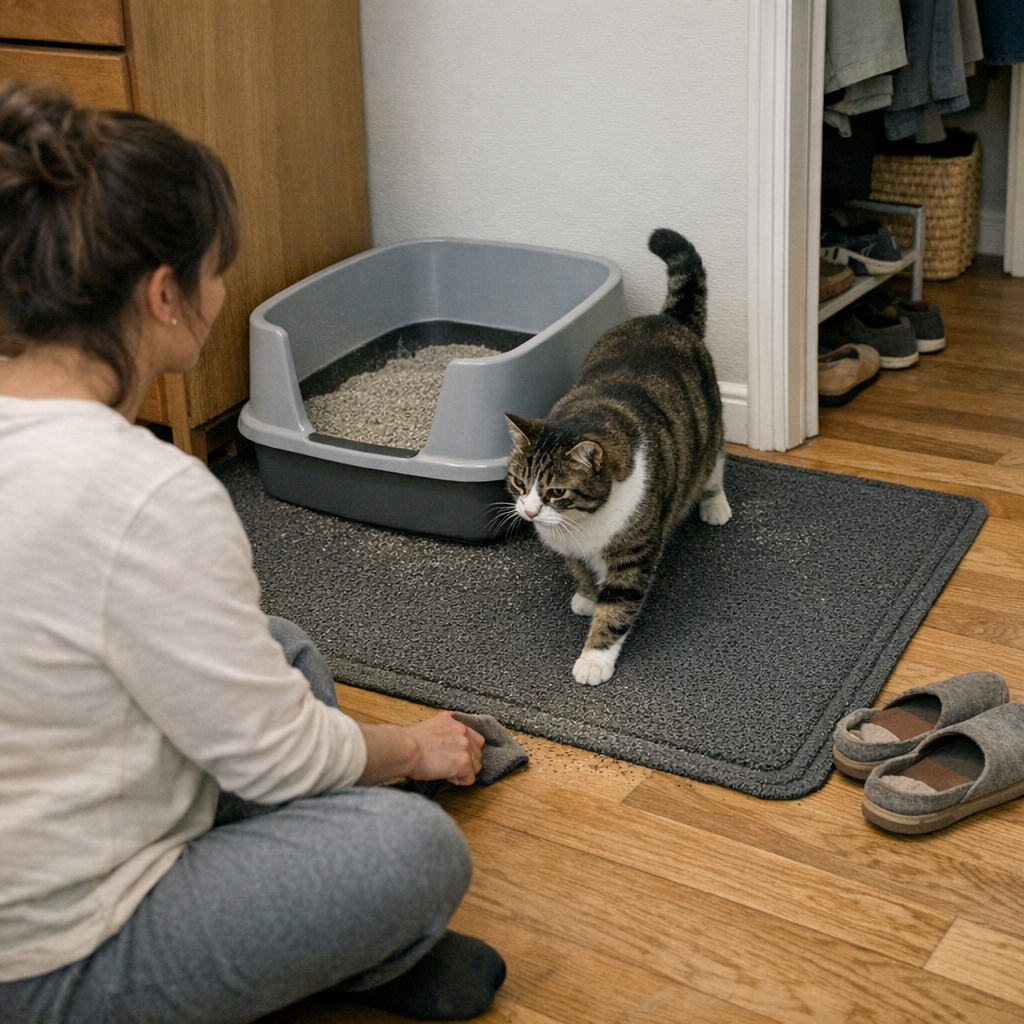
There’s a moment that sneaks up, somewhere between the third litter refill and the fifth weekday sweep: the illusion of order in the litter area quietly slips. It’s subtle, not dramatic. Small bits of grit find their way into the kitchen, a few stray pellets nudge past the hallway threshold. What looked tidy at the start of the week begins to feel less certain by Friday, even when the setup was carefully arranged that morning.
A narrow mat beneath the litter box always seemed enough. For days, its edges stayed crisp, and the surrounding floor kept a just-cleaned look. But when the house is shared between cat and human routines—food bowls close to the litter box, small corners used for storage, a door opening far too often—familiar patterns develop cracks. It starts small: tiny bits of litter where heel meets tile. Despite careful resets, this was the part that kept returning.
You realize, little by little, that the “clean” zone is losing its grip. Each sweep of the broom stretches further. Cleaning shifts from prevention to catching up.
Where Boundaries Blur
The mat’s size quietly sets the rhythm for the whole area. When the border is too modest, cat paws cross just enough to send grains into new spots—living room traffic lanes, kitchen seams, even laundry room shortcuts. What seems contained from above looks less convincing up close, especially when socks catch grit on the move.
By midweek, those tiny granules have found places to gather: under the edge of the food mat, next to chair legs, even under cabinet doors that no cat ever opened. After multiple resets, you notice the mat doesn’t simply set a physical boundary—it marks the start of extra cleanup. The difference isn’t visible, but felt between what you step on and what you have to sweep up.
A Quiet Shift in Routine
Switching to a wider mat initially felt unnecessary. Visually, it looked fine at first. But after a few days, fewer gritty surprises appeared underfoot. Cleanup areas shrank and stayed closer to the litter box. Instead of semi-daily spot checks across half the room, most resets involved just the immediate area around the box. The constant sense of trying to “catch up” never fully disappeared—but it faded, like a background hum softening.
This lived-in, repeatedly reset space revealed a clear preference: containment matters more than decorative neatness. The mat’s real work happens not at its center, but at the edges—where daily habits risk spilling debris into everyone’s path.
Some Details Feel Truer Over Time
It’s easy to overlook these small borders. A wide, grooved mat quietly changes cleaning dynamics. Not a revolution, but a practical return to ordinary: fewer grains tracked away, less time rerouting to fix the same spots. The difference isn’t in the mat itself but in how much less you think about the floor by the seventh day.
Lasting setups aren’t always the prettiest or quickest to install. But the right shape, in the right place, gives shared indoor life a steadier flow—across feeding areas, water corners, litter edges, rest spots, scratching zones, toy scatter, cleanup routines, grooming storage, and overall shared spaces.