When the Walk Home Feels Like a Quiet Struggle
What seems like a gentle decline at the end of every dog walk can signal a snag in your daily transition. Set a clear handoff point.
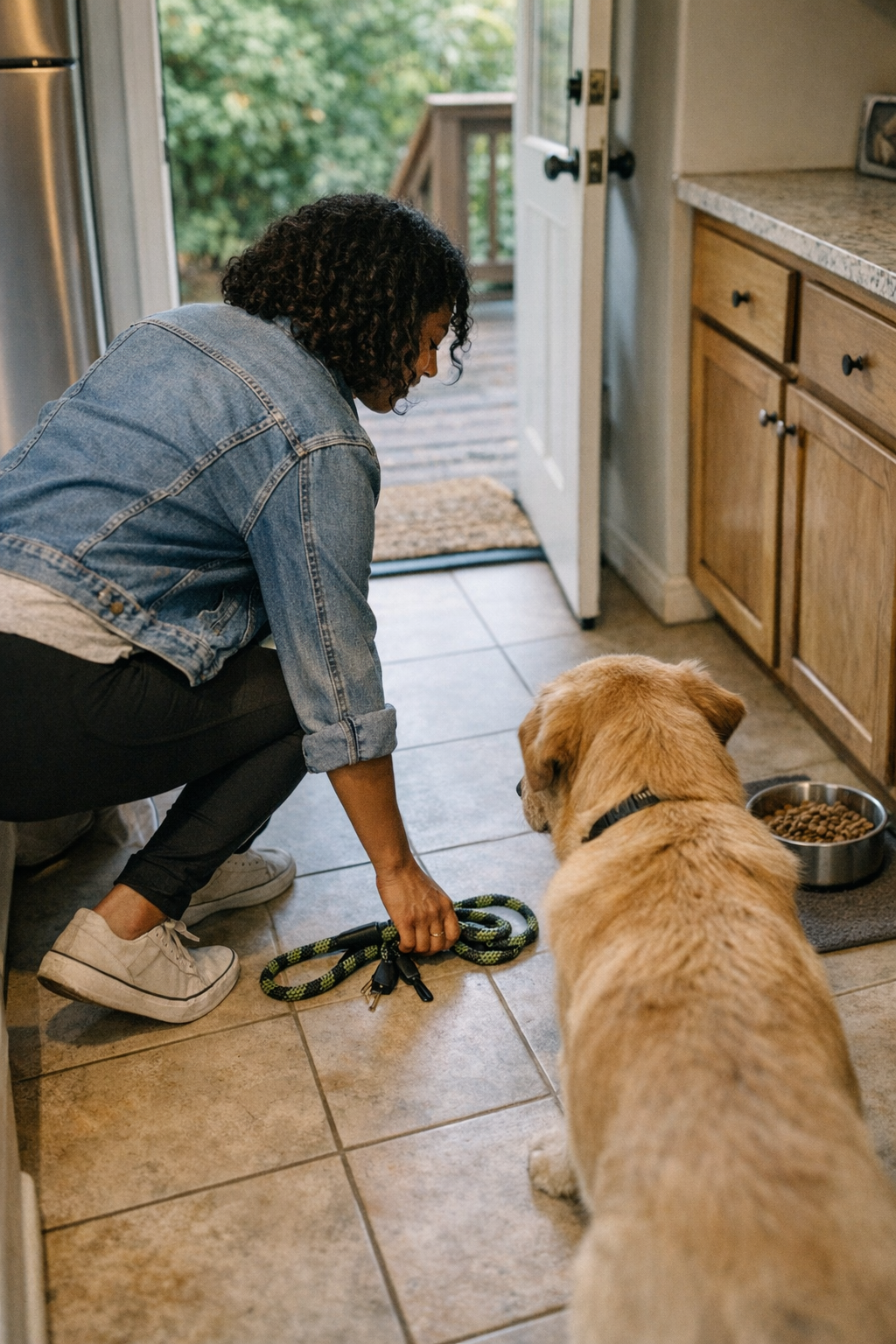
It took a few days of stepping around the same crowded corner after every walk—right near the kitchen, where bowls, towels, and tangled toys gathered—before I noticed the small ways the setup was holding us back. Anyone watching would call it a perfectly normal dog area, nothing flashy. But after a while, the daily friction started to add up.
You realize it after a few mornings spent picking up a dropped leash, nudging aside yesterday’s towel, or reaching with your foot for a water bowl that’s slid from its usual spot. At first, the space looked organized—crowded but functional. But there was a repeated awkwardness unfolding in that tight spot: an extra step here, a sidestep there, a towel just out of reach when wet paws tracked through after a damp walk.
These small misalignments are easy to ignore. Any day living with a dog includes tiny negotiations—who moves what, what has to be within reach, which corners get cluttered by the hour. Still, after enough repetitions, those awkward reaches and hesitations add up, like a creaky drawer or sticky door you start to notice every time you pass.
The Corners That Quietly Slow You Down
It happened most often in the late afternoon, returning from a walk just before dinner prep started. The plan was simple: dry paws, a quick drink, then maybe some rest in the crate nearby. Instead, I’d retrace a few steps to grab a dropped towel or shift bowls while holding a twitchy leash. Nothing dramatic—just scattered seconds added up every day.
That small struggle kept returning. I thought the spot was fine—towels folded, crate ready, bowls reset—but the setup kept sliding out of sync with how we actually moved through the space. If the towel hung even a foot too far from the door, wet paws hit the wood floors before I could catch them. If the bowl drifted to the far corner after cleaning, the dog’s first drink meant an awkward, clumsy reach.
Eventually, I realized it wasn’t about how many items were there or how neat things looked at night. It was what was actually within arm’s length when the routine happened. The difference was smaller and more subtle than expected—but real.
When Routine and Setup Drift Apart
Day after day, our routine and space arrangement fought each other without either of us intending it. The crate sat ready but always just off the natural path from door to rest. The leash drop zone never lined up with where I ended up standing—usually because I’d nudged a bowl or dodged a heap of toys on the way. Looking back, I saw how each small adjustment—an extra reach, a pause to move something—made the transition less smooth.
The spot looked tidy from across the room, but in practice it worked against itself. The bowl was easy to clean but never consistently returned to where the thirsty dog expected it. Towels drifted away from the closest hook and got buried as the week went on. There was no chaos—just a growing pattern of little slides, delays, and hesitations.
Over time, evening routines stretched longer than necessary. I ended up with a dog waiting by the door while I hunted for the right towel, or pacing for water because a bowl had been nudged out of sight. These small daily obstacles added up, mostly unnoticed until a spill happened in the narrow walkway or I caught myself walking back and forth too often.
One Adjustment Makes Its Way In
One evening, mostly out of impatience, I tried a simple shift: everything needed for post-walk entry—towel, bowl, leash—went right inside the door, arranged in the exact order we’d need them. No major overhaul, just a practical move. A towel draped over the bench closest to the entry, the bowl nudged a step forward, the leash set down in the same spot every time.
The change was quietly immediate. Instead of chasing one item after another, both of us moved through coming home in a clean line—paws wiped, water ready, then crate or bed—no sidetracks. The old tangle of delayed cleanup and slow transitions faded before I really noticed.
Since then, I can still see where the old pattern would’ve tripped us up—a towel drifting across the room, a bowl reset absent-mindedly. The new setup isn’t perfect every day, but it keeps the flow close to the way the routine actually plays out, not just what looks tidy. Interesting how a leash, a towel, and a bowl, when set down where you’ll truly reach for them, can pull the dog’s rhythm—and yours—gently back on track.
Reshaping the space wasn’t about organizing for show or creating a pet-perfect look. It was about learning—finally—to put things where the daily routine proves you’ll reach for them. That practical shift smooths the rough edges week by week, in a way only repeated use reveals.
Living with a dog means these small adjustments never really stop. Course-corrections build on themselves, and the next hitch tends to show up quieter than the last.
If you’ve found yourself caught in repeated sidesteps and misplaced towels or bowls, you might find some ideas here: http://www.dogpile.myshopify.com