When the Walkway Tells the True Story of Your Yard
In backyard storage, clear center paths matter more than tight organization; they ease movement, reduce clutter, and keep setups functional.
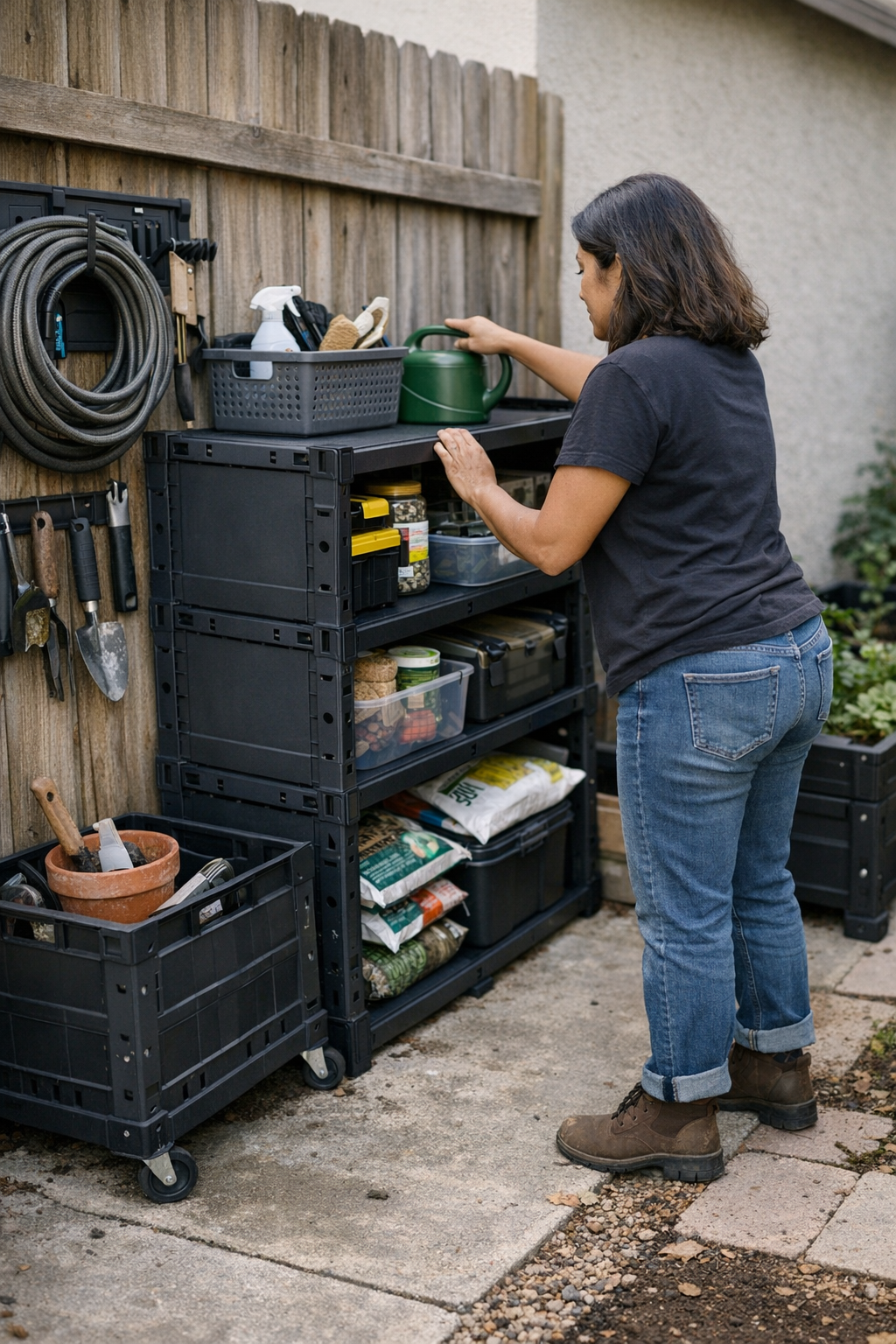
It’s strange how you only appreciate a clear path once you lose it. When the walkway narrows—just enough that a wheelbarrow gets wedged or a garden boot lands askew—order quietly starts to vanish. I used to think backyard storage success was mostly about what went on the shelves: lined-up bins, tidy wall racks, or even the overfilled cubes stacking higher every spring.
But the real trouble always began at ground level, not on the edges.
The Subtle Cost of a Blocked Walkway
You don’t notice the problem immediately.
It creeps in through small delays: the clatter when a tool handle is knocked loose, the slow frustration when a rake tips across your feet, or the moment your arms are too full and you have to step wide just to reach a bin.
The setup always looked best early in the season—freshly reset and perfectly arranged. Then came rain, family visits, and repeated trips back and forth. Suddenly, the path was never quite empty. What once felt “organized” turned into a kind of obstacle course, especially during busy times when everyone was coming and going at once. That was the part I kept coming back to.
Order Isn’t Always Enough
You can line every fence with clever systems, squeeze vertical racks against the siding, use modular boxes and hooks to harness every inch of vertical space.
It looks promising at first—efficient even. But the more you pack in, the less forgiving the daily use becomes, especially after a few wet days or those rushed, end-of-week drop-offs.
Before I knew it, the main walkway started filling with stray gear, boots, and a wayward storage tote. The path became the overflow zone. Moving a single bike required some soft negotiation with whatever had migrated underfoot. The “perfect” arrangement faded as old habits and the unpredictability of shared space took over.
Clearing Space for What Moves Through
One uncertain evening, I tried moving the main storage unit just back from the path. Sixteen inches—such a small shift—and suddenly the centerline was open again.
Not perfectly tidy, but open. The feeling changed right away: carts could pass; muddy boots had a place that wasn’t the center of the walkway; even on busy days, moving through the yard stayed possible without second thoughts or silent curses.
It surprised me that removing a few bins did more good than cramming in extra ones. Sometimes, the best thing is to leave enough room for movement—enough gap so daily returns and weekend clutter don’t immediately collapse into mess. The less you have to constantly reset the path, the more the rest of the system seems to hold.
These reflections took root during a rainy week, after rethinking my own side-yard storage setup. For those managing small-yard organization, wall systems, modular structures, and shared outdoor spaces, this shift in focus—from packed shelves to an open, usable path—makes all the difference for practical backyard utility.



