When the Yard Becomes a Place to Rest, Not Work
A yard’s ease depends on storage that handles floor pressure and movement; wall-mounted modular setups prevent spillover and reset faster.
It was always subtle at first. A pair of rubber boots edging closer to the walkway, a half-filled bucket quietly settling by the fence, a jumble of kids’ things inching into what used to be open space. Clutter in a yard doesn’t appear with a crash—it quietly gathers, day by day, until simply crossing it starts to feel heavy and strained.
I noticed that typical storage solutions—bins, crates, floor chests—that seemed practical in the beginning rarely kept pace with the ebb and flow of real life outdoors. It wasn’t about laziness, but about how easily things moved when weekends blended into chores, or after rain muddied tools and plans alike. For me, the hardest part wasn’t making things neat; it was keeping the flow of the space alive and accessible through regular use.
When the Floor Fights Back
You rarely spot it at first. A container here, a crate there—they sit on the ground like quiet promises. But over time, those bins stop guiding order and instead collect stray gear, squeezing the walkways tighter and tighter.
There were days when checking the side yard felt like wading through someone else’s unfinished project. The more I tried to reset, the more time it took just to reach what I needed. It was as if the floor itself was pushing back against the idea of open, flowing space.
I kept wondering why every tidy-up felt undone so fast. That was the challenge I kept circling back to.
The Quiet Shift to the Wall
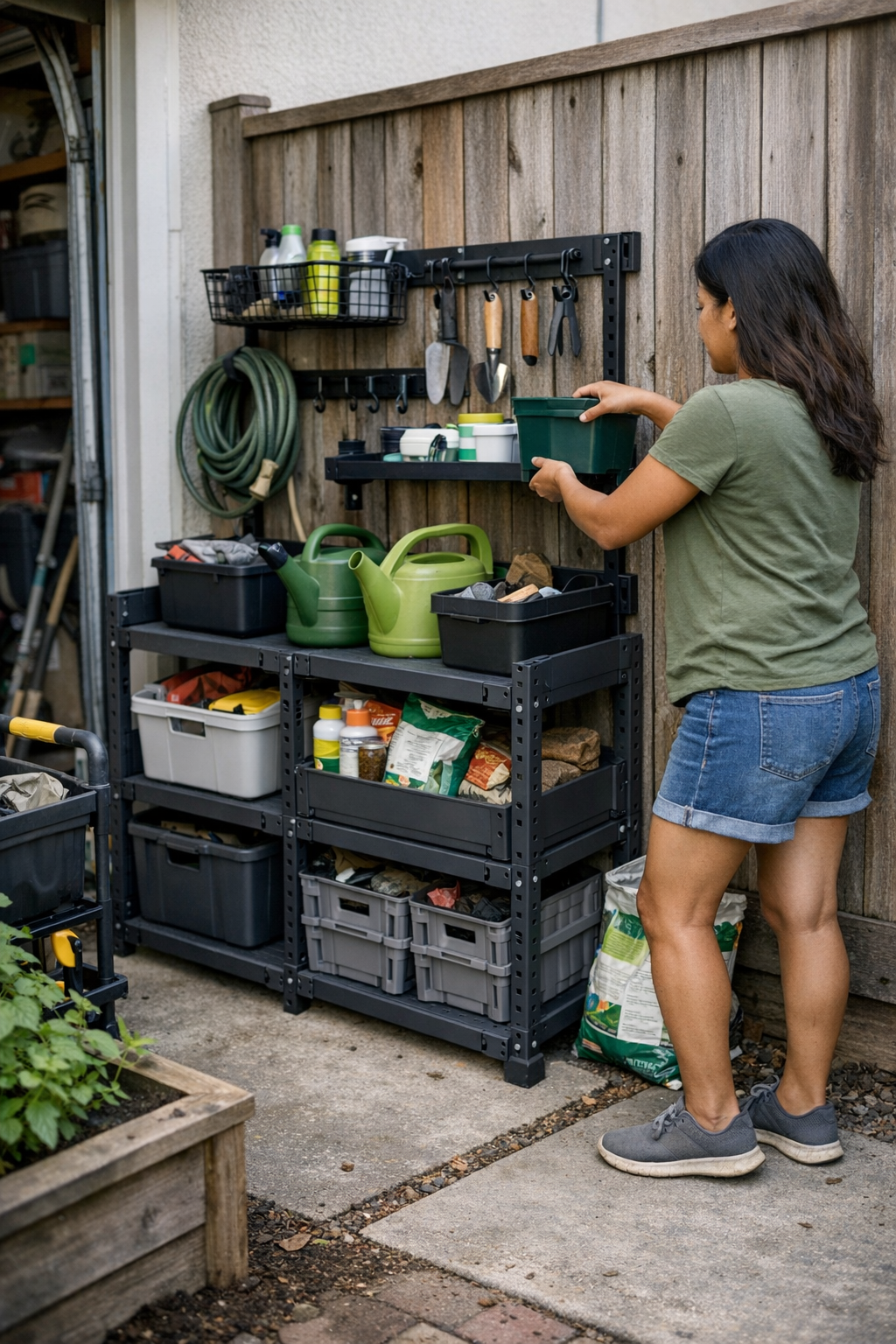
One afternoon, not out of frustration but mostly curiosity, I tried mounting a few rails and shelves along the fence. It wasn’t about creating a perfect system but about giving things a stable place above ground level.
Suddenly, movement felt easier—lighter even. The walkway didn’t shrink, even as gear stayed within reach. Items that used to spill along the edges were now anchored on hooks and shelves. Resetting after messier tasks stopped feeling like an uphill chore and edged closer to becoming a simple habit.
You don’t always notice right away, but there’s a quiet relief in not having to search for the same trowel or toy every time.
When Habits Finally Meet Structure
Over weeks, it became clear: a yard needs boundaries that match how you actually move through it. Not rigid rules, but a gentle push in the form of routines that don’t fight back.
Vertical storage wasn’t just about saving floor space. It created visible boundaries, suggesting where things belonged—not only for me but for everyone who came out to help or play. The path stayed open. Cleanup shrank to a single, natural motion.
That breathing room came from each item returning to its place. For the first time, the yard felt like it could reset itself instead of waiting for another round of effort.
These thoughts came together while trying different ideas in my own small yard: View the full collection