When the Yard Finally Stopped Feeling Like a Maze
Flexible setups often fail with shared use; switching to wall or modular systems eases clutter and reduces reset effort.
There’s a quiet kind of tension that builds when you try to keep a small outdoor space working well for everyone who uses it. It’s not obvious at first—not clutter exactly, but the slow stacking of tools, a chair that never goes back to its place, the squeeze sideways just to reach the hose. You don’t notice until routines start to bump into each other. That’s when a setup that once seemed flexible suddenly feels rigid or overloaded under constant use.
Eventually, someone becomes the keeper—resetting the order each weekend, holding back the slow tide of overflow. What felt workable becomes just another daily negotiation.
Where the Setup Breaks Down
Every household carves out space differently: open racks, tall cabinets absorbing garden tools, stackable bins for everything else. They promise ease—until busy days and competing priorities put that promise to the test.
You see the breakdown most clearly after a social gathering or a chaotic gardening session. Open bins get buried, things migrate to corners, and the main walkway becomes an obstacle course. Well-meaning systems unravel, often faster than you expect, simply because real life doesn’t follow the plan.
You feel it in the frustration of trying to put something back only to find the floor rack spilling into the path again, or gear tucked behind something someone “just set down for a second.” The more flexible a setup sounds in theory, the faster rigidity sets in when it meets repeated use.
The Quiet Impact of Structure
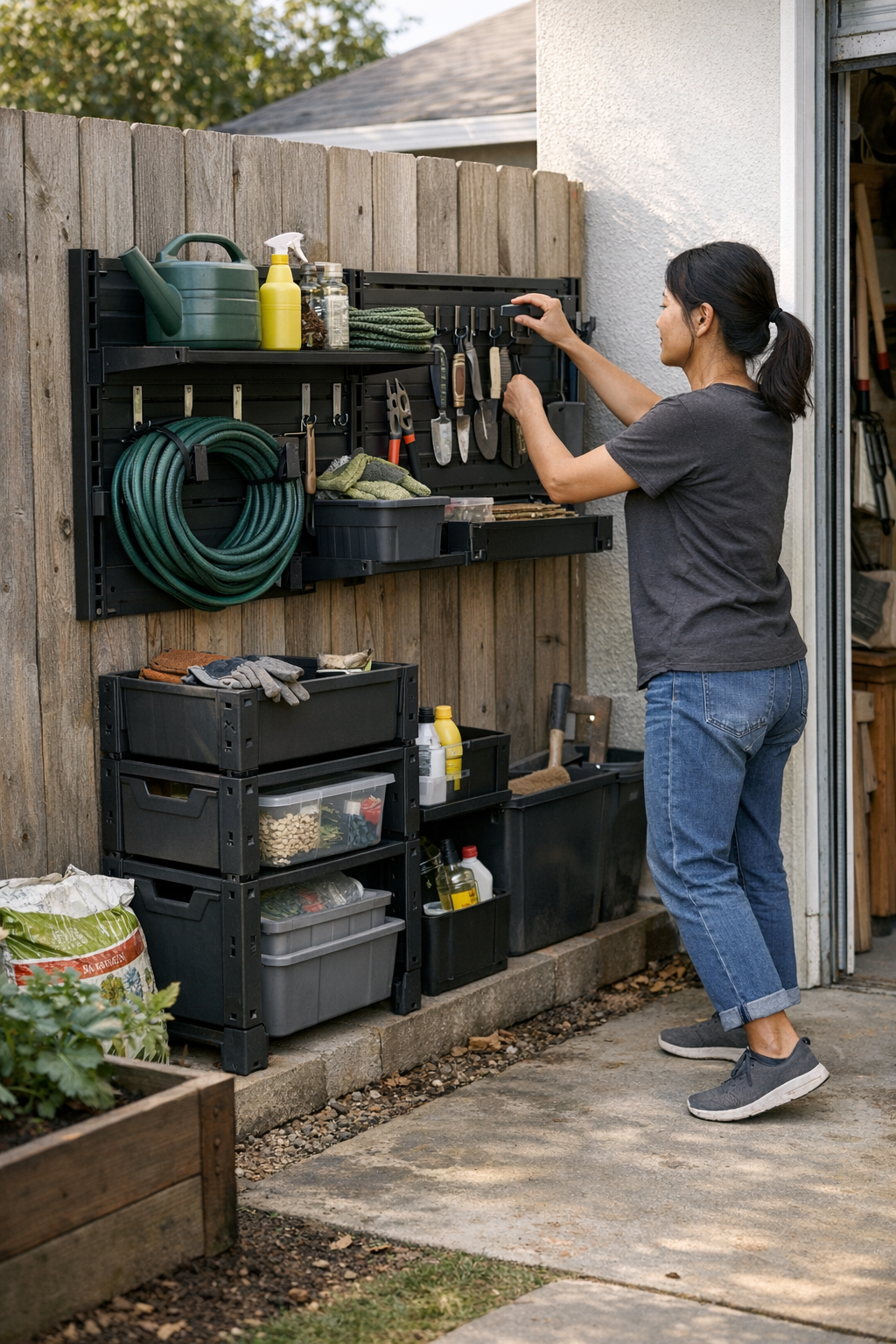
Small changes often show their worth quickly. For me, swapping an old floor rack for a bare wall panel along the side yard made a big difference. Tools were lifted off the ground, no more sidestepping handles or wet footprints tracing across the fertilizer bag.
This wasn’t a total transformation. The yard still churns daily, but raising storage to eye level became the new normal for everyone passing through. I didn’t have to remind anyone; the layout nudged itself. After a few weeks, there was less to reset, and more visible order. The walkway stayed open, as if the space had finally breathed and relaxed a bit. Small frustrations didn’t vanish, but they softened.
Absorbing Real Habits
Storage solutions live or die by how well they absorb the hits of real use. It’s not about looking neat on day one, but about whether the space can handle uneven or rushed routines without collapsing into clutter.
Wall panels and modular units seem to forgive those hurried days or when family members aren’t aligned. They don’t erase the mess but keep it from snowballing into a bigger problem requiring its own project. Nothing’s perfect, but moving storage up and out of traffic changes who carries the burden of resetting.
You can feel when a space lets everyone return without stumbling over yesterday’s leftovers.
These reflections came from quietly experimenting with my own little space. View the full collection