When the Yard’s Calm Breaks After Tidying
Outdoor storage that looks tidy often fails with use; prioritizing access and clear zones helps maintain order and avoid clutter buildup.
There’s a bittersweet feeling during those first days after a big backyard clean-out. The old piles are gone, the shed looks almost new again, and for a moment, the whole outdoor space seems to breathe easier. But beneath that fresh order, a quieter feeling stays with you — a sense that with every new gardening project or seasonal shift, clutter will slowly start creeping back. I only truly realized how storage habits shape these cycles after living with my own version of “neatness” for a while.
Where the Mess Hides
You don’t notice it right away. The initial tidy-up almost feels like a reset for the entire area. Then, a few weeks later, I found myself hesitating, shifting bins just to reach a rake, then moving a chair around to make space for those bins. Temporary “just for now” piles would appear, even though everything had a supposed designated spot. The order held, yes, but not in a way that made moving through the yard easier. That was the part I kept coming back to.
There’s a difference between hiding mess and making it simple to move through the space, hands full, shoes muddy, sun beating down. A neat cabinet looks disciplined; a stack of containers can be impressive. But if every errand becomes a minor maze, the calm won’t last. The real issue wasn’t just storage itself — it was how those storage choices made each task either smoother or more irritating with every use.
How Habits Reshape a Space
This problem crept up mostly when I was in a hurry. On rainy days, needing a particular tool often meant disassembling half a stack. Over time, the most-used items — gloves, fertilizer, a battered hand trowel — started collecting right near the door, not out of laziness, but because re-stacking the bins each time never quite fit with the rush of busy days. The yard setup didn’t adapt well to the back-and-forth flow of real use — especially when more than one person was in and out.
I started to see that a tidy setup at rest is not the same as a system that works in motion. What looks low-profile or contained at first often creates small friction points that add up — not much at once, but enough that clutter quietly migrates to the most convenient spots, usually right where you walk.
Space That Flows, Not Fights
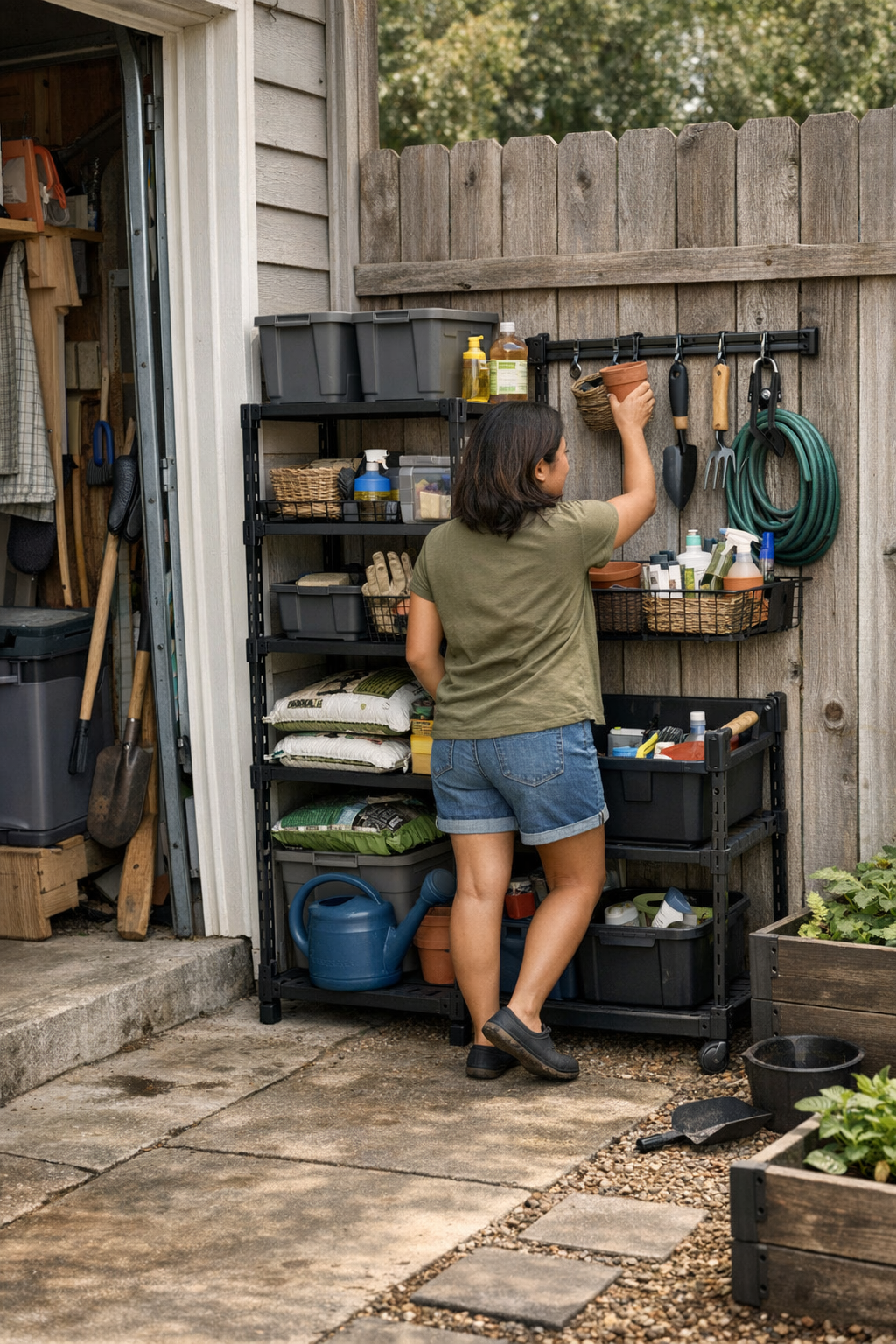
The smallest adjustment made the biggest difference. Swapping the stack of bins for a row of hooks and a single open shelf along one shed wall seemed unremarkable. But suddenly, grabbing and returning anything stopped feeling like solving a puzzle. Even lowering a shelf by a few inches mattered more than squeezing in another container.
It made me realize that the best kind of order isn’t about how much you can conceal or how little is left out. Instead, it’s about how gracefully things can come and go without sparking new piles elsewhere. When that’s working, the space feels lighter, even after a long week of busy outdoor work.
These realizations hit me while tinkering on this little side project: http://www.tidyyard.myshopify.com