When Tidy Shelves Hide Everyday Frustrations
Overfilled storage seems neat at first, but quickly leads to hidden clutter, slower retrieval, and disorder as categories and routines break down.
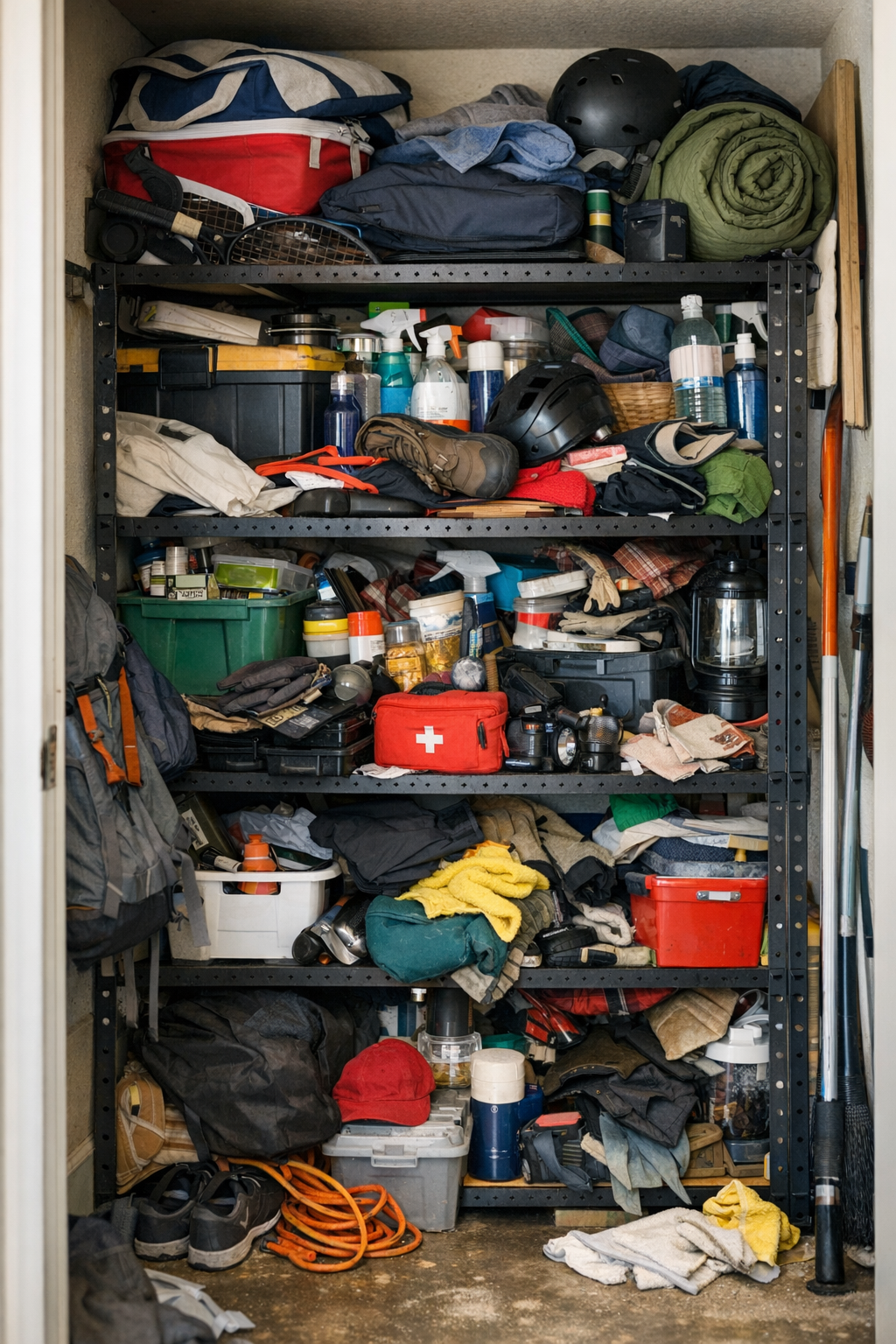
It’s easy to believe the illusion of order. A closet where every shelf is lined, every bin filled, gives a gentle sense of accomplishment—like things might, finally, run a little smoother.
But you don’t really notice how storage works until it starts working against you. The tidy front hides quiet friction: a glove vanishes behind a box, what was once a quick grab turns into an awkward shuffle. Without warning, the order you built becomes something you have to negotiate with every day.
Maybe this is just the way it goes with storage systems.
The Quiet Cost of Full Capacity
You don’t notice it immediately.
Shelves packed edge to edge, bins stacked to their limit—at first, they seem efficient, almost satisfying to look at. But as the days pass, a subtle problem creeps in: every routine retrieval slows down, a second item always needs nudging, and that initial clarity starts to blur.
It’s not just about clutter. There’s a lived-in moment, often half-ignored, when returning an object means moving two others first. The neatness feels like it should hold up, but it quietly shifts—order turning into hidden chaos you can’t see until you feel it, usually as a small, regular frustration.
When Organization Unravels
The unsettling part is how quickly surfaces lose their boundaries. One busy week and a shelf that looked pristine now holds a tangle of mismatched pairs, partial stacks, and misplaced odds and ends. You find yourself double-checking corners and crevices—wasn’t there supposed to be a flashlight here?
Visual order, it turns out, is fragile. Leaning objects tip forward, lightweight things vanish behind heavier ones, and what was grouped yesterday feels mixed and uncertain today. The shift isn’t sudden, but accumulates until the system asks more of you just to keep it upright.
Sometimes it just takes one pause—a small moment, hand halfway to the shelf—where you realize you’re spending more time managing your stuff than using it.
Making Space for Breathing Room
There’s an odd relief in pulling things back—a third less on each shelf, enough that daylight and definition return. Strangely, that gap changes everything. For the first time, it's possible to pick up or put back something without negotiating with its neighbors.
The difference feels practical, not just aesthetic. Resetting a space takes on a kind of ease, as if you’re working less and finding more. Small bins help, but only when they aren’t crammed full; the real difference arrives when you can see the outline of each thing, and every category holds steady, even under regular use.
It’s not about sacrifice or minimalism for its own sake. It’s a gentle shift—a space that feels light enough to return to, no longer trading time for a veneer of order.
Most of us try to make the most of what we have, sometimes filling up every shelf because it feels smart or necessary. But a bit of air, a little less, can make daily life softer at the seams.
Sometimes the most honest form of organization is simply letting things breathe.
These thoughts came together while quietly reworking a tangled closet at home.



