When Tidy Spaces Hide Everyday Frustrations at Home
Repeated real-world use revealed flaws in indoor cat setups; small placement tweaks reduced mess and made routines smoother.
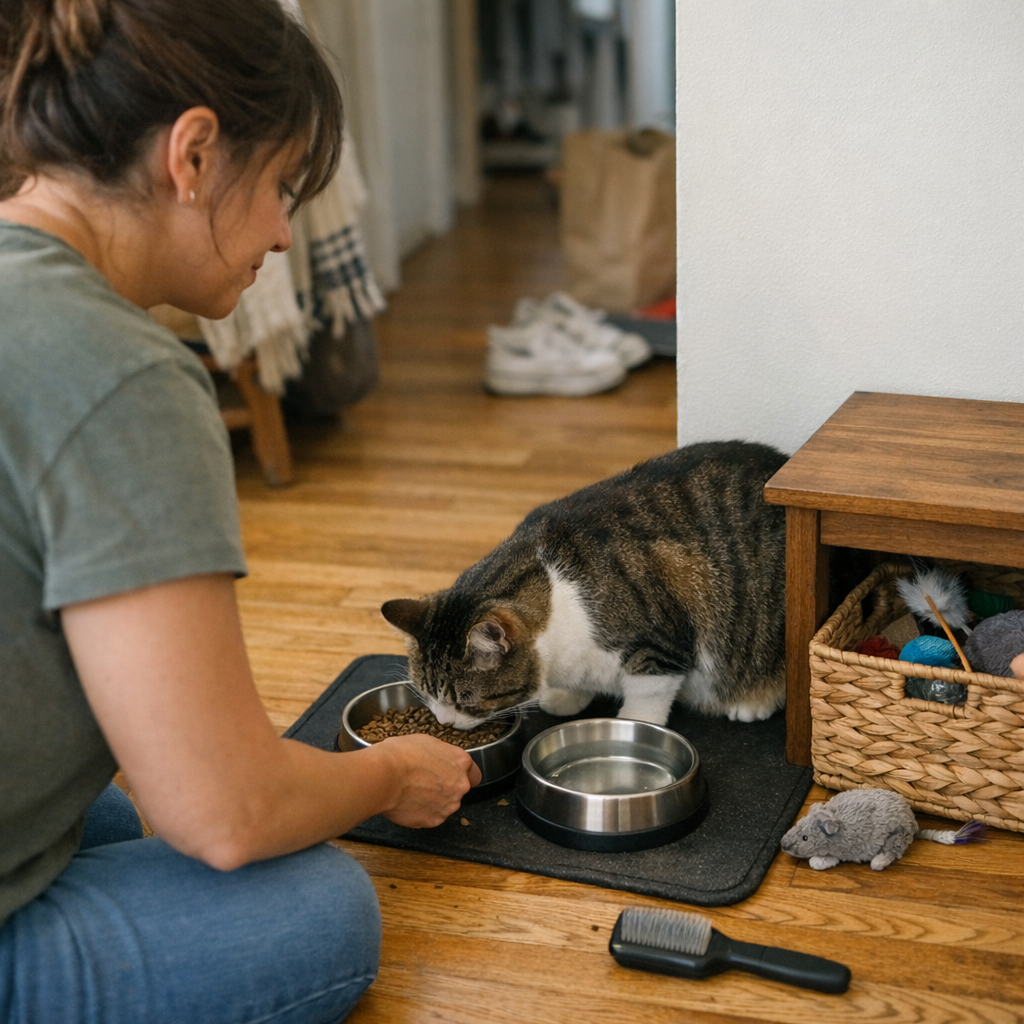
It looked fine at first. The feeding corner, water dish, and toy basket all in their places—nothing jumbled, nothing awkward. For a while, I thought we’d found steady ground. But after a few weeks with an indoor cat, it’s the routines that reveal the real test. That’s when the difference shows up—between a setup that looks settled and one that actually holds up through repeated use.
How Upkeep Gets Unraveled
You notice it after a few resets. One evening, it’s the food bowl nudged halfway into the walkway as you’re scrambling out the door. Another day, it’s water leaking under the mat or a brush drifting to the far end of the shelf, just as fur starts swirling around. The setup itself hadn’t changed, but the ongoing rhythm of cleaning, scooping, feeding, and picking up toys began demanding more breathing room—more space than I first thought necessary when everything was neatly aligned.
Most setups handle a slow afternoon just fine, when the house is quiet. But on busy days, with errands, deliveries, or visitors, the tidy corner starts to feel less reliable. A bowl too close to the mat’s edge becomes harder to wipe under. Kibble escapes keep getting pushed further by paws or stray footsteps. A toy that was once corralled suddenly ends up in high-traffic zones, requiring one more pickup before guests arrive.
The time lost is small, but it adds up in ways you don’t expect. Little interruptions stack—one more trip across the room, one extra sweep, an awkward bend digging an old treat out from under the storage cubby. Those repeated slowdowns kept returning, no matter how good the setup looked on a normal morning.
Making Room for What Actually Happens
Interestingly, the solution wasn’t about buying better mats, bins, or grooming caddies. It was about adjusting to what happens when the rhythm speeds up. The afternoon rush, the overlap of cat, people, and household routine—those were the moments that broke the illusion of “all set” in the feeding area.
Moving the food bowl just a bowl’s width away from the nearest edge and giving toys their own dedicated space under the table made a clear difference. This shift kept walkways more passable and made it faster to spot-clean spills or stray kibble. The tweak was almost invisible, but the difference kept showing up. Whenever the day crowded the space, it held together a little better. I stopped resenting the quick resets.
Why the Small Change Matters More Than It Seems
It’s surprising how small adjustments—an inch here, a new habit there—do more for daily home life than a full deep-clean or reorganization. A “good enough” zone becomes truly livable when it can handle a little chaos without slowing you down. In the long run, the setups that stay practical aren’t always the ones that look perfect. They’re the ones that quietly support both the cat’s world and yours, day after day.
I kept thinking about that shift and how it changed the feeling in the room—there’s now a bit more breathing space and fewer surprise cleanups when the pace picks up. That sense carries on quietly, every time you walk by.



