When Tidy Spaces Hide Everyday Struggles
Indoor-cat setups that look neat often create extra work; clear, open layouts reduce maintenance and speed up routines for both owner and cat.
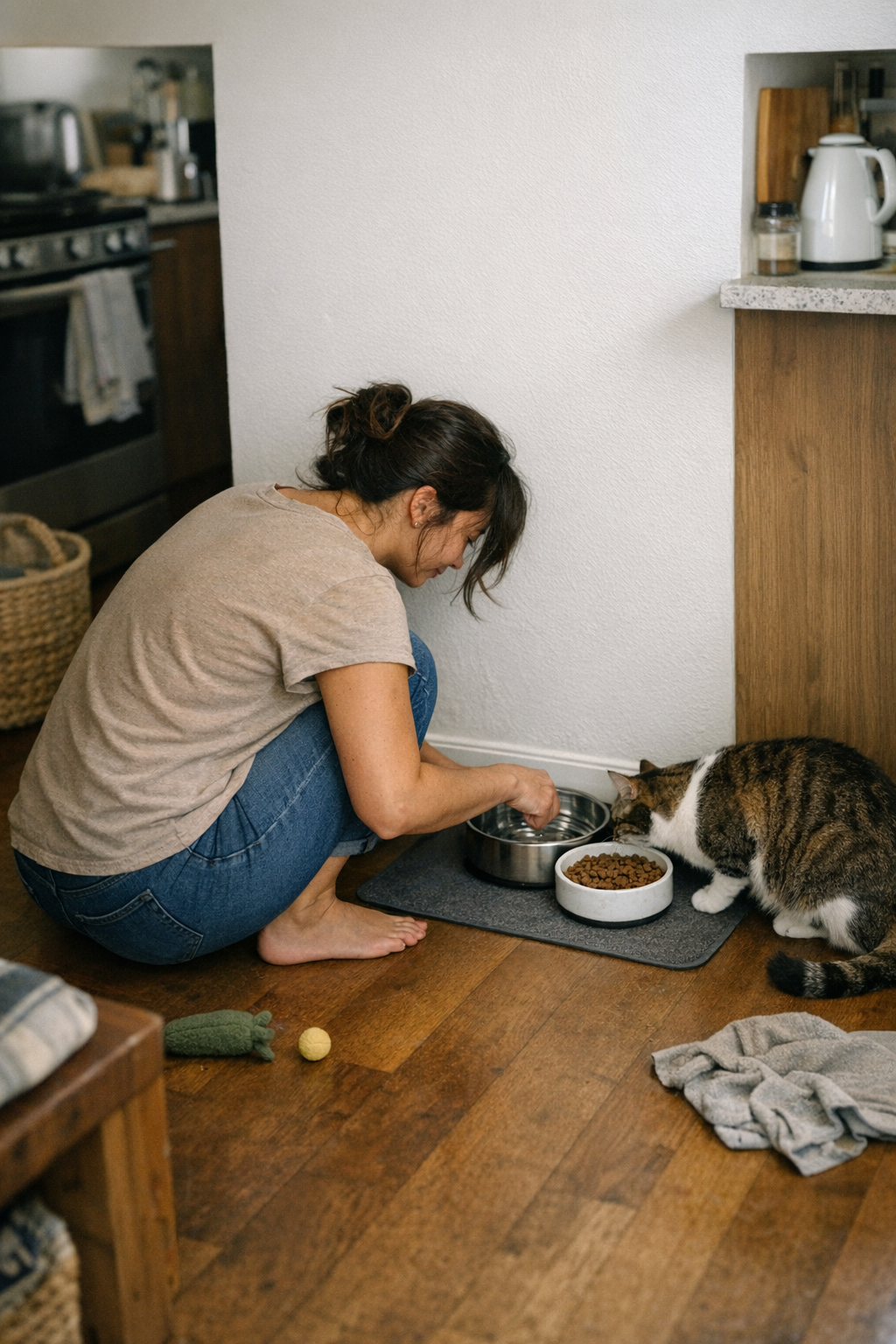
There’s a moment when you start noticing your indoor cat’s setup isn’t as settled as it first seemed. Maybe it’s the stretch you make reaching past a chair to fill the water bowl, or the quick straighten the mat under the feeder always needs, even when it looks tucked away. These small interruptions blend quietly into daily life at first — easy to ignore in a room that looks organized. But after several refills, wipe downs, and toy rescues from under the couch, that friction quietly adds up.
The First Week Looks Fine—But the Pauses Creep In
At first, the setup looked fine.
Arranging the cat’s feeding and water zone along an unused wall felt intentional and efficient. Yet that spot meant frequently leaning around the sideboard, always pulling the feeding mat out just enough, and nudging the water bowl away from chair legs or a blanket edge. These small pauses start to show only after a few refills: every reset has a quiet cost.
Toys accumulate in corners or out-of-reach spots. The routine that once felt smooth begins to collect little delays—not enough to break the day, but enough to disrupt the rhythm.
The Tidy Corners That Ask for More
A week in, the room settled into a routine that wasn’t quite mine.
The feeding corner, arranged to look tidy, needed daily adjustment. The mat beside the litter box creased no matter how carefully I smoothed it each morning. Water spots gathered under the bowl, only noticeable after shifting furniture—a slow buildup of extra cleanup.
These repeated “fixes” showed the difference between a setup that stands still and one that supports movement without pause day after day.
When Looks Get in the Way of Living
Once I moved the bowls and mat to a more open part of the kitchen wall, the daily routine became quieter.
No surfaces pressed against edges, no chair blocking access, no hidden bowls that needed pulling forward. There was just room for quick sweeps and catching crumbs before they scattered. The cat’s bowl stayed fully accessible; the mat kept its shape. Interruptions faded, resets sped up, and the space felt calmer where it needed to be.
What worked wasn’t a flawless arrangement, but one that didn’t demand the same small corrections every day.
For a smoother, less interrupted routine, these small practical moments make more difference than any ornamental layout could.