When Too Much Stuff Makes Cat Care Harder at Home
Overpacking cat essentials causes clutter and repeated cleaning. A single, clear setup reduces cleanup and makes daily care easier.
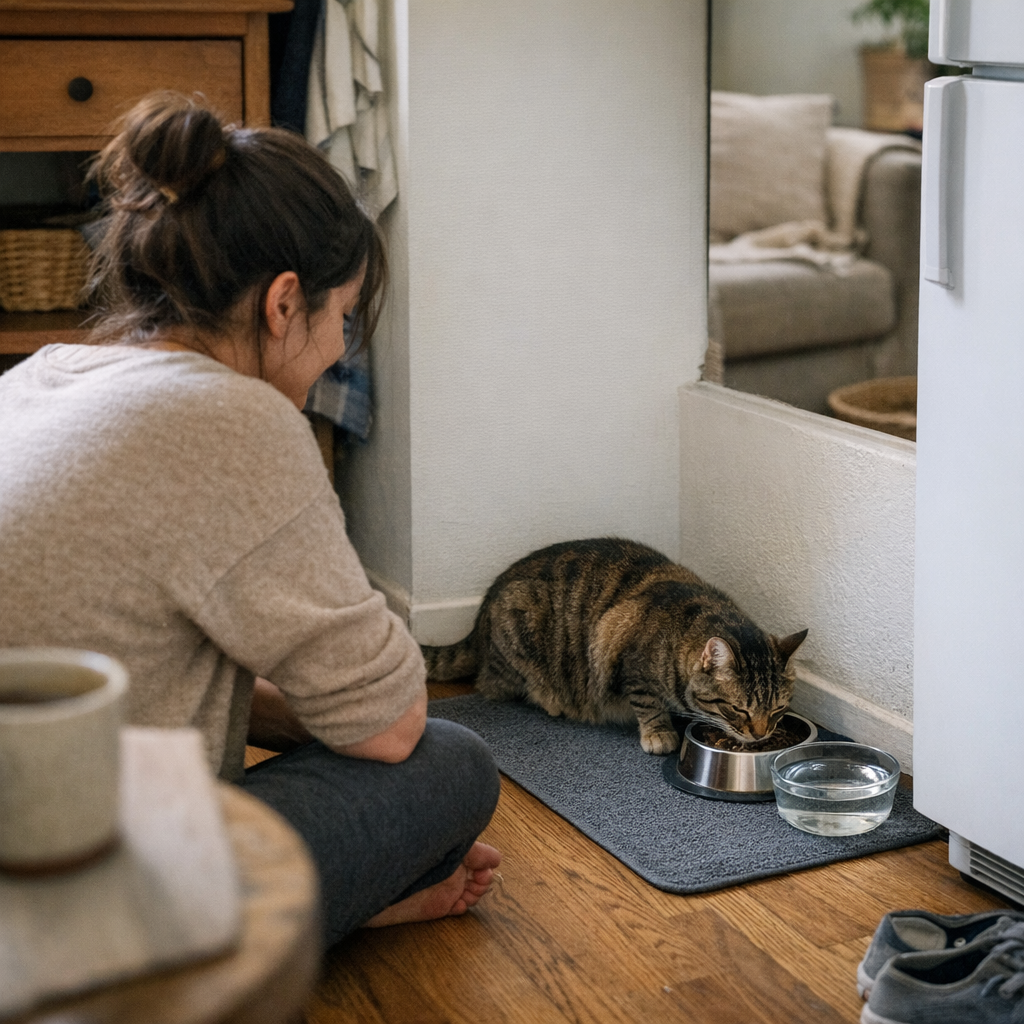
The first time I realized I’d overdone my cat’s setup, it wasn’t dramatic—just an ordinary Tuesday with another pause at the feeding corner. I noticed, in that half-second before picking up the dish, that the edge needed wiping again. There were extra mats and a backup water bowl, but my routine felt longer, not easier. It all looked prepared, well-stocked even. Still, something about the constant tidying kept returning, quieter than mess but more persistent than comfort. Over time, it wasn’t the clutter itself but the repetition that wore me down.
The Space Between “Prepared” and “Piled”
At first, the extra bowls and litter mats gave off that reassuring feeling. No surprises, just backup for every need—from refilling water to catching stray litter granules. But slowly, the area lost its shape. You start to notice it after a few resets: each extra item is another thing to wash, lift, or clear from under the feeder and around the litter zone.
The real shift happened in the middle of a busy week, when I reached behind a chair for the third time to clean a splash or some tracked litter I’d missed. That was the part that kept coming back. The more I added, the more surfaces held onto dust, fur, and crumbs. The setup stayed full but felt less manageable; each addition blurred the boundaries that once made the corner easy to wipe, sweep, or reset at the end of the day.
When Simplicity Wins the Routine
The pause came after a longer-than-usual cleanup—wiping all the bowls, moving mats to sweep underneath, fishing a rubber mouse out from behind the trash can. The area looked organized but still called for constant correction. I started focusing on what I actually used regularly, not just what I’d set out “just in case.”
Scaling back meant more than just removing things. One mat, clearly edged to catch spills and fur. The water bowl placed right on it, not clustered in a corner. I noticed the smudges were easier to spot and wipe, crumbs stayed inside the defined mat area, and the small rescue routines—like chasing loose toys or wiping stray water—happened less often. The space looked plainer, but the reset took half the time. The cat didn’t seem to mind; if anything, the area looked more like his space and less like a cluttered storeroom.
What Lingers (and What Leaves)
Part of the clutter, I realized, was maintenance that didn’t need to exist. There’s a hidden cost in every extra piece you add, especially in shared indoor spaces where quiet order matters most. A single feeding and water spot, easy to see and quick to access, was enough—at least in our small place. I saw less fur stuck to the mat, fewer split-second decisions about whether to wipe now or wait, and a space that felt less like a chore and more like part of the house again.
These thoughts stayed with me after noticing the difference between “well prepared” and just “spread thin.” The things you keep shape the home as much as the things you let go.
If you've found similar patterns gathering in your own setup, there’s a little more to consider here: http://www.stillwhisker.myshopify.com



