When Tool Storage Shapes the Workday Mood
Oscillating multitool storage impacts blade wear and speed; rigid cases with fitted slots reduce dust, damage, and save time on the job.
There’s a strange calm to having everything in reach—until, quietly, that calm is broken. Imagine starting your morning with tools lined up, multitool accessories tucked away in their case. It seems fine. Then, after a few dusty hours, you reach for a blade and find yourself sifting through a gritty pocket, realizing what was once “organized” has slowly worked against you.
Oscillating multitool accessory storage sounds trivial—until you’re in the middle of something precise and a missing attachment derails your flow.
How Tiny Problems Sneak In
When new, most accessory cases look reassuringly similar. Plastic, fabric, or something more rigid—they make the same promise: everything in its place. At first, that’s true.
But after a few days of projects, little differences become obvious.
You don’t notice them immediately, but you feel them.
Smudges of dust invade loose slots. The sharpness of a blade is dulled, not from use, but from rolling and knocking around with others. That “one more minute” lost searching for a clean sanding pad slips by quietly, stealing your rhythm. Before long, even the best tool can be slowed by a worn edge or missing piece hidden in a crowded pouch.
The Hidden Cost of Grime and Chaos
There’s a moment every renovator knows—muddy hands, half a thought on lunch, a rush to swap blades and get back to the task. If a backup blade now grates as you pull it free, or a sanding sheet goes missing just as you need it, annoyance gathers. It’s minor, but real.
I’ve noticed that the simpler the storage, the more chaotic it becomes with each job. Open trays look efficient but gather debris, fabric pouches swallow parts whole, and thin plastic slots promise more than they quietly deliver. It’s easy to forget how much time is lost to these small frustrations—until they stack up, making the work a little less satisfying.
What Changes When Storage Works With You
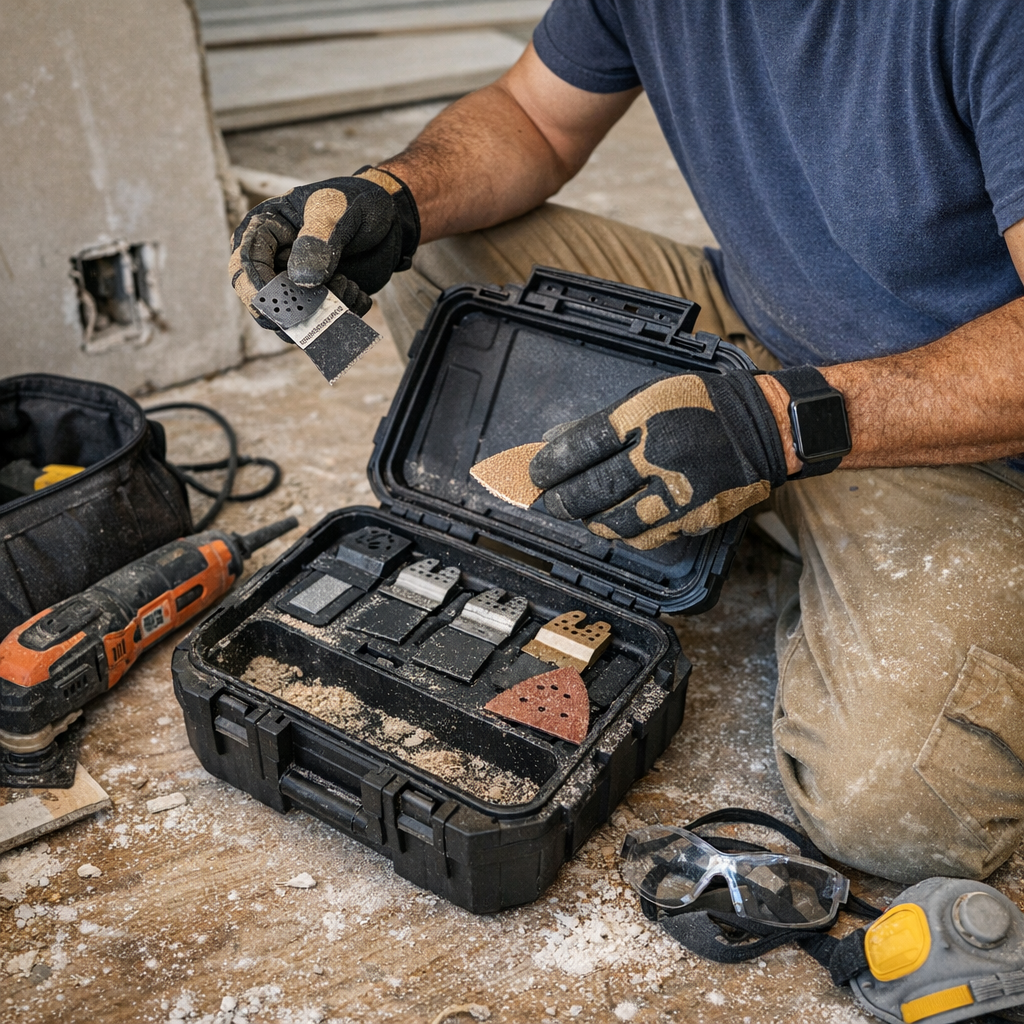
One day, I tried a molded hard-shell case—dense foam, proper slots, every part held gently but firmly in place. There was something quietly reassuring about glancing at the open case and seeing every blade and pad where it belonged.
Suddenly, there was less movement and fewer lost seconds. Dust collected in a tray, not on every blade. Accessory swaps became almost automatic—a relief I didn’t realize I wanted.
The calm returned. Not in a flashy way, but in the steadiness of work uninterrupted by missing or damaged pieces. The kind of order that clears your head and keeps fatigue at bay a little longer.
Most people see a storage case as a small detail. But with use, these details shape how smoothly each day goes. I find myself paying more attention now—not for the sake of being tidy, but because I enjoy having some part of the job flow just a bit better than before.
Sometimes, that’s enough.
These thoughts came together while working on a renovation and noticing just how many times a good storage case made things easier.