When Tools Heat Up: The Quiet Struggle of Long Remodels
Angle grinders that seem similar at first diverge over long work, with overheating causing rough finishes and costly corrections; breaks and high-duty tools help.
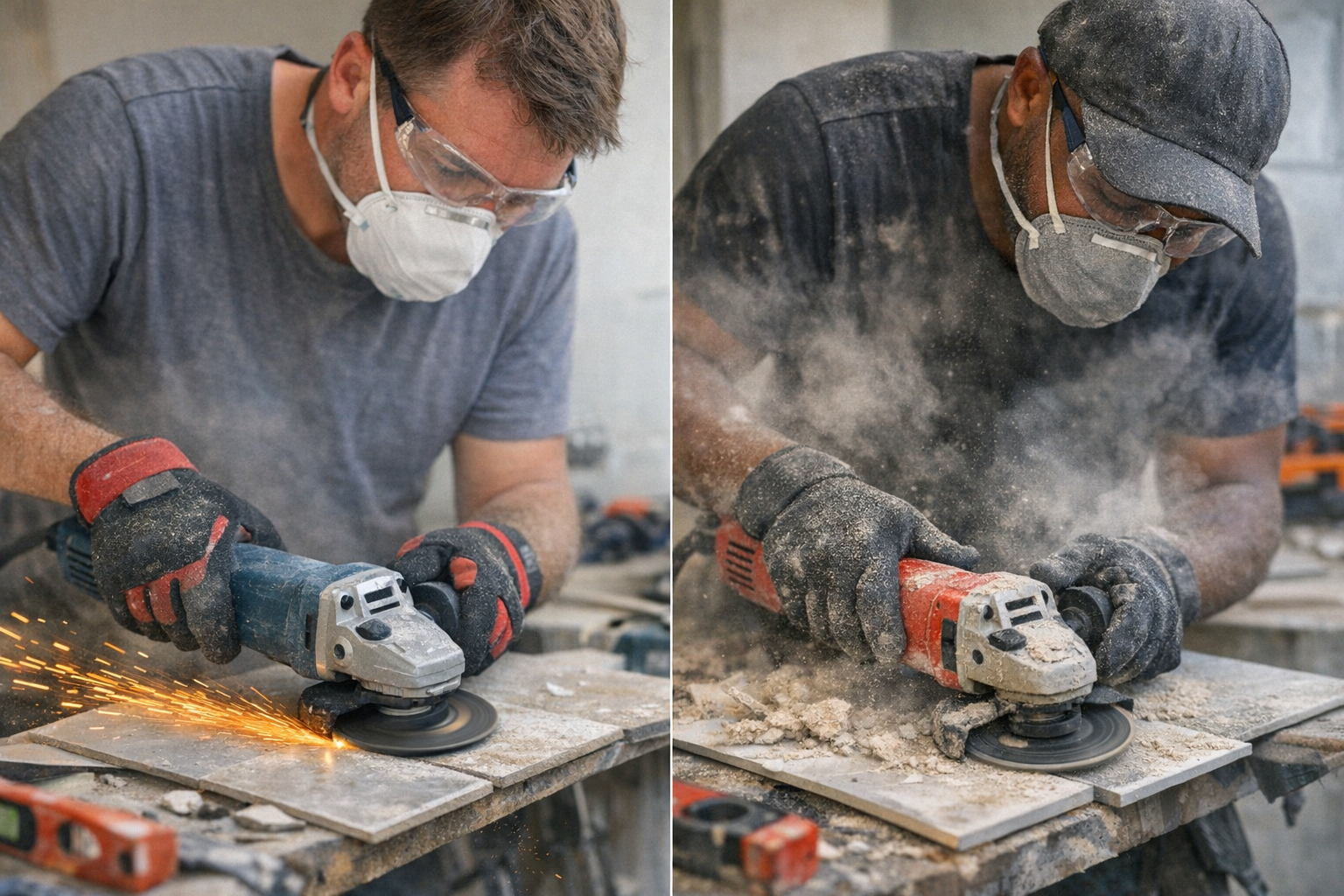
You don’t usually notice what’s happening inside your tools — not until your hands start to feel it, quietly breaking the rhythm of your work. Maybe you’re using an angle grinder to refinish a stubborn backsplash or cut through a line of tiles. At first, everything works smoothly. Minutes slip by. But over time, a slow, hidden tension builds: heat.
People talk a lot about power and wattage, but rarely about how a tool’s temperature tells its own story. Overheating is something you only truly recognize when it starts costing you. Work slows. Edges chip. And finishing cleanly seems much further away.
The Fade You Don’t See Coming
What separates a good grinder from a frustrating one isn’t always power on paper. Both spin up, bite into tile, and feel steady enough for the first cuts. But after about forty minutes, the difference becomes clear. One keeps its motor cool and the dust fine; the other heats up at the handle, debris thickens, and seams begin collecting chips. You don’t notice it right away.
But you feel it.
It’s almost sneaky, this shift. One moment, you’re working steadily; the next, there’s roughness where none should be. Force and focus, suddenly working against each other.
The Tipping Point Midway Through
By the time the handle is hot and dust clings to your gloves, you’ve usually crossed an unseen line. I remember reshaping a row of tiles once, thinking the cleanup would stay minor. But after a few passes, the grinder faltered, whining deeper with each cut. Tiny chips appeared along the edges. The process got heavier, both physically and mentally.
You don’t just lose time — you lose the clean finish you’d started with.
When a tool’s heat creeps past the comfort zone, every small slip multiplies. Dust clogs faster, alignment becomes harder to trust, and you end up circling back, re-sanding seams that should have been done hours ago. Sometimes, all it takes is overlooking those early signals.
Finding a Gentler Balance
Most days, the answer isn’t about overhauling everything. During a longer job, I swapped in a grinder built for higher steady wattage. Adding timed breaks — simple “twenty minutes on, five off” — kept the casing cool, the dust light, and the cut lines cleaner. My hands stopped carrying that anxious warmth, and the work felt lighter as the hours wore on.
It’s almost counterintuitive: pausing just when you want to push through. But letting a tool breathe often lets you finish stronger, with less to fix in the end. Sometimes, those pauses are what give the job its flow back.
Grinders, like people, need room to shed tension. And sometimes, noticing heat early is the quiet difference between a drawn-out repair and a finish you don’t have to go back over.
These thoughts came together one long afternoon, tiles and all, while restoring an old backsplash.



