When Tools Wander: The Quiet Chaos of Shared Spaces
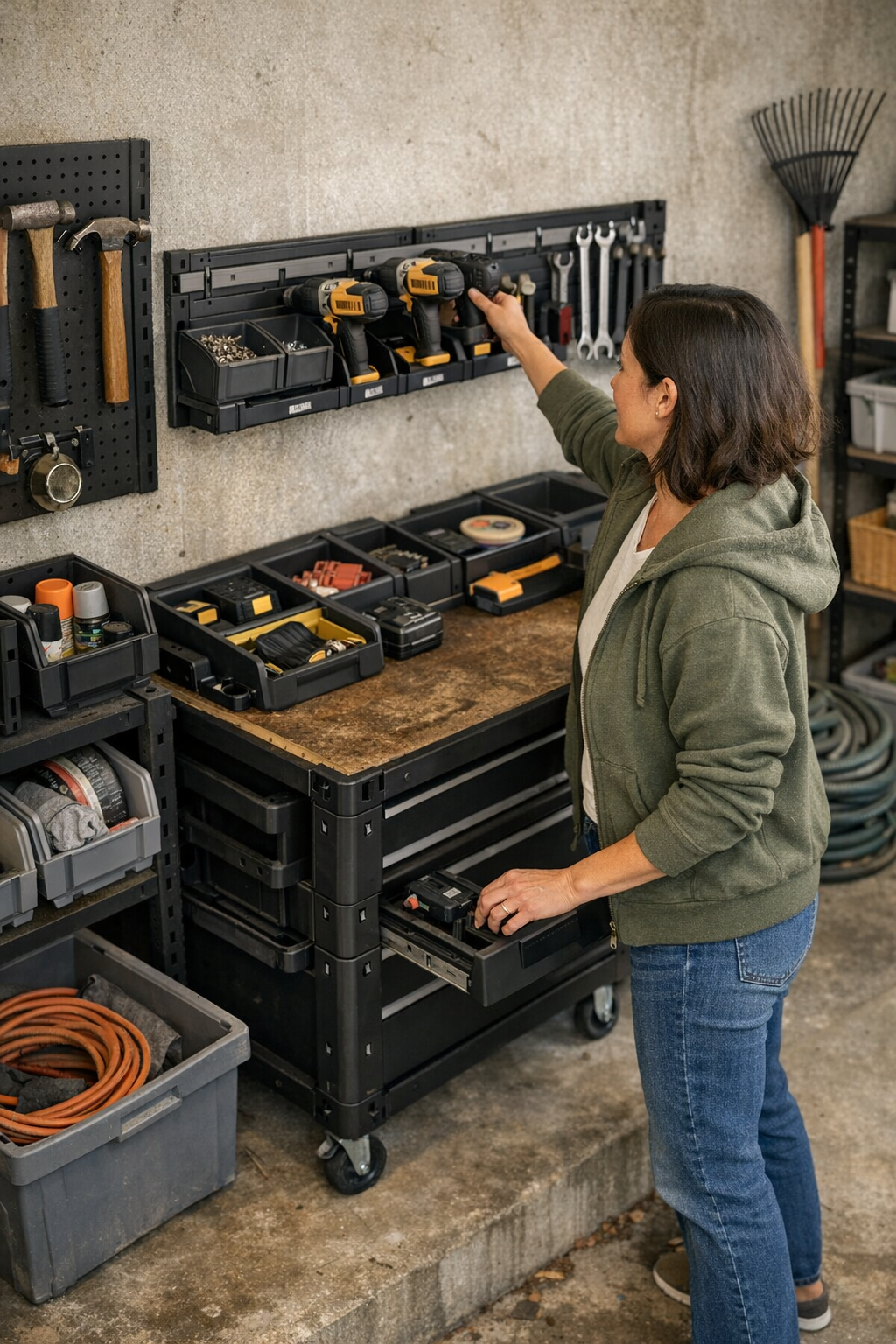
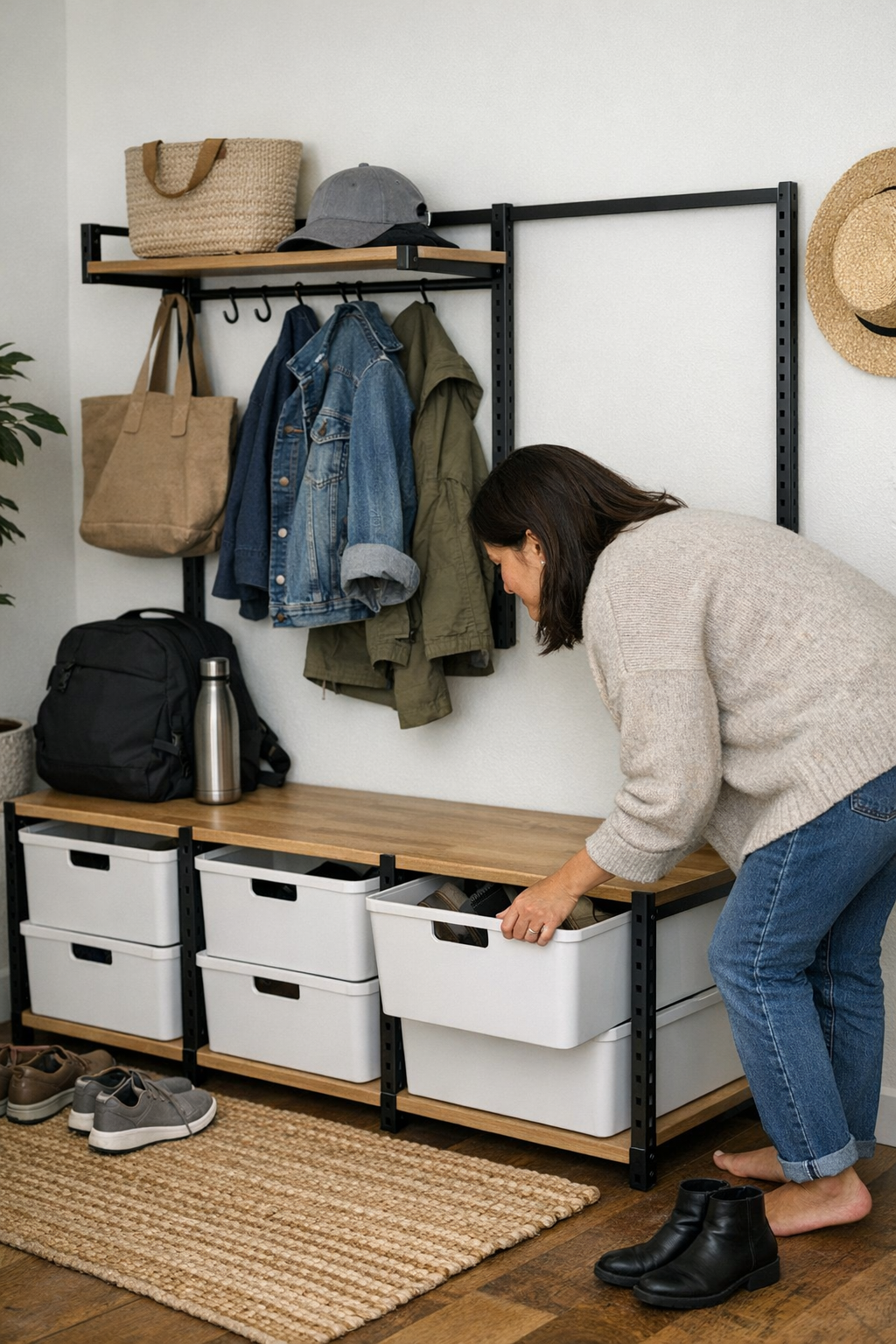
Storage systems for shared tools reveal their strengths in repeated use; clear return zones and matching routines keep the workspace organized.
There’s something quietly reassuring about a freshly organized garage or workshop. In those first moments—all the tools lined up, every shelf neat—it’s easy to believe you’ve finally solved it. Everything feels ready for any project, any mess.
But order is only the beginning. It’s what happens after—the daily shuffle of wrenches, drills, and chargers—that reveals what really works. Tool storage seems straightforward on paper, but in motion, the story changes.
You don’t notice it immediately.
But you feel it.
The Practical Puzzle of Sharing Space
Every storage system has its promise. Modular rails display your tools like a row of trophies. Floor cabinets keep clutter tucked away. A mobile cart glides behind you, ready to offer up what you need.
Yet, over time, friction creeps in.
A tool left on a bench “just for now.” A mobile cart edging into the middle of the floor, wheels pointed in different directions. A cabinet door blocked by a stray box or loose extension cord. Sometimes it feels as if the space reconfigures itself, subtly working against your best intentions.
What makes sense in stillness keeps shifting under real use. This everyday drift—tools settling wherever’s easiest at the moment—slowly undoes a system meant to keep order.
Invisible Bottlenecks
I started noticing where things piled up when others shared my workspace for a week. The wall rack stayed immaculate, but the main workbench filled with “in progress” tools. The cart wandered, then stalled somewhere out of the way. Cabinets that looked like overflow havens quietly became graveyards for whatever could be shoved inside without much thought.
It’s rarely a grand collapse. More like slow, persistent leaks: dead corners, double-parked carts, shelves that swallow small items behind big ones. Every storage choice made sense at the start, but by Friday, the energy needed to reset everything was higher than before.
You don’t always see the moment routine turns to friction. But the space starts to feel heavier.
The Gentle Shift That Stuck
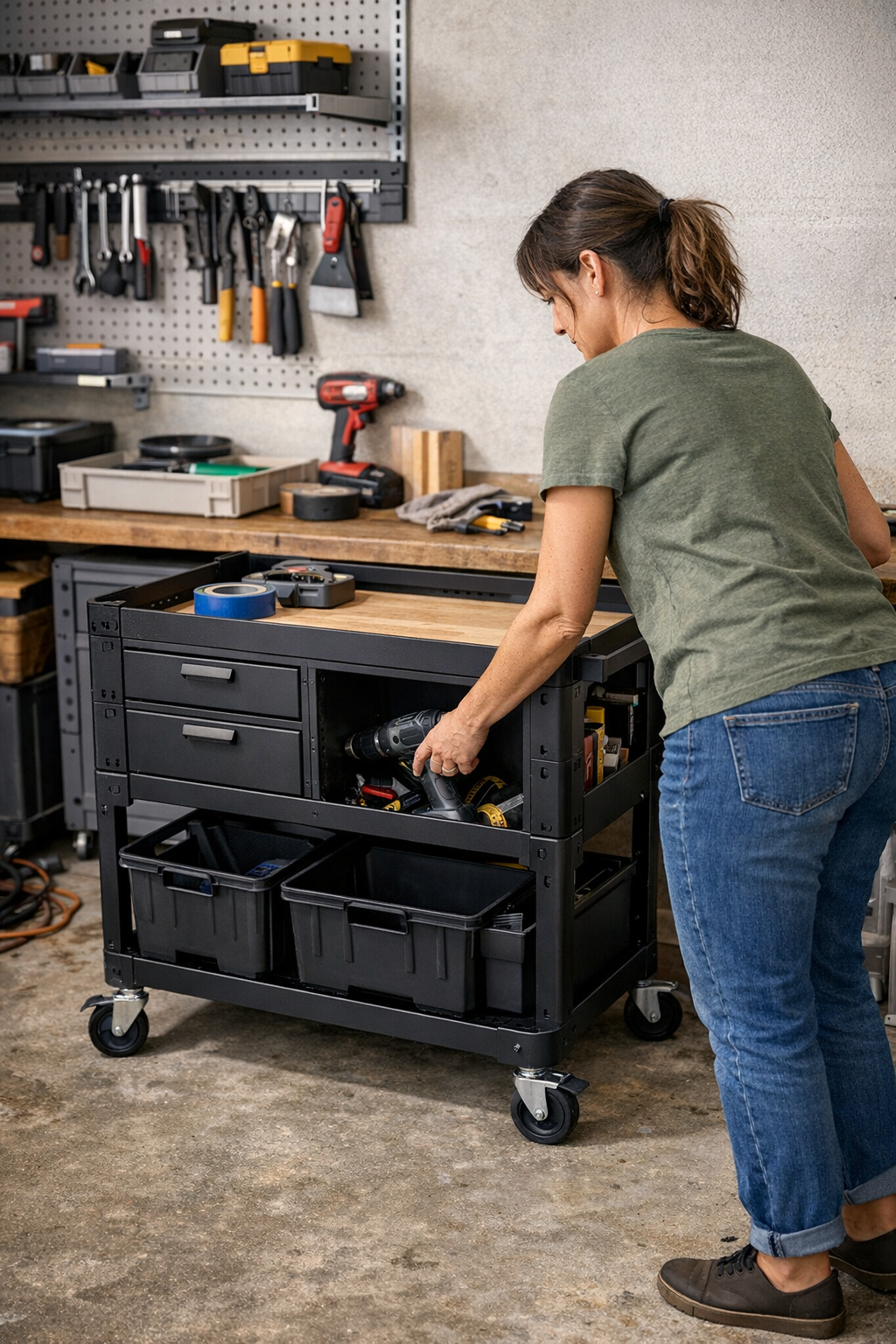
Oddly, the biggest relief came from the smallest change: a single, open spot on the rolling cart, marked in my mind as the place for any tool not yet in its final home. No rules, no sorting—just a visible, always-available “drop zone” near the main bench. It invited things back in, instead of demanding another walk or a cabinet search.
Once that slot was there, benches cleared themselves. The cart, parked deliberately along the aisle instead of across it, faded into the background, never blocking or crowding. There was less reshuffling, less overflow, and—almost unnoticed—the effort of keeping order fell away.
It’s not about the perfect shelf or the sleekest rack. It’s about making the “return” as easy as the “grab.” When tools have a last stop before they settle in, the space keeps pace with the people in it.
Sometimes, what works is just one tweak away from what doesn’t. And the right “home” for things only makes itself known through living with the mess, then quietly reducing it.
These thoughts came together while sorting out my own garage one quiet weekend.