When Travel Bags Betray Us in the Rush of Airports
Packing efficiency unravels in transit as overlapping items in shared pockets increase retrieval time and repacking stress.
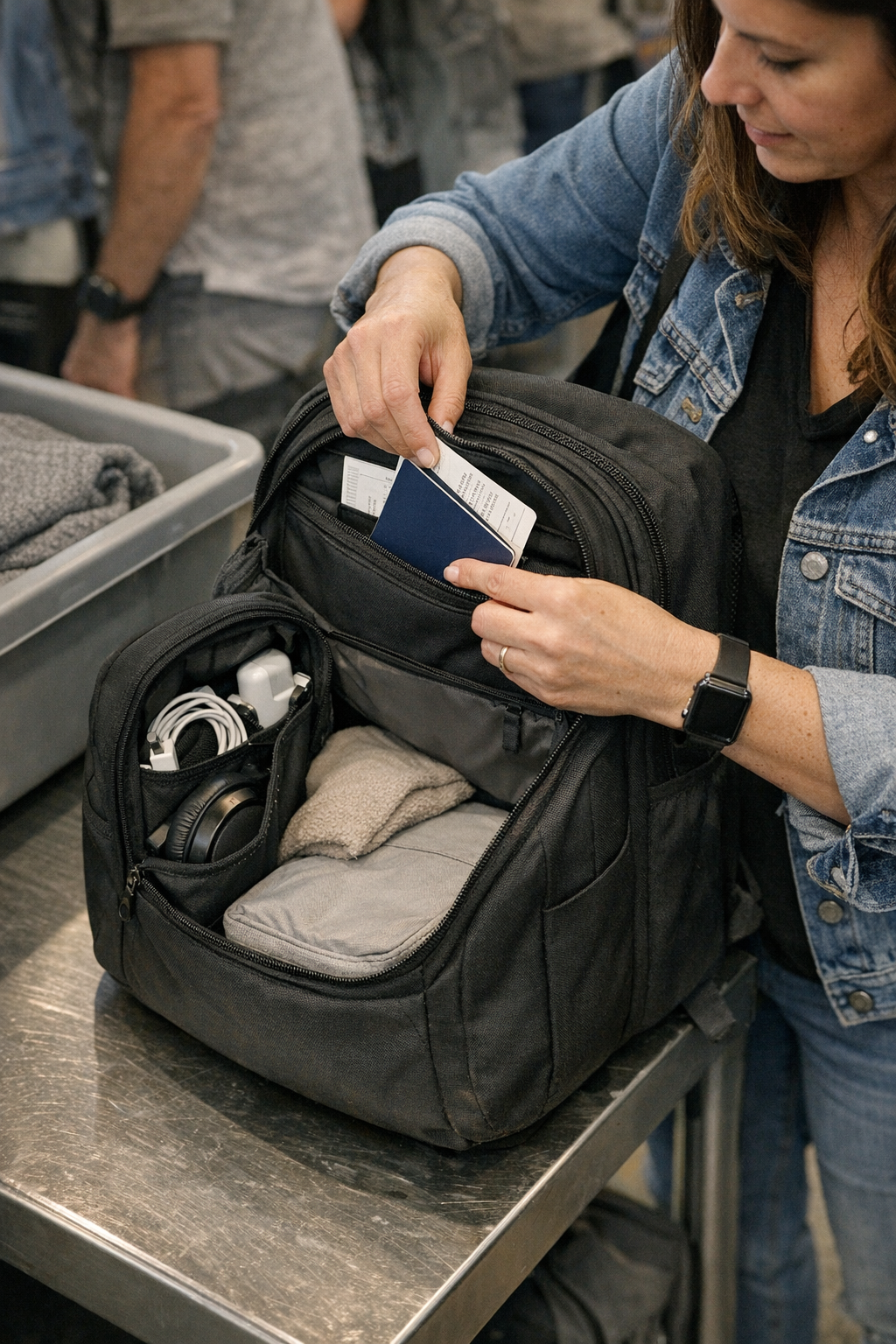
The bag always looked ready on the bedroom floor. Everything slotted where it belonged: a sleeve for documents, perfectly boxed organizers, headphones cushioned into their own corner. At first, this felt like preparation—a calm system you built at home before heading to the airport. But there was no hint yet of the noise underneath all that order, no sign of how quickly even a well-planned setup could get tangled during travel.
You notice the difference after a few trips. The difference between a bag that just carries your things and one that genuinely helps you move. It doesn’t reveal itself all at once. It’s in the smallest moments—paused in a crowded security line, one hand gripping the handle, the other digging for a single document you suddenly need. The organization you built starts to shift around the edges, quiet friction creeping in. Nothing dramatic. Just a slight delay, a repeated shuffle, and the odd feeling that your system is slowing you down, not smoothing your journey.
When Overlap Creeps In
Most bag setups fall apart not from a lack of effort but from invisible overlap. Headphones drift into the document pocket. Chargers tangle around the single pen you rely on. It looks fine at first—until pressure makes you rush. One frantic search at the security tray, and something subtle changes: hesitation where you expected certainty, the nagging sense that you’ve mixed up “accessible” with “convenient-for-packing.”
That hesitation kept coming back. Every repeated reach—passport here, charger there, ticket stub caught behind a flat pouch—slowed the rhythm you intended to keep. Lay-flat organizers that looked sleek on the bedroom floor suddenly got in each other’s way once the bag was lifted, zipped, and carried. The tidier the setup seemed, the more it tangled during use.
The Relief of a Single-Move Retrieval
At some point, I moved to separating everything touched more than once during a flight. Instead of stacking pouches by category, I kept the highest-frequency items—passport, boarding pass, headphones, a single pen—each in their own zone, strict about not mixing tech and travel documents in the same compartment. Only one zipper led to travel documents, and nothing else blocked access.
The difference wasn’t dramatic at first. Just a little less fumbling at the gate, a smoother rhythm repacking after security. But it added up: no more digging through cables blocking the passport sleeve, no more last-minute rearranging between trays. The bag didn’t look any neater, but finding essentials took one motion instead of several. Over time, that change added up to real support.
When the System Settles In
What I didn’t expect was how much less mental effort the routine required over multiple trips. Predictable access matters most exactly when you don’t have extra time to re-sort. Giving each pocket a single role—the document pocket, the tech pouch, the comfort zone—let resets happen naturally. Fewer awkward pauses fixing what shifted during overhead bin lifts or security checks. Fewer micro-panics undoing the work of organizing after every checkpoint.
It’s a quiet relief, realizing the bag simply helps you move. These details only show themselves in repetition, but after enough miles, you start to appreciate how reliable small order can be.
Sometimes what matters most is a system you don’t have to rethink in transit, and for me, I ended up here: carryonsupply.myshopify.com