When Travel Bags Fail, Pets Feel the Pause
Surface-level organization rarely survives repeated stops; structured, fixed-pocket setups keep items accessible and travel smooth for pet and owner.
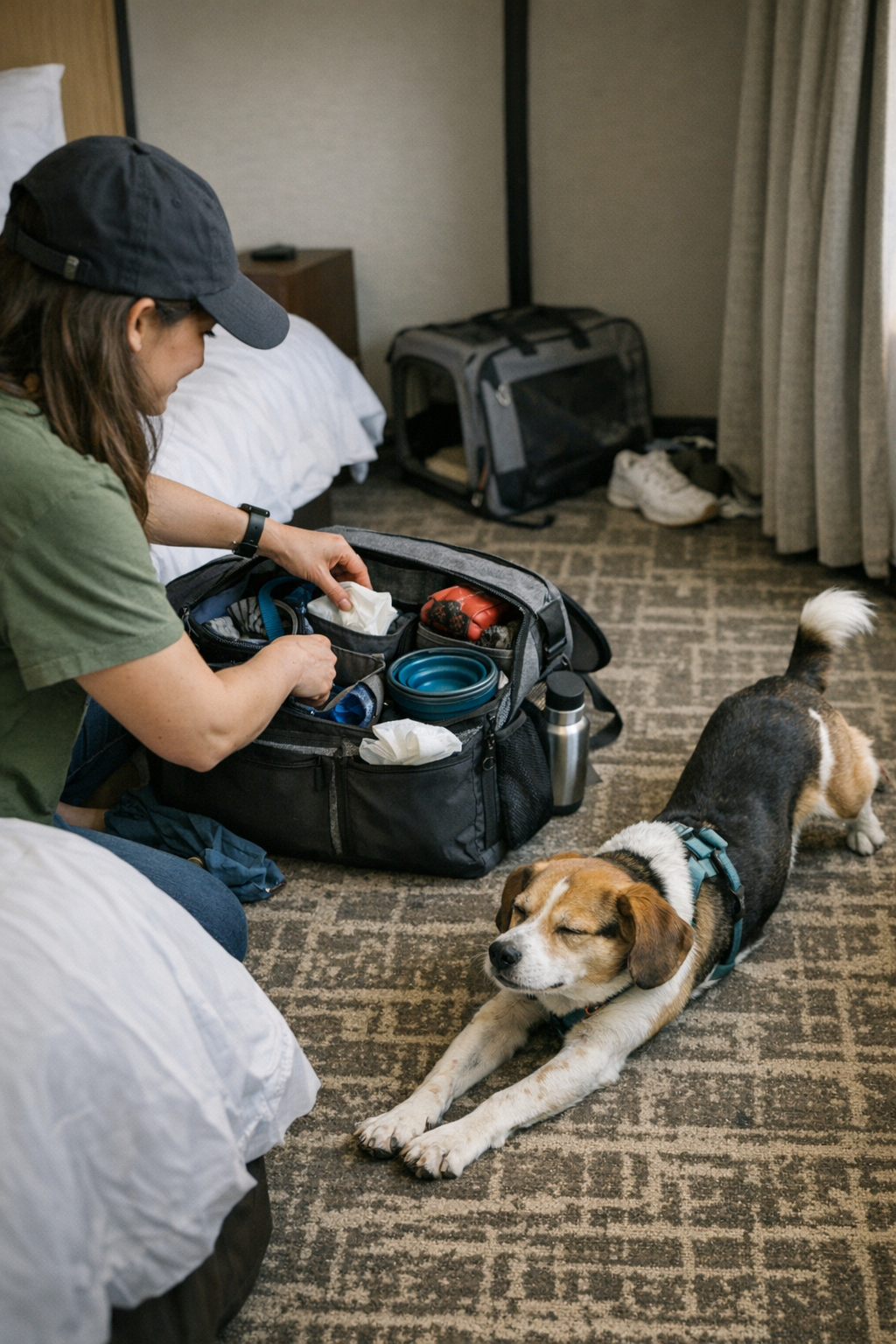
It’s always clear right after we arrive: that small, easy movement as my pet stretches—finally relaxed in a new place. After hauling everything inside, I notice how much the setup between curbside and the hotel door matters. Lately, I can spot the difference faster: the feeling shows in those small delays—the awkward search for wipes, the leash tangled on a bowl, the beat of my pet waiting as I adjust items that seemed “set” just an hour before. The bag sits by the entry, everything supposed to be in its place. But the real test isn’t the neat first setup—it’s the drag that creeps in after the third quick stop.
The Friction Creeps In
You notice it after a few trips.
Pet travel bags always promise order—bowls tucked neatly, wipes zipped securely, leashes clipped tight. At first, everything holds; compartments feel intentional. But with each stop, something small shifts: wipes slide under soft toys, the leash wraps itself around a water bowl, and the quick motion you intended to keep starts to slow.
It looked fine at first.
I don’t expect chaos, but organization doesn’t help if a wipe isn’t there when I reach, or if a restless pet waits while I dig through the same compartment I just packed perfectly that morning. The more times we replay the process—bag to car, car to hotel, hotel to lobby—the more I feel how the setup either supports us or quietly gets in the way.
When Readiness Isn’t Enough
The tension is so ordinary I almost missed it: a bowl stuck at the wrong angle, the leash caught behind a zipper, a cleanup pouch nowhere to be found just when I needed it. It happens because most pet travel bags aren’t designed for the real back-and-forth movements—repurposing the pack on the fly, fast grabs for wipes while seated, clearing a carrier mid-entry.
That’s the part that kept coming back.
A setup can look impressively sorted when nothing’s moving. But in use, the deepest layers of “organization” fall apart the moment two items compete for the same space or a bowl blocks quick access just as we’re ready to move again. The small loss of flow—my hand slowing, a pet shifting, a delay in the doorway—adds up. Over time, neatness matters less than easy access. That slipped in not from one messy moment, but a string of little pauses hitting the same points on every trip.
Finding a Return Point
The closest I’ve come to smoothing that out was after switching to a bag with a dedicated, anchored pouch just for wipes, placed seat-side. I stopped hunting. Instead, my hand reached and the wipes were there—untouched by bowls or chews—even when the rest of the bag tangled itself.
Each return to movement felt easier to repeat.
It wasn’t a magic fix; it was structure doing invisible work—a small separation that, across multiple stops, kept routines from fraying. My pet learned, too. She stopped glancing back as I sorted, trusting the flow to start sooner. It’s a quiet improvement, but it changed how each trip unfolded, giving us both an earlier, easier breath on arrival.
For setups that last beyond the first hotel room, it’s usually this: structure that stands up to repeated use, not just a tidy appearance.
For anyone adjusting their own routines, I’ve kept coming back here when planning the next trip: http://www.pawgotravel.myshopify.com



