When Travel Bags Lose Their Calm in Motion
Pet travel setups show flaws after repeated stops; separating quick-grab items from other gear keeps motion smooth and restarts easy.
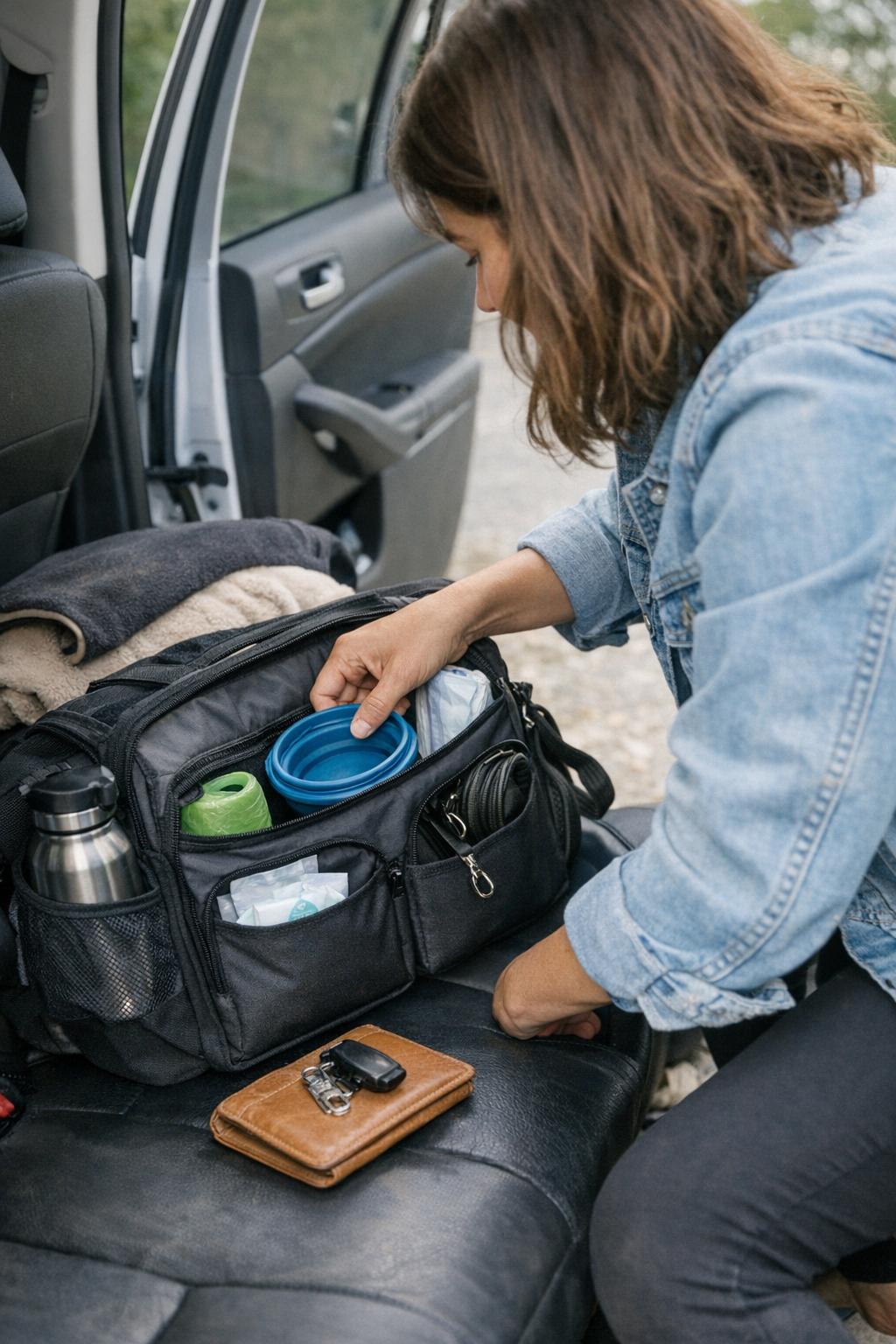
There’s a moment, not always at the start, when a pet travel setup actually meets the reality it’s designed to handle. You’ve prepped the bag, zipped everything neatly, laid out bowls and comfort items where logic says they should go. It looked fine at first. But the real difference, I noticed, didn’t happen in the careful packing at home. It showed up after three or four actual stops: the awkward shuffle, that small spike of frustration when a cleanup pouch vanished beneath a dog blanket, or when a leash tangled over part of lunch.
After the Second or Third Stop, Order Breaks Down
You notice it after a few trips—what felt efficiently organized on the living room floor becomes slow and slightly clumsy in motion. At a park exit, there’s my hand pausing on the zipper, reshuffling wipes beside a snack pack and leash handle, trying to fish out a single waste bag. Seat-side, something you need always slips just out of reach.
The handles still hold up, but the flow gets stuck. The reason quietly resurfaces at every pause: the layers designed for structure blur together after each quick toss or grab. All those bright pockets start sharing the same overcrowded space, and the frustration isn’t in the packing itself—it’s in returning to movement when you need items separated, not nested.
When Separation Outweighs Neatness
That’s the piece that kept showing up. Organization doesn’t mean quick access if pockets cram too much at once. Early on, I kept comfort items, treats, and wipes all zipped together—everything in place, nothing sticking out. It made sense standing still, but in motion, small tangles formed. Every time I reached for a wipe, I had to move a bowl. Every time the leash slipped away, it took extra time to find waste bags.
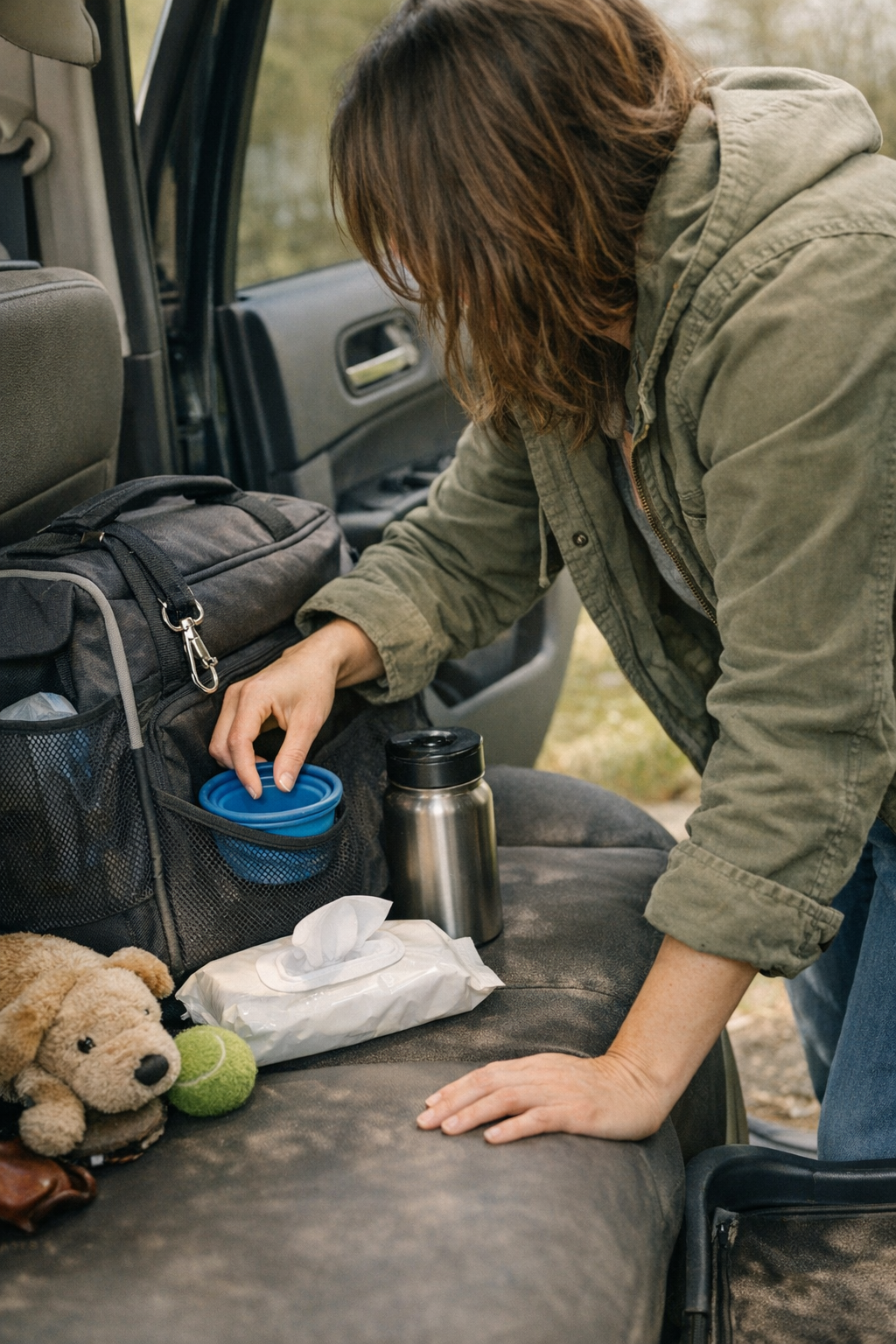
One quiet change—splitting fast-grab items and putting all cleanup and water gear in an outside pocket that opened with one hand—made more difference than reorganizing everything else combined. The tangle never got a chance to start. Even after stops, bowls and blankets stayed put, and the piece that needed to be quick stayed quick.
Routines Change When Structure Endures
A rhythm forms with repetition. If the pet bag’s layout can absorb a day’s worth of stops and doesn’t slow you down by the third or fourth round, that’s the real test. I found keeping wipes and waste bags in a separate, reachable spot meant my hands didn’t hesitate or double back. Small detail, but over the course of a trip, it changed how fast everything bounced back to ready.
Most routines don’t break from a single messy pause—they break when the setup makes you stop and fuss. When form and separation hold through repeated movement, momentum becomes easier to trust. The bag waits by the seat, not as another thing to manage, but as the hand-off that keeps restarts simple.
Sometimes what seems perfect on first pack turns out to be the quiet reason a trip feels smooth, or doesn’t.