When Travel Bags Lose Their Rhythm Between Gates
Carry-on setups that seem neat often fail during repeated transfers. Quick-access pockets reduce disruptions and keep travel smooth.
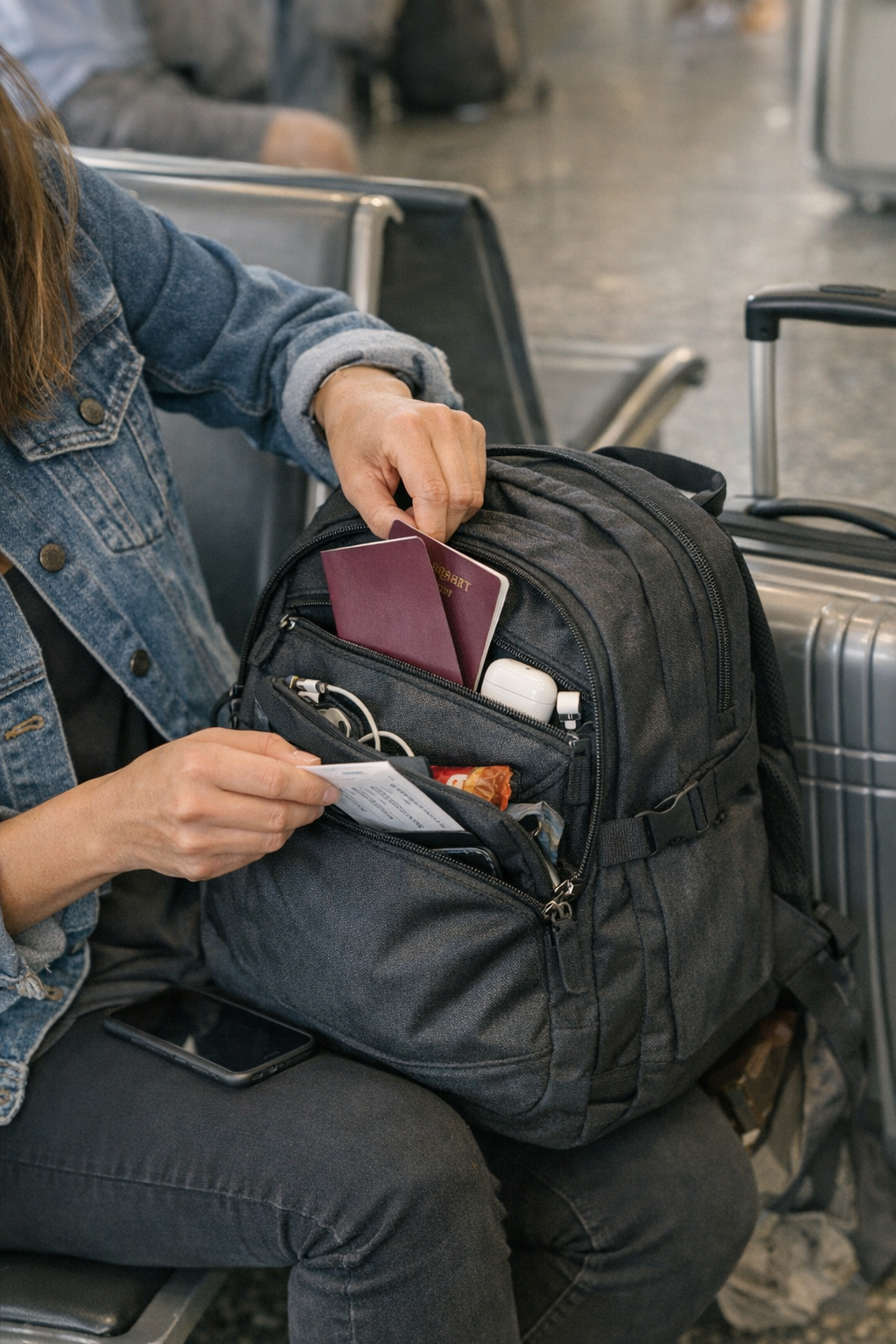
The Moment a Carry-On Stops Working Isn’t When You Pack It
The first sign your carry-on isn’t working isn’t a big spill or disaster. Instead, it’s the small interruptions: a stuck zipper, rifling through a pocket, or realizing your passport isn’t where you expected. I used to think overpacking or the wrong bag caused my issues, but the real trouble shows during airport transfers—between gates, not when the bag is neatly zipped shut.
Where Neatness Starts Falling Apart
At home, a perfectly packed bag feels like control: cables bundled, toiletries in pouches, documents lined up in sleeves. Closing the main zipper feels like being ready for anything.
But that calm shifts the first time you need your passport quickly and it’s buried under layers of organizers. Or when a snack jams the outer pocket, pushing your power bank out of reach. After a few gate changes, what looked orderly slows you down—small frustrating moments adding up at every checkpoint. That’s the feeling that repeated itself: interrupted motions multiplying with each access.
The Repeat-Test You Don’t Pack For
It’s not a single big search that disrupts you; it’s constant shuffling. Standing at security, juggling items or returning them to the wrong pouches. At the gate, fumbling for a charger when your phone’s almost dead. Even simple routines strain: lifting the bag from the overhead bin, rifling through a wedge of mismatched organizers, or grabbing headphones blocked by something packed for comfort, not quick access.
By the second or third gate change, my organized setup started coming undone. Things seemed settled at first glance, but friction crept in—enough to force me to juggle or shove items just to keep moving. This subtle breakdown repeated with each transition.
The Hidden Trade That Actually Helps
Eventually, I simplified. The change was small but brought noticeable relief: the essentials I actually need between security, gates, or seat shifts went into the flat outer pocket. Not stacked, not behind zippers—just there. Fewer loose items, less anxious unpacking. A tiny tweak in routine, repeated dozens of times.
It didn’t fix the bag perfectly, but it returned momentum—less time reordering pouches, fewer misplaced items, less pressure during the trip. The real difference wasn’t a brand or a system, but a bag that keeps your hands mostly free and your flow less interrupted, despite the constant unpredictability of travel.
If you want to explore how these setups evolve, I found some quiet ideas tucked away at CarryOnSupply.



