When Travel Breaks Turn Into Quiet Moments of Relief
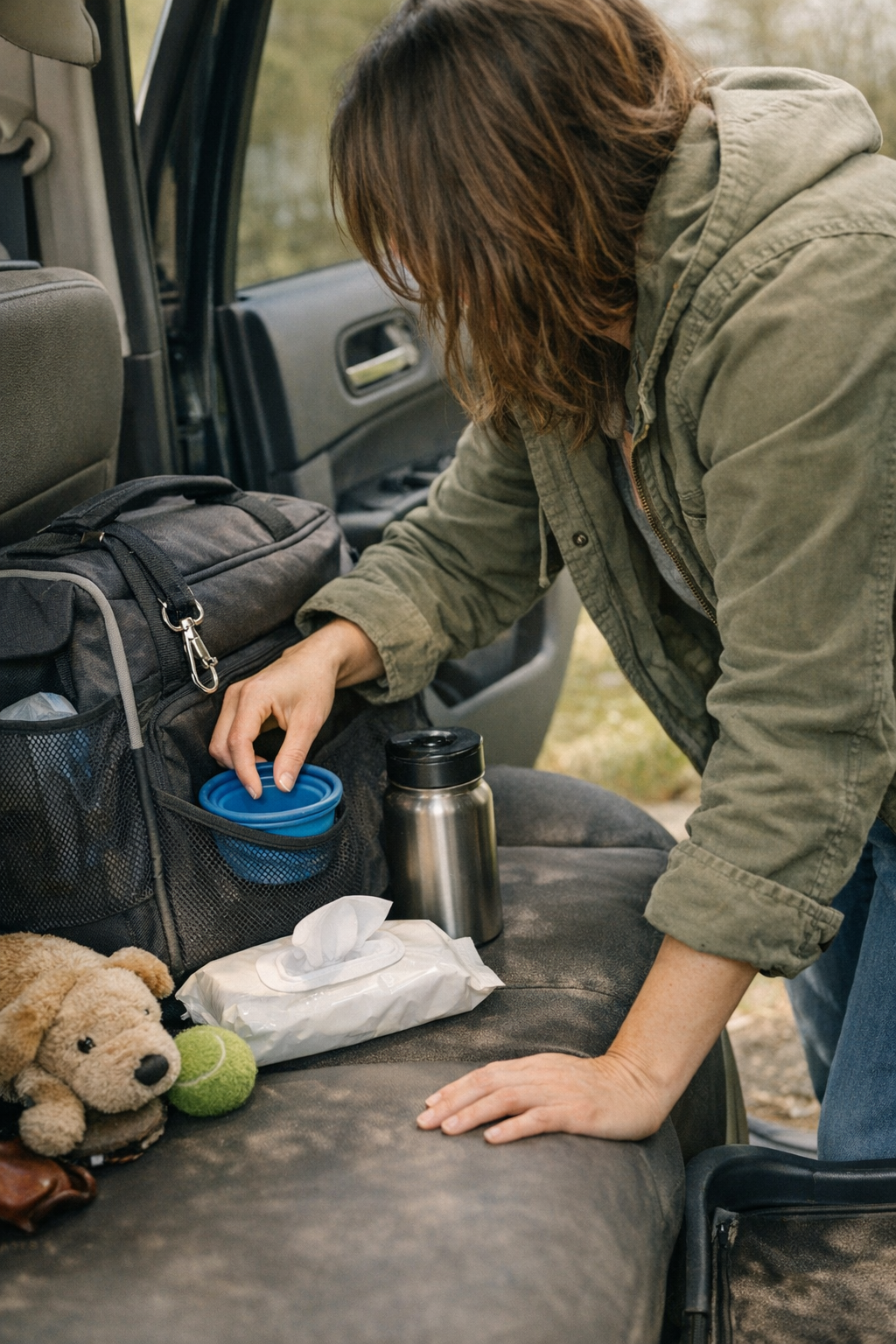
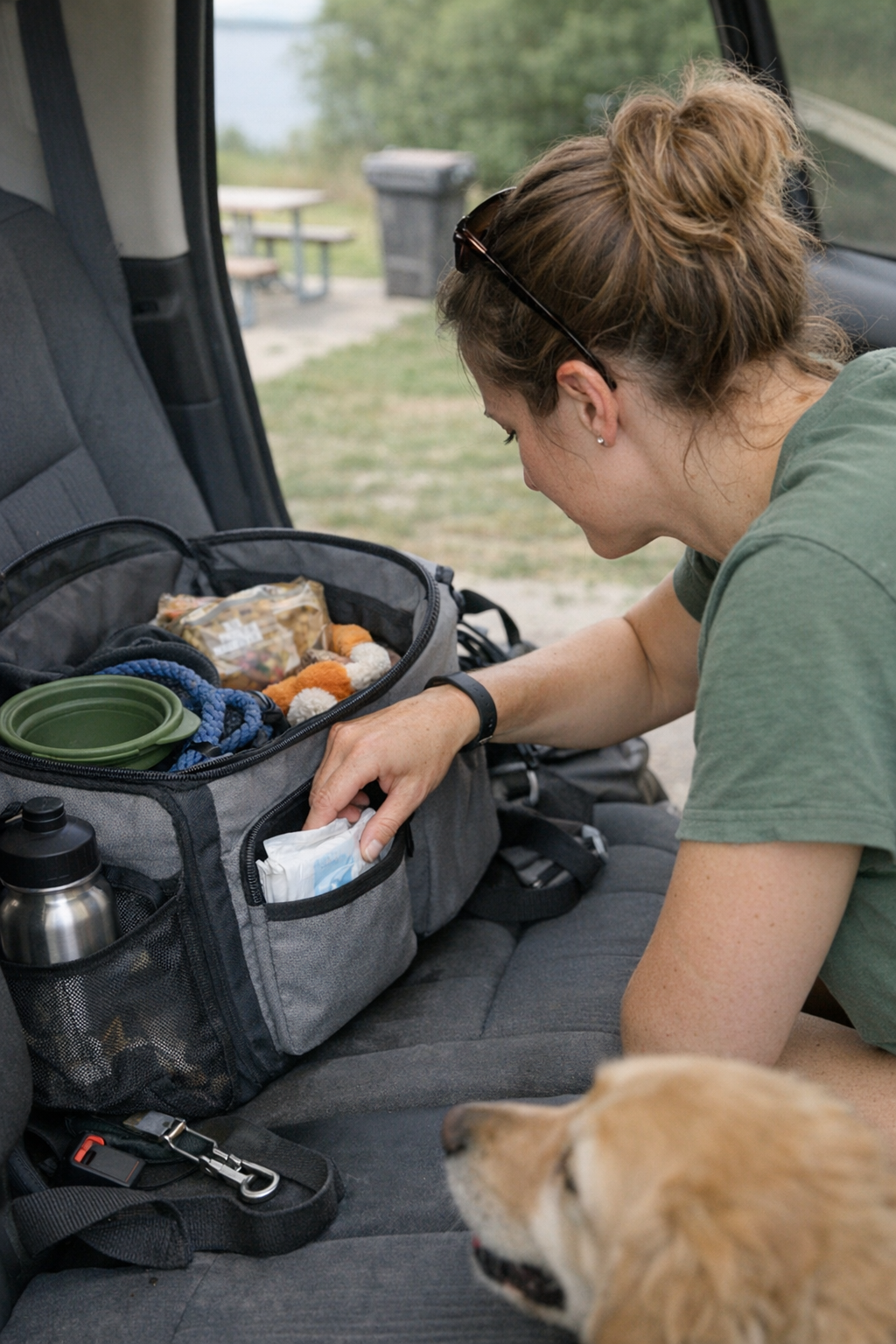
Clear separation of pet travel gear into dedicated pockets keeps rest stops fast, reduces friction, and ensures smooth repeated use.
It’s not at the very start of a trip that a pet travel setup shows its real story. The first pause is quiet and still orderly; the early organization holds together. But after a few rest stops—dog shifting at your side, a seat pocket now slightly askew—the subtle patterns begin to surface. The neat readiness packed at home meets the realities of movement: items slide, overlap, wipes get nudged behind snacks, and reaching for essentials means disrupting something else. It’s not dramatic, but by the third time you dig past a tangle of leash, bottle, and toy for sanitizer, a clear truth settles in. Somewhere between stops, the setup stops being about how “ready” it looked at first and becomes about how quietly it lets you keep moving.
The Accumulation of Small Interruptions
You start to notice after a few trips.
Every pause begins with calm: the zipper’s reassuring pull, a pocket’s remembered shape. But then the routines shift. Quick grabs for cleanup items collide with the bowl you hurriedly packed away last stop, wipes hide beneath comfort items instead of mess essentials. What felt perfectly prepared at home now creates friction—small, but repeating.
That’s what stuck with me. Each time I reached for something meant to be quick, I got caught in that extra moment—the one where a misplaced item turned a thirty-second break into two minutes of low-level problem-solving. This effect isn’t obvious on paper, but on the road, it piles up in between stops.
How Boundaries Hold Up Under Movement
Some bags look organized, every item zipped and slotted neatly. But the real test comes after the second, third, or fourth reset. These cycles of movement reveal which parts of the layout hold up, and which dissolve into clutter under pressure.
Once, I kept wipes and bags together in a side pocket, assuming proximity would speed things up. Instead, after a few stops it became a small scavenger hunt—the wipes slipped under a collapsible bowl, a leash pressed awkwardly against the pile. With one hand on a restless pet and the other rooting through the pocket, the structure felt less like support and more like an obstacle.
The smallest change made a difference: dedicating a single pocket just for cleanup—no snacks, no toys—meant each pause stopped becoming an extraction challenge. That pocket stayed half-empty and instantly ready. The ease of a one-motion grab became the reset I leaned on each time.
Routines That Outlast Aesthetic Order
The shift I noticed wasn’t about making everything look perfectly ordered, but whether the calm I established in the kitchen lasted beyond the first few hours of driving. The best setup was one where I never had to second-guess where to reach—a bag that absorbed disruption without needing rearrangement at each stop.
Over time, the practical improvement showed up in small, repeated moments: grabbing a wipe without shuffling other pockets, not hesitating on cleanup, handing my dog a treat on the first try because snacks hadn’t migrated behind chargers or water bottles. What looked prepared at home finally began holding steady on the road.
Of all the lessons, this one landed quietly: small physical boundaries let you reset faster, and those uninterrupted moments of simply moving on are what actually endure.
If you ever want a closer look at the kinds of setups that shape those routines, I’ve found one of the more thoughtful options here: http://www.pawgotravel.myshopify.com