When Travel Buys Turn Packing Into a Daily Struggle
Travel shopping breaks packing systems as new items clutter quick-access areas, slowing retrieval; using one overflow pocket keeps access smooth.
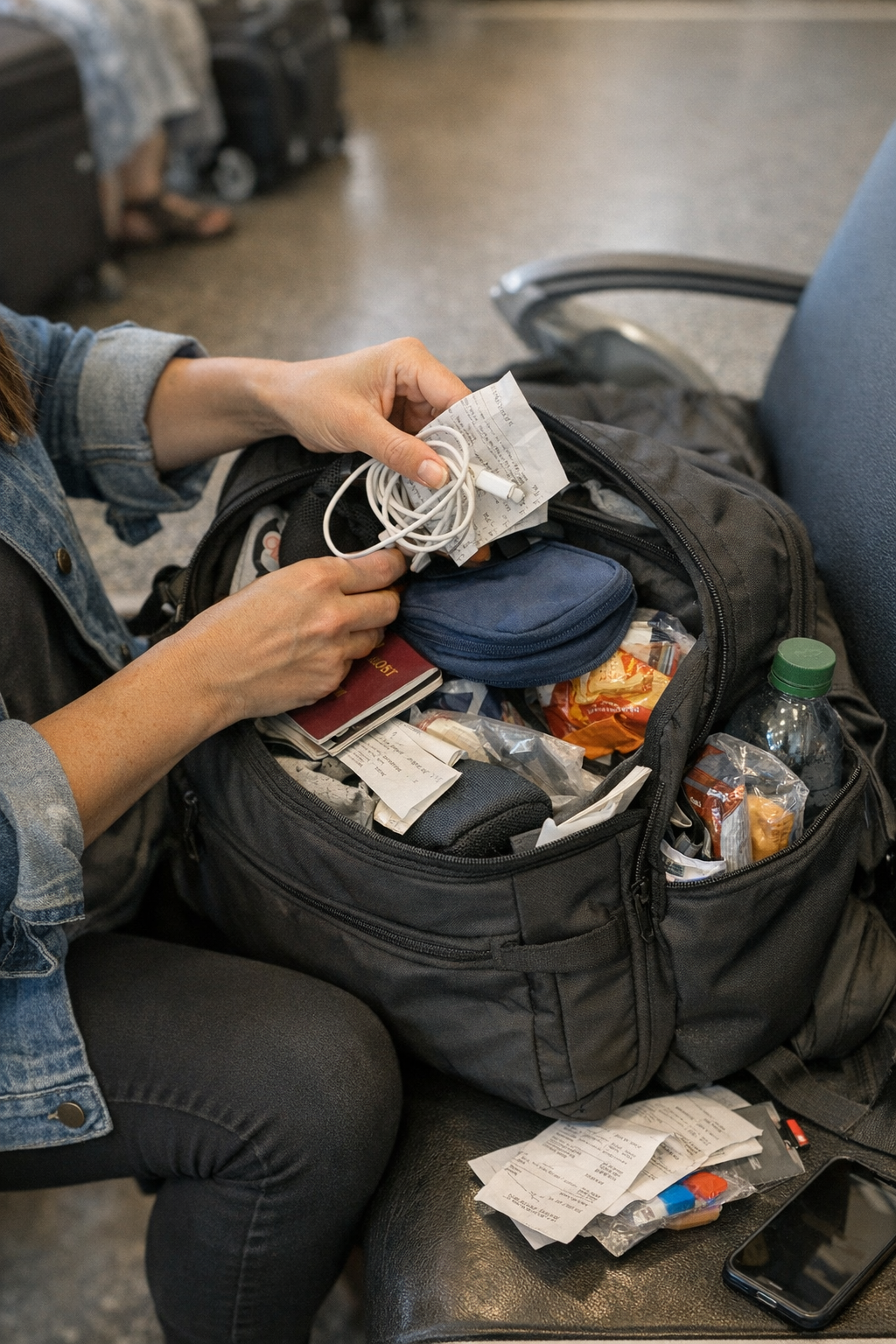
There’s a moment every traveler knows—that subtle shift when a carry-on that once moved in a smooth rhythm suddenly starts to resist. The systems you set up at home, with cables tucked neatly, sleeves crisp, and essentials easy to reach, begin to feel less reliable as soon as you add a last-minute charger or a travel snack. Things that snapped into place hours ago now slide, jam, or overlap just when you need quick access the most. I really noticed this the second time through security, with a line growing behind me.
You see it after a few airport transitions. What starts as a harmless extra cable, a magazine grabbed last-minute, or a stray bottle quietly rearranges the whole setup. It’s never about the bag being too full to carry—the problem is access. Reaching for my passport would land me on a tangle of extras: receipts curled around chargers, boarding passes slipping beneath snack wrappers. The zipper catch suddenly matters. Each reach becomes a rushed mini sort—the flow thrown off in a public, hurried moment.
At first, it looked fine. But as the trip went on, quick-access pouches, document slots, and slim outer sleeves went from streamlined to sticky, sometimes within just two gates. The bag still looked organized on paper, but every reach felt heavier, slower. It was humbling to realize that pouches designed with perfect logic at home ignored the chaos of actual in-transit movement. Small things made the difference—boarding passes mixing with new travel stubs, a single new cable sliding across a pocket and blocking everything else. My carefully planned layout became a slow process, not because of poor design, but from accumulation.
That slow, creeping disruption kept coming back. There isn’t a clear moment when the system breaks, just a gradual overlap, the way things don’t quite return to their starting place. The fix wasn’t to uproot everything and start fresh, but to quietly give new items their own dedicated space. I began using one side pocket exclusively for last-minute buys, no matter how small—charging cables, snacks, receipts—all went there and nowhere else. That small change shifted everything. The core organization stayed intact; essential pouches kept their logic. Minutes shaved off at security and when hunting for overhead-bin items made a noticeable difference on repeated trips.
This isn’t something you see in those neat packing photos. But over a few flights, dedicating a specific overflow spot changed the pace of the trip. Sometimes the simplest move is deciding where the excess should live.
If you’re curious how other people set up their carry-on worlds, there’s a quiet corner here: http://www.carryonsupply.myshopify.com