When Travel Chaos Meets a Curious Dog’s Needs
Repeated stop-and-go pet travel reveals if your bag reduces friction; midline access for key items speeds resets and reduces mess.
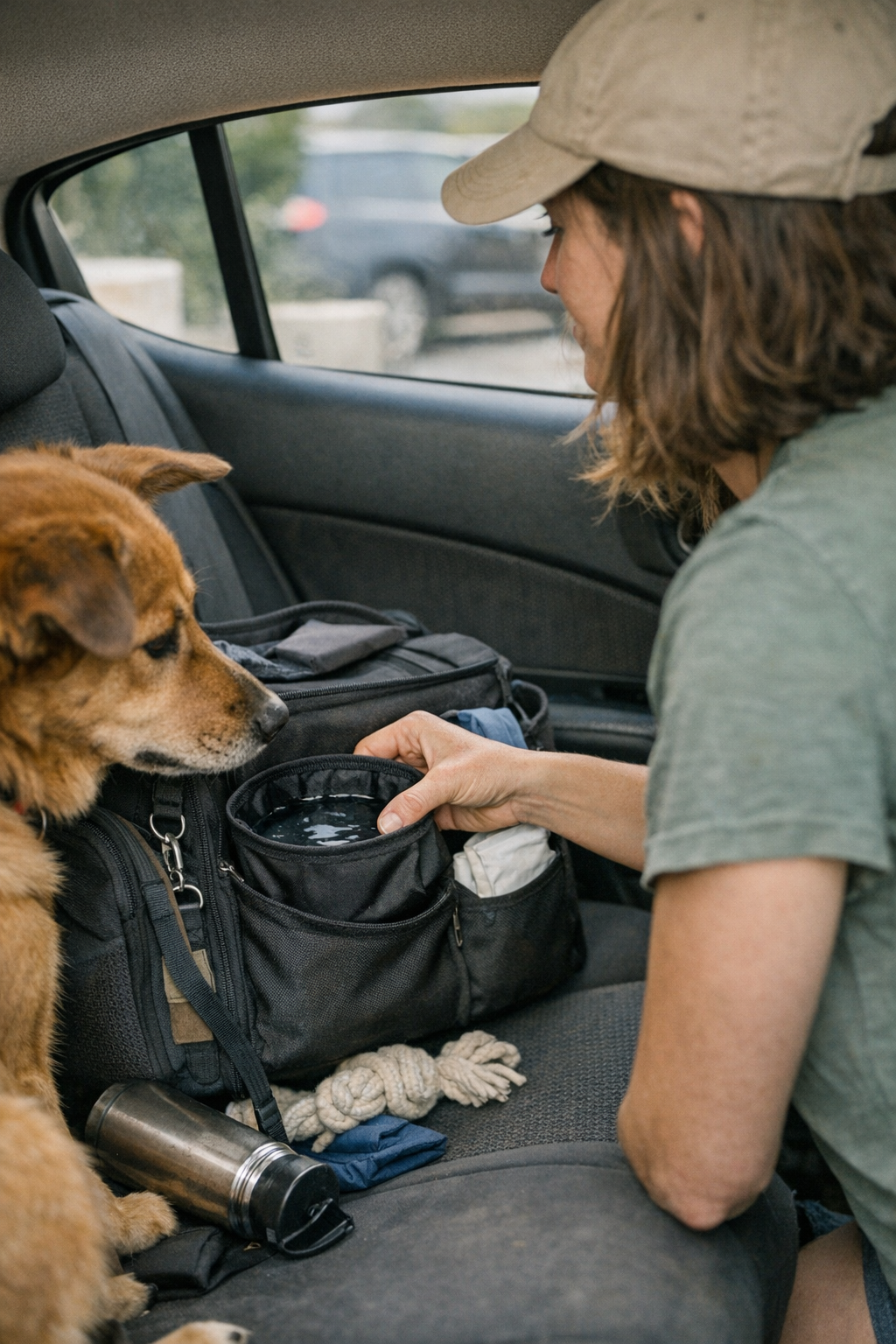
There’s a moment during a trip—usually when you’re already buckling the leash back on or digging for wipes—when you realize your pet travel kit isn’t working the way you hoped. At home, everything feels sorted: bowls nested neatly, leash stowed, wipes zipped into their pocket. But after a few hurried stops, somewhere between a curbside water break and an untimely accident in the backseat, the system quietly starts to fail. What once felt structured turns into just another thing to wrestle with, adding small delays right when you expected to be moving smoothly again.
The Friction That Hides Until You Move
You notice it after a few trips.
There’s a surprising difference between being organized and having actual ease on the road. At first, it’s just minor annoyances—reaching for a treat and coming up short, or the bowl getting blocked by a toy you repacked at the gas station. Then it registers as a pattern. What made sense before leaving becomes awkward in motion: layered pockets you need to empty just to grab what your dog wants, or a cleanup pouch that’s always buried when you need it most.
That mismatch kept coming back.
What I expected from a “prepared” setup slowly clashed with reality—digging for things out of order while my dog waited impatiently. Over time, those mismatches built up into a kind of clutter, even if the kit still looked calm at a glance.
The Subtle Tax of Restarts
Each stop, start, and reshuffle has its own cost.
A quiet pause becomes a mini scramble. First, the leash clip slips under a blanket. Next, wipes slide just out of reach. Nothing dramatic, just repeated interruptions that gradually turn the seat-side storage into a makeshift holding area. Getting back on the road takes longer than it should.
I found myself mentally tracking the usual offenders—items I always needed in a hurry but never kept close enough. The slow realization: it’s not how neat the kit looks, but whether you can grab what you need in one smooth motion, not three.
Cleanup routines especially highlight this tension. If wipes are buried, every small mess takes extra shifting and drains patience—not just mine, but my dog’s too, who senses the delay. Equipment that worked fine at departure ended up slowing everything once the trip was underway.
A Small Shift That Changed the Rhythm
Eventually, frustration gave way to a simple experiment.
Instead of reorganizing everything, I moved the three items I grab most—the leash clip, wipes, and travel bowl—into the same spot, side-by-side, with nothing in front of them. No extra pockets, just a straightforward reset of their position. What I didn’t expect was how much this cut that restart drag. Suddenly, it felt like the bag understood the trip itself, not just how it looked on the hallway floor before leaving.
The rest of the kit stayed a little messier, but moving on became easier. Each reach was smoother, the seat-side arrangement finally synced with the dog’s unpredictable energy. Overlap lessened, stops blended back into the drive, and the slow comfort of feeling ready returned—even if things didn’t stay tidy for long.
Sometimes function really does follow the path you’ve worn into it, not the one you planned out beforehand.
If you’re curious where that shift led next, some of what I’ve settled on is still tucked away here: http://www.pawgotravel.myshopify.com



