When Travel Demands More Than Just Neat Packing
The light-day packing method streamlines carry-on organization by minimizing layering and segmentation, improving accessibility and reducing travel friction.
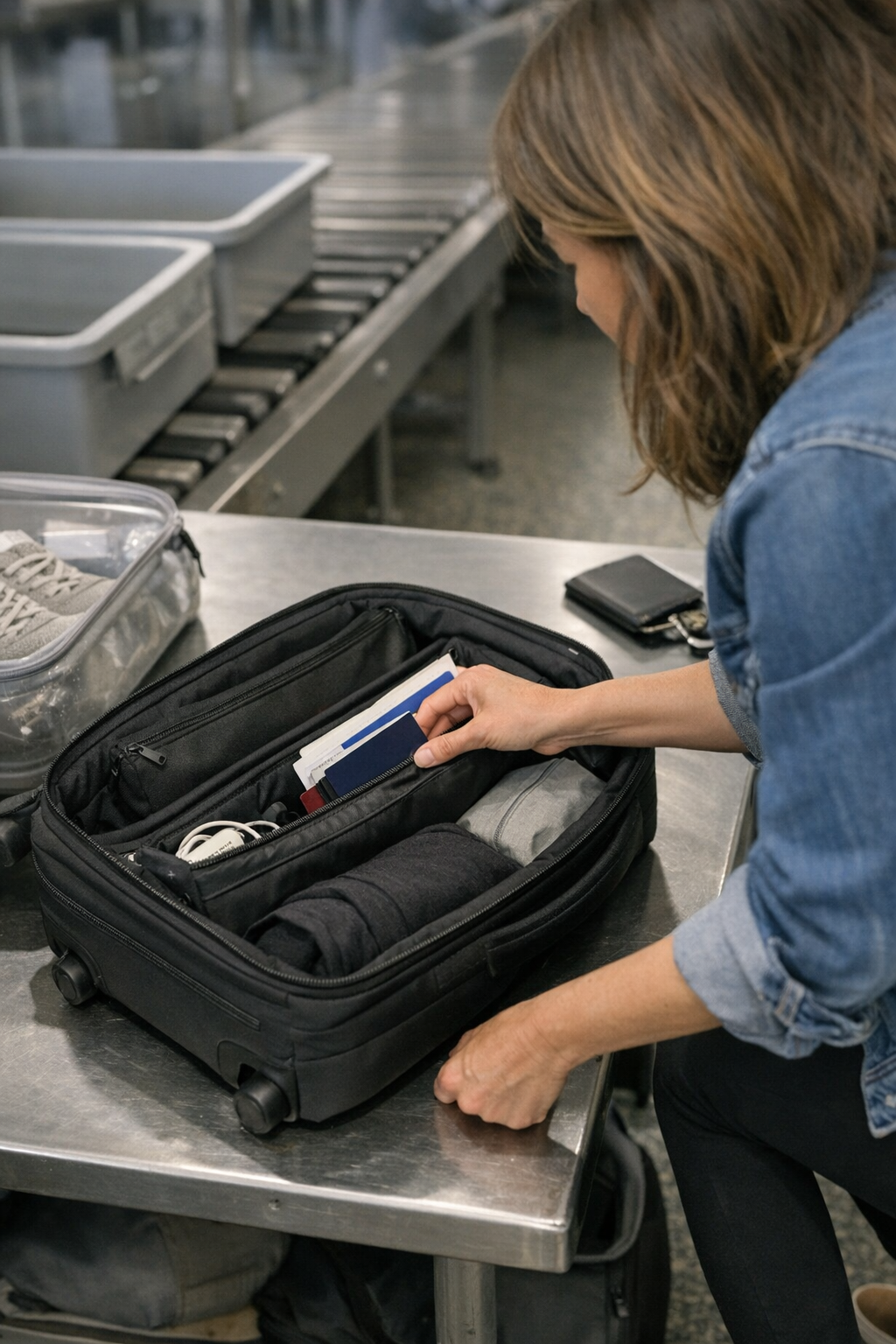
It’s usually the third or fourth stop that gets you—not when you first pack, or even at the initial checkpoint, but later, when the bag’s system starts slowing down in ways you didn’t expect. You reach for your boarding pass and feel a pouch blocking the zipper. Or you have to lift two layers just to grab your headphones. Even a bag that looks tidy can feel like a series of nested gates, each one slightly misaligned with the way you actually move.
You don’t notice the friction at first. But the difference keeps showing up: neat stacks slide forward and block quick-access pockets, organizers that seemed perfect begin dragging at security bins, and eventually each “organized” zipper becomes its own small puzzle. It’s not that you can’t find things—it’s that finding and then putting them back adds extra seconds you don’t have. This isn’t an aesthetic flaw. It’s a real travel problem—a structure that looks tidy standing still but doesn’t move well when you’re on the go.
When Layers Multiply, Movement Slows
At first, it looked fine. A slim tech pouch, one for toiletries, a sleeve for documents—all stacked neatly to keep everything separated. But after a couple of transitions, what felt organized starts to snag. The outer pocket you labeled “quick access” ends up hidden behind a vertical stack that shifts forward every time you squeeze into a new seat.
You notice it after a few checkpoints. Every movement—tray to bin, seat to aisle—comes with small hiccups: repacking items that slipped out, fishing under a pouch for a boarding pass, trying to return a pen to the same spot you pulled it from a few minutes ago. The routine adds drag. By the time you’re arriving at the second gate, reaching for your boarding pass feels less like a quick grab and more like a multi-step routine that’s always one move too many.
That’s the part that keeps coming back. Looking organized at the start doesn’t always mean moving easily when it’s time to travel.
The Quiet Value of One Clear Path
Switching from stacked organizers to a flatter, lateral divider changed more than the bag’s look—it changed how it behaved in motion. Instead of crossing over multiple layered pouches, everything now sits close to the surface where you need it. Documents rest right inside the main compartment, chargers lay flat off to the side, never blocking zipper paths or hiding passports when time counts.
You don’t think about it much until the bag’s passed through a few checkpoints. That surface-level setup means one-motion access—no reshuffling, no juggling pouches during security checks. The bag stays in order, even after fast hands and quick repacking.
The small detail? Carrying only the essentials for this stretch—one pouch, one divider, nothing extra—means less time repeating the “why-can’t-I-find-that” moment. It’s a trade-off: sacrificing visual stack neatness for a flow that keeps up with real travel.
Function Beyond Looking Organized
The real test isn’t at packing or even the first checkpoint. It shows up three stops later—in a crowded security line or a narrow boarding aisle—swapping trays while juggling your phone. That too-deep pouch or blocked pocket then costs real seconds. The tidy look fades, and how the bag behaves matters far more. Overlapping compartments add steps to a repeated sequence, sometimes under pressure, marking the bag as ready—or not—for travel at speed.
The setup that holds up keeps retrieval easy and the return path clear. After making the shift, moments of friction almost vanished. There’s less reason to pause and try to remember where everything was supposed to go.
The bag just works, quiet and ready, with one less reason to reorganize on the move.
For a more detailed look at this kind of packing setup, visit CarryOnSupply.



