When Travel Demands More Than Just Neat Packing
Even a tidy carry-on creates friction if its setup can't adapt to travel; prioritize access to avoid overlaps and ease retrieval trip after trip.
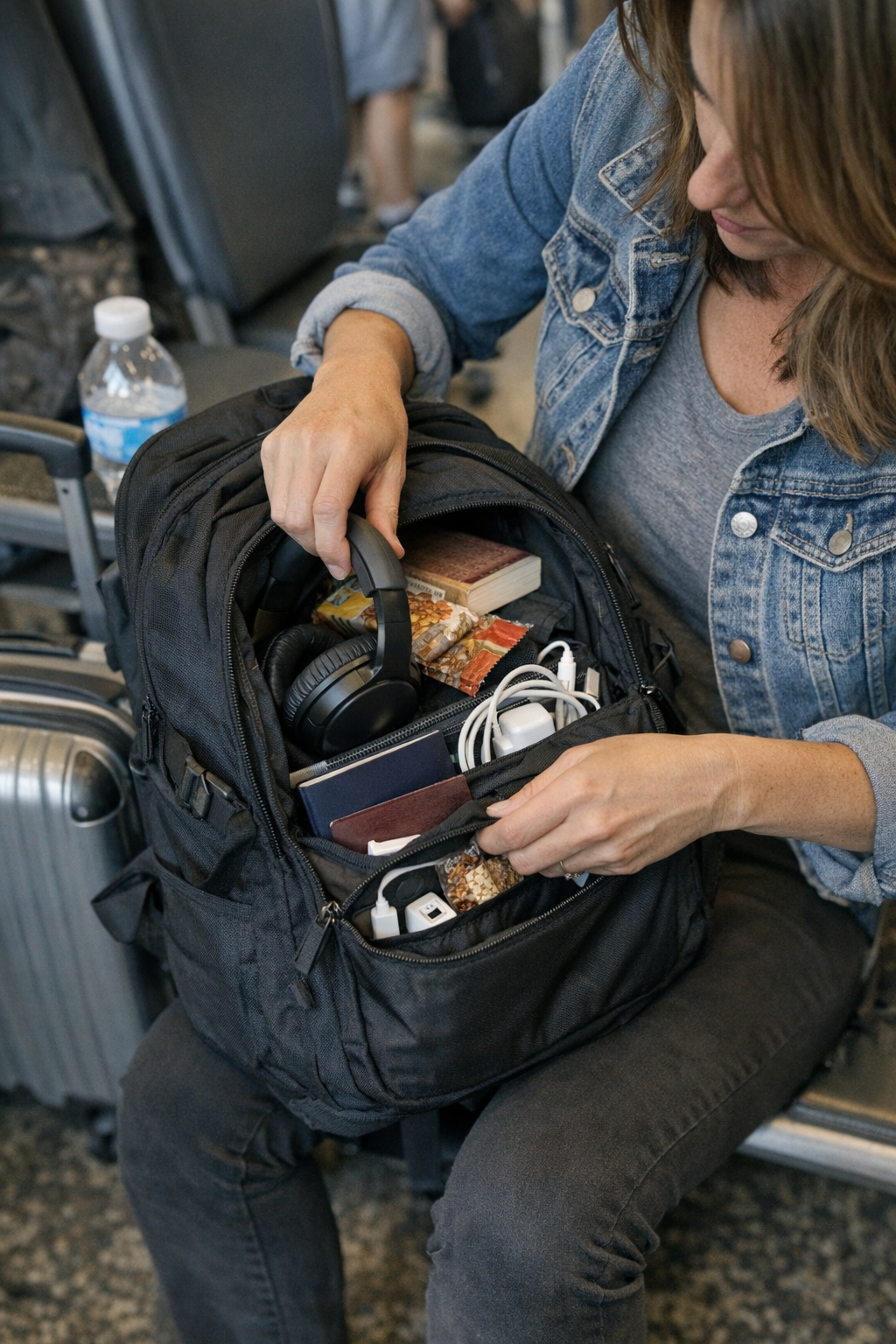
Some of the most revealing moments with a carry-on come halfway down a boarding line, palm pressed against the bag, hunting for a passport without wanting to unpack everything. Standing there—not quite moving, not quite still—it’s easy to remember how organized things looked back at home: zippers closed, pouches sorted, every item in its place. But travel involves a series of small interruptions, and the setup that seemed airtight under a bedroom lamp quietly unravels as the journey repeats itself.
How Order Fades in Motion
You start to notice it after a few transitions. A tech sleeve unzipped quickly at security. The outer pocket, once flat and tight, now bulging with things grabbed “just briefly.” It’s not dramatic—just a growing discomfort, a drag, that worsens with every reach. The baggage you engineered for a perfect starting point subtly resists the mid-journey shuffle. Lifting the bag to tuck it into an overhead bin, sliding it under a seat, hunting for the only working charger while someone moves behind you in the aisle—things begin to feel less controlled.
That problem keeps coming back. Not the big theory of packing, but the simple reality of access: reaching for a familiar item and finding it blocked or disordered by the last quick grab. A pouch meant for headphones returns half-zipped because seatmates were stirring. Document wallets slip beneath a tangle of cords. What seemed like a solid system dissolves—not all at once, but through dozens of small, frustrating motions.
The Difference Between Looks and Use
For a while, I chased that magazine-spread kind of order: single-layer organizers, tight mesh pockets, color-coded pouches. On paper, everything was visible and sorted by category. It looked good at first. But the gap kept growing as soon as I needed the same item twice within an hour. Fine-sorted pouches overlap once in regular use. Tech gear, snacks, and chargers share space with documents. By the third rummage of the day, the organization feels like just another obstacle.
It’s striking how a layout that photographs well at home doesn’t work with the blur of reaching, stowing, grabbing, and returning in transit. At its worst, the carry-on becomes a friction machine—multiplying every small inefficiency until the actual trip—the in-between moments—feels heavier than it should.
One Change After Enough Movement
Somewhere between flights, I tried organizing by how often I reached for things, not just by type. The repeated-reach items—chargers, a granola bar, IDs—earned their own easy-access pocket: one I could open without fishing through less-urgent gear. Everything else packed deeper, away from the path of constant hands. It wasn’t revolutionary, but it was real: organizing the bag around how I interacted with it, not just how it looked on a packing list.
Over time, that single-zip motion mattered. I found myself less tangled carrying things between tray tables, less likely to scatter headphones across the seat. There was less friction—in movement, mood, and that mild anxiety that comes from repacking a bag just to find a document. The outer pocket developed a slight sag from use—the mark of a bag shaped by honest, repeated movement, not just visual order.
The truth is, the best setup bends to you long after the first departure. Repeated use exposes what works and what quietly slows you down. For anyone interested, I keep coming back to CarryOnSupply, where many of these ideas first took shape.