When Travel Demands More Than Just Neat Packing
A carry-on prioritizing quick-access essentials in outer pockets prevents slowdowns, ensuring smoother movement through travel routines.
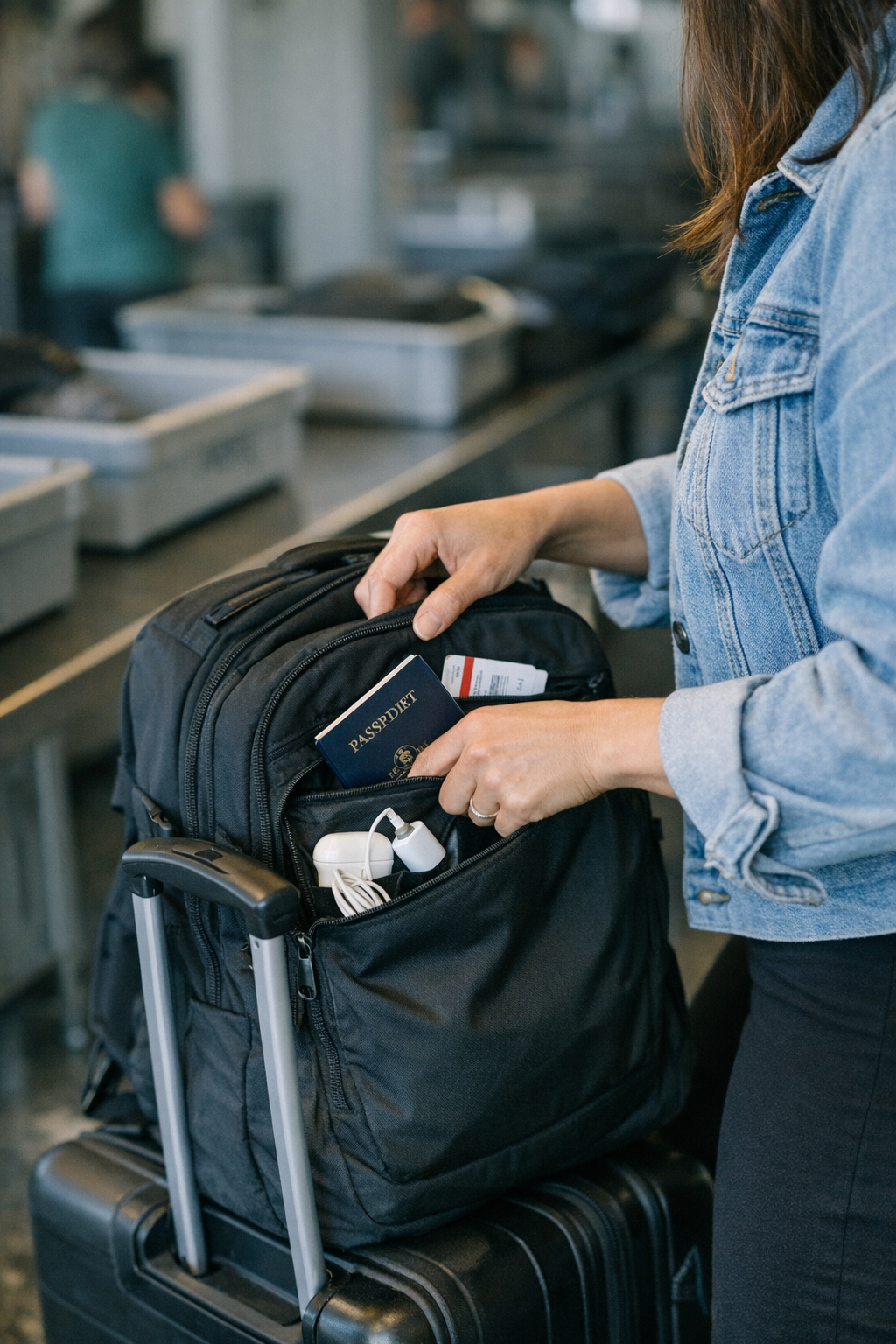
At first, it really did seem sorted. The inside of my carry-on was like a tidy room—everything zipped and compartmentalized, every cable in its pouch, all the documents exactly where they should be. I remember feeling relief while packing at home, convinced this meant I’d move smoothly through airports and stations. But there’s a big difference between what stays controlled on the floor and what actually supports you in motion. You notice that once you start switching between checkpoints, seats, and terminals.
The first clue arrived in a security queue, reaching for my boarding pass. Everything was where it “belonged,” only I had to dig through an organizer, unzip a second pouch, and shuffle the bag’s contents just to retrieve one small item. The outside remained sleek, almost untouched, but inside, layers collapsed, items shifted, and the tidy setup started costing me time. That pause—wrestling with a system I thought would save effort—kept coming back.
How Order Turns Against You on the Move
There’s something subtle about how small slowdowns add up. In theory, each organizer should add clarity. But real travel routines—pulling documents at a new checkpoint, reaching for a charger mid-flight, grabbing earphones with one hand crammed between seats—don’t allow extra steps.
The difference showed up at the worst times. It looked fine at first, then a quick stop for a passport suddenly unraveled the careful stacking. It wasn’t just digging through pouches, but the need to repack or remember exact placement, causing tiny stalls that made the whole journey feel heavier.
After repeated use, I began to see setups that looked controlled while still turned clumsy under pressure. That tension—between neatness and actual speed—was clearest as boarding started. A small but telling moment when the bag quietly revealed where its arrangement fell short.
One Change That Changed Everything
Eventually, it made more sense to trade surface tidiness for better motion. Instead of stashing essentials deep or grouping by category, I moved the most-used items—passport, charger, main cable—into a single, easy-reach pocket right behind the front zipper. From then on, every retrieval was one step, not three.
The little rituals became less stressful. No more full-bag unzips at checkpoints. No more dividing attention between inner pouches. Over time, that front pocket developed a worn shape and a crease that made it easy to find instinctively.
It sounds small, but shaving off those repeated friction points changed the whole feel of the trip. The inside stayed less perfect, but travel started feeling lighter and much more direct.
When Frequency Matters More Than Neatness
What really worked wasn’t how beautifully I could pack, but how easily I could move. The real difference was always which pocket held the things I’d reach for multiple times. The rest became background noise.
I realized outer pockets work only when kept specific—catch-alls just add confusion. So I set firm boundaries: only place items there if I’ll grab them at least twice before bags go into the overhead bin or seat-back pocket. Everything else can stay buried, because those minor interruptions quickly make a bag feel harder to carry, no matter how light it is.
In the end, it wasn’t about perfection or how the bag looked sitting still. It was about which setup let me move easily, without negotiation, every time real travel routines forced my hand. Efficiency felt quiet—almost invisible—after that change.
For anyone curious to see what setups I’ve grown to trust, I started looking here: www.carryonsupply.myshopify.com



