When Travel Fatigue Meets Packing Reality
Restructuring your carry-on by placing essentials in quick-access outer pockets speeds retrieval and reduces travel delays under pressure.
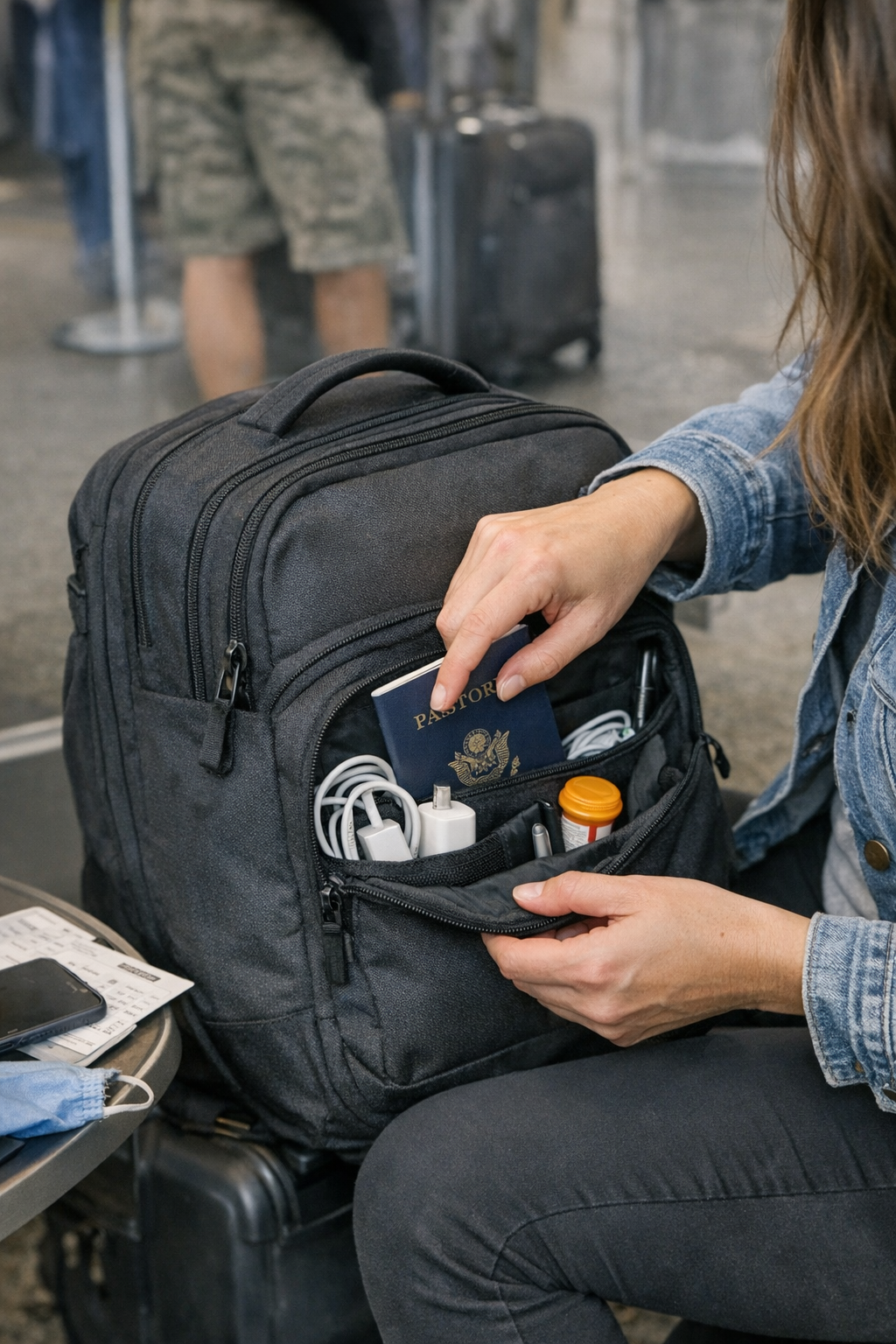
It’s strange how a carry-on can look perfectly sorted when laid out on the bed, but rarely stays that way for long. Order in the hotel room comes easily—pouches zipped, chargers stacked, tickets tucked out of sight. The sense of tidy control is reassuring. Yet somewhere between all the moving—security, boarding, and the cramped push of the return leg—what seemed organized starts showing its edges. You notice it after a few transitions: the quiet drag each time you reach for something simple—a document, headphones, medication—buried where you’d meant to keep it safe. That’s when the structure you gave your bag begins to work against you.
The Tidy Setup That Slows Down
At first, a stack of small bags and organizers feels smart. Pouches for tech, a slim folder for papers, everything slotted with intention. There’s a satisfaction in snapping everything closed, watching the inside of your carry-on line up neat. I used to like how crisp it looked—the before-photo, maybe, before the traveling really starts.
But the difference kept showing up. The spots where easy access would have mattered most—a passport at an unexpected check, a charger during a boarding delay, pills mid-flight—those “safe” spots became hurdles instead. It seemed minor; an extra unzip or two. Then, with repetition, those little delays began to feel like friction, stacking up exactly where there was no room for it.
One Move, Not Three
It only took a flight or two to see where the setup cracked. What looked good on a hotel desk became an obstacle course in front of a gate agent or squeezed into an aisle seat with someone waiting behind me. When a document slid just out of reach, or I found myself shuffling pouches for the cable I already knew I’d need, that neatness faded fast.
That was the part that kept returning: reorganizing after a quick grab, misplacing the same pouch twice, feeling scattered for longer than I wanted. It’s never a disaster, just an accumulation—the bag that looks “together,” but doesn’t move with you. What fixed it wasn’t more sorting, but moving the few must-reach items—a passport, medication, a charging cable—to one outer pocket, always ready in a single motion, not three.
When Movement Matters More Than Looks
What started as a quest for order became a lesson in momentum. Traveling isn’t about how carefully everything fits at the start. It’s about the small, repeated movements—removing a bag at security, reaching overhead for the bin, sliding back into your seat, handing over a document when you’d rather not unpack anything.
There’s a quiet sort of trust when a setup works in those moments—the bag opens the right way, the pocket fits what you need, there’s no delay or extra digging. The outward neatness stops mattering. Instead, you care whether each item answers the call without interrupting the trip. Over time, you start packing not for the photo, but for the real, repeated actions on the road or in the air. That’s what makes the travel cycle less scattered, a little easier, more forgiving each time.
Often the simplest change—a single accessible pocket, a habit of noticing what you reach for again and again—is what finally sticks.



