When Travel Gear Interrupts More Than It Helps
A neat pet-travel setup may slow trips with hidden friction; minimal overlap and easy access keep routines smooth and stress-free.
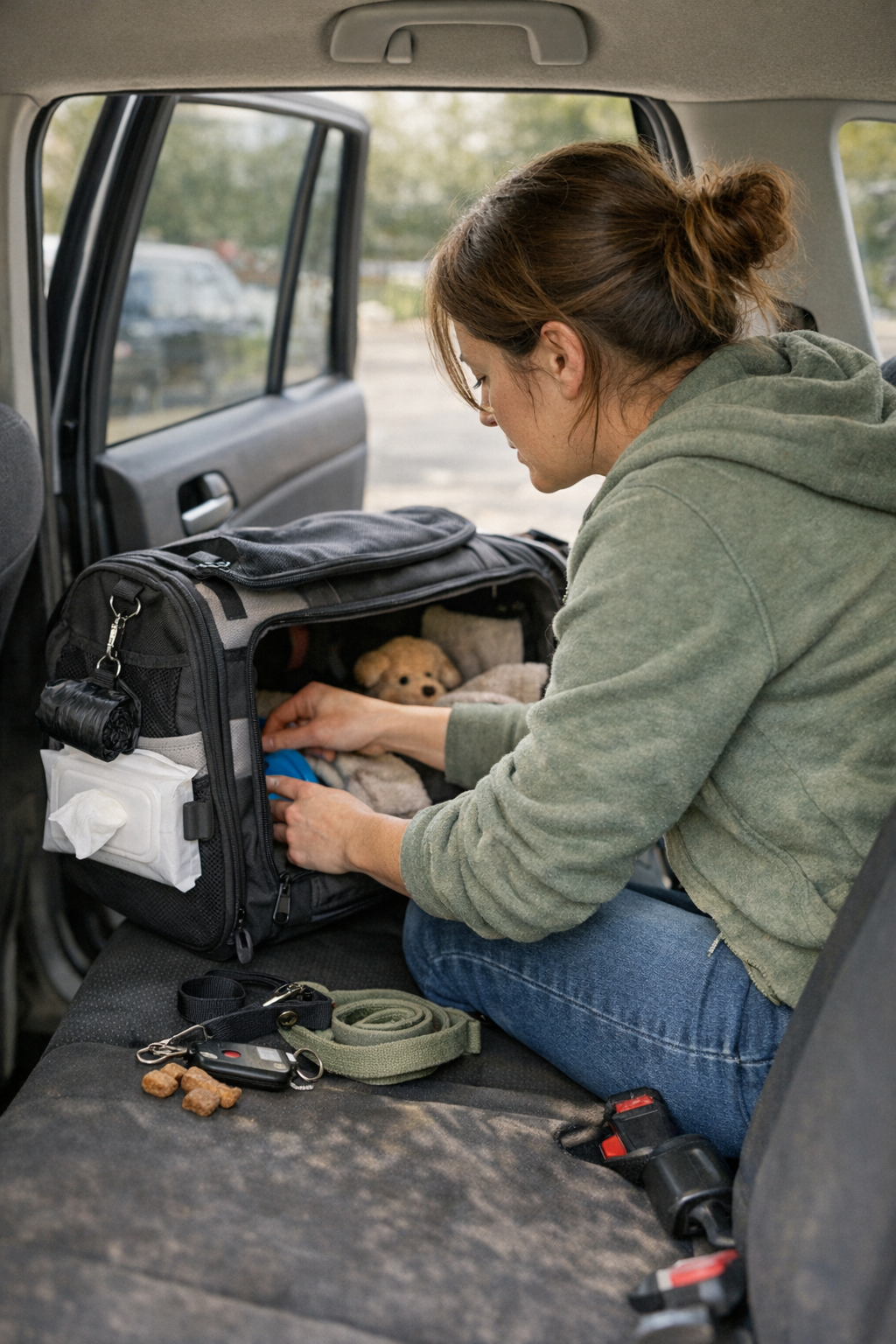
There’s a particular pause that happens the first few times you travel with your pet. You buckle them in, stash the carrier by the seat, line up the gear, and nudge everything into position. It feels organized, at least in theory. But after a few errands and short stops, you notice how often you’re bending around the bag, fishing for wipes, or shifting treats just to find something basic. These small interruptions stack up through the morning until every movement feels less natural than it should.
You recognize it after a few trips. The big moments—the fuss of finding your keys, dropping a treat pouch, the clatter when a bowl slips into the footwell—fade into smaller, repeated motions. The friction doesn’t happen all at once. It’s in the way your hand pauses over too many zippers or when the comfort blanket you placed carefully slides under backup leashes. These aren’t outright problems, but everyday obstacles that dull the flow of return and restart. What kept coming back was how often I reshuffled the same few items over and over just to keep moving forward.
There’s a difference between a setup that looks ready and one that stays smooth in real travel. A bag loaded with organizers and sorted gear often seems impressive at first glance—color-coded sections, every supply accounted for, nothing left behind. But by the third stop, details shift. Cleanup becomes a hunt for wipes lost beneath the chews or a leash looped just out of reach. The illusion of order gives way to overlap: pouches layered too tightly, essentials nudged out of position, seat-side gear half-buried by day’s end. You don’t notice until you pause for the third time in an hour just to get a simple task done. That pause drags against the whole experience.
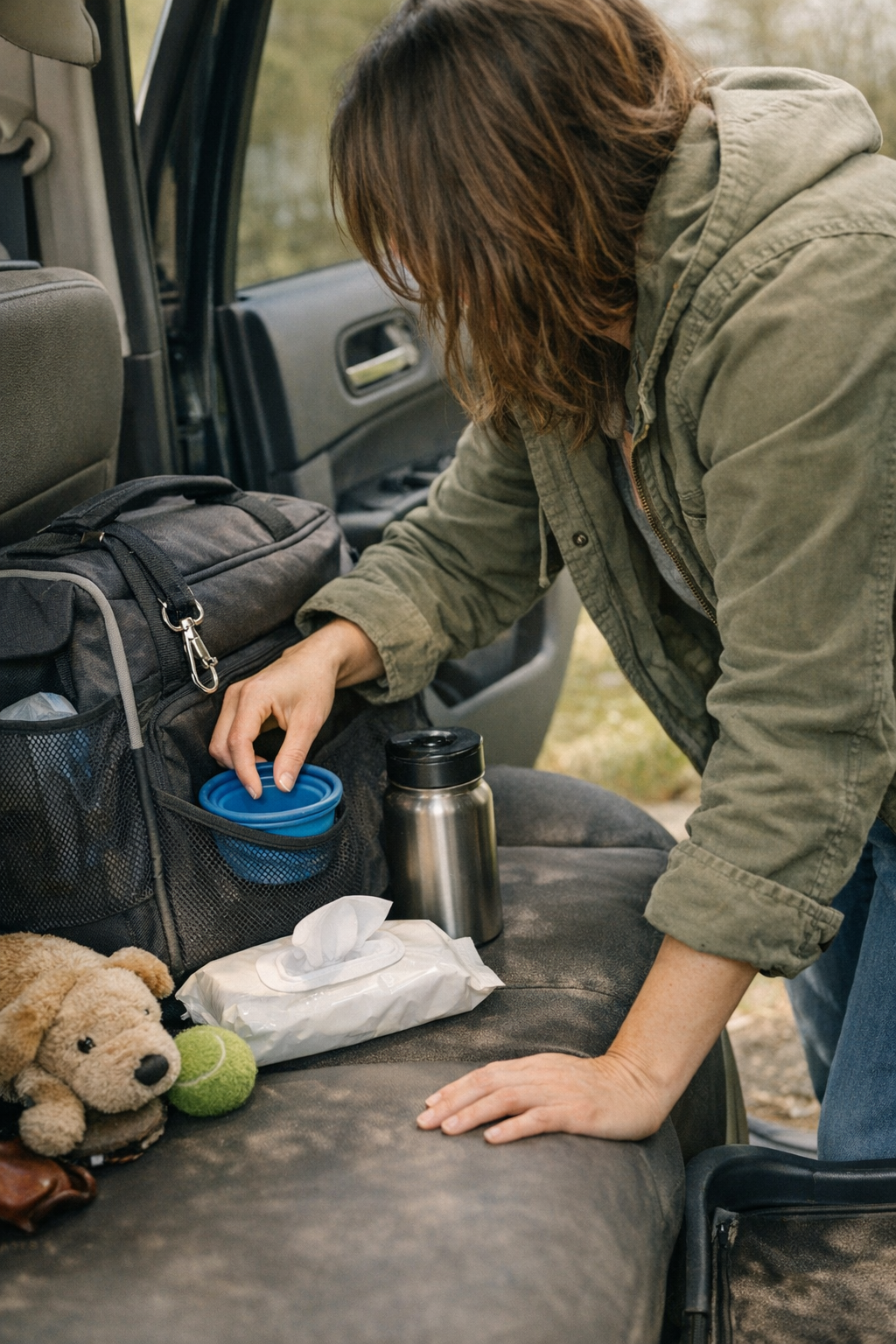
For me, it took several back-to-back weeks of drives, short restarts, and small, low-pressure crises to see where my arrangement really fell short. Adding compartments didn’t stop the drift toward clutter. More gear didn’t help; it only increased the pockets to check. What changed the rhythm was stripping back—keeping only what fit in one main carrier opening, clipping wipes outside at the edge of reach, and stitching comfort inside instead of burying it under supplies. It clarified things. On triple-stop days, nothing spilled loose and cleanup wasn’t delayed. Every item had one motion. Over time, the difference wasn’t just visual; it felt quieter, less scattered, and easier to keep together every time I moved.
Most setups fall apart not from lack of effort, but from overthinking what “organized” looks like—prioritizing neat layers instead of actual access in motion. The routines that stayed smooth always had something simple: wipes visible, cleanup clipped at the edge, and nothing forced into an extra pocket just for show. Overlap causes clutter. A livable setup shrinks the restart—comfortable, but not overloaded, focused more on the shape of everyday movement than packing every last thing inside.
If you want to see the kind of structures people actually keep using, there’s one spot I keep returning to: PawGoTravel.