When Travel Memories Linger in Everyday Spaces
A carry-on may look tidy but cause repeated friction and delays; direct, one-move access prevents these hassles from lingering after travel.
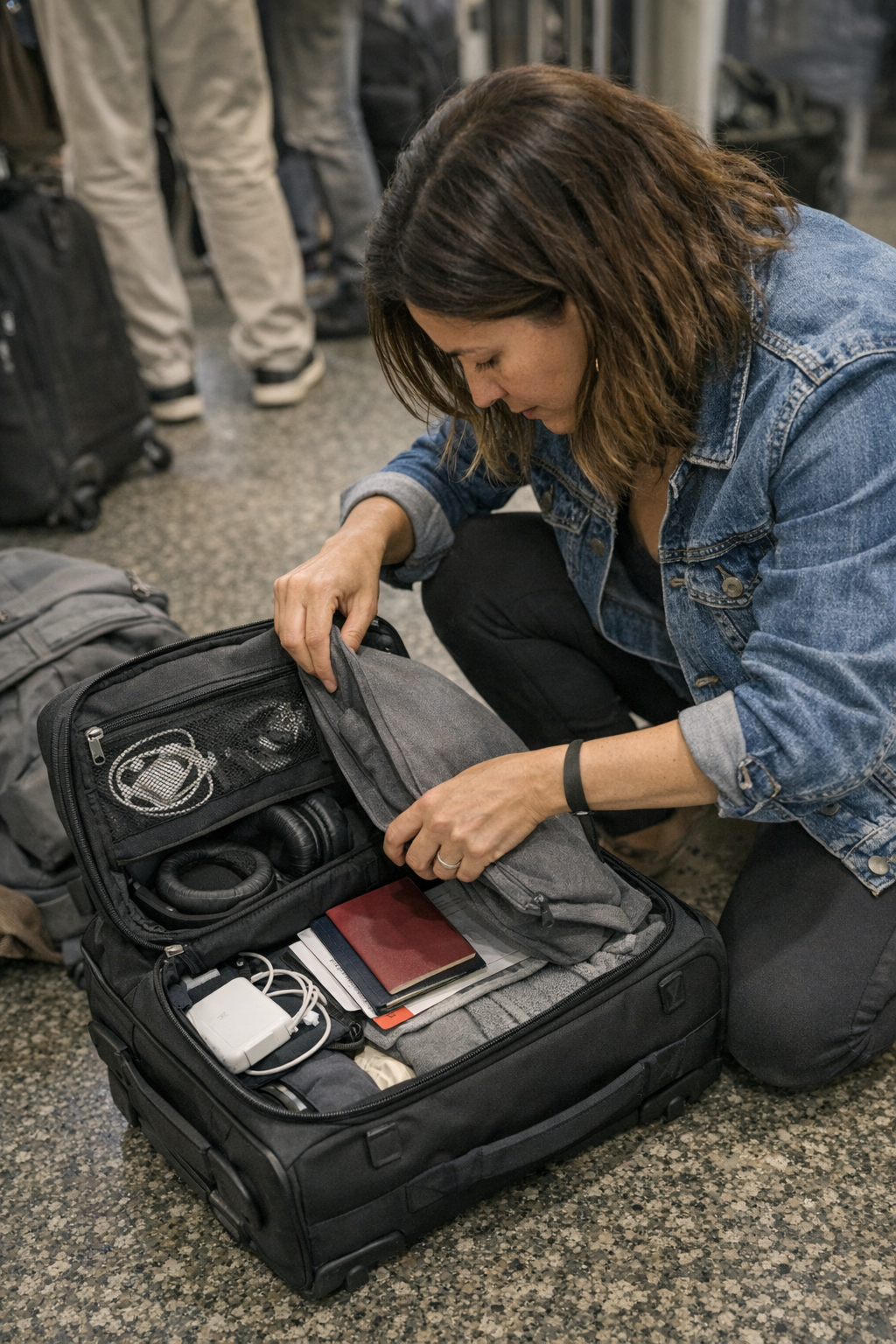
It’s easy to convince yourself your carry-on is packed and ready—zipped up, pouches neatly stacked, headphones resting safely above the chargers. Everything looks set. Yet, over time, you start noticing the difference between a bag that looks organized and one that actually lets you move freely through airport checkpoints, security lines, and tight boarding lanes. The airport repeatedly tests every design you thought you’d already figured out.
You only see the real structure in those moments standing mid-aisle, one hand balancing the bag as you hunt for a single card or charger, while the line behind you slows. Or when the pouch you need sits buried just beneath several others. Organization that looks neat on your floor can quickly feel like a slow leak in real use—harder to name and harder to solve.
Mistakes Hide Under Neatness
At home, I believed my system worked well. Each cable, each passport, had its own slim niche. The layout was impressive enough. But the truth came out after a few transitions: checking in, changing gates, sliding documents out while half in and half out of a seat. Those hesitating pauses, where supposed “efficiency” got clogged by too many layers, kept showing up. One misplaced zipper or extra pouch added seconds. It became clear I wasn’t after more pockets or compartments, but fewer steps.
This didn’t feel like failure—just a mismatch between tidy layers and quick practical access. Over time, my focus shifted from keeping a perfect grid inside the bag to smoothing the repeated moves themselves. Would my hand reach exactly what I needed, or would it fumble under another pouch—again?
Change Unfolds in Small Motions
There’s a moment—usually mid-journey—where you stop thinking about neat compartmentalization and start considering the actual route your hand takes. What do you need most, where are you likely to need it, and which pocket do you instinctively reach for? For me, one quiet upgrade made all the difference: moving all travel papers into a single top-zip slot.
It wasn’t a clever add-on, just removing what was in the way. Though it looked less tidy, it functioned much better. Reach, retrieve, reset—done in one smooth motion. The bag stopped reminding me of itself; it was there, but no longer interrupting the flow of my day. You notice this subtle shift after a few flights. Solutions rarely mean more control—usually less to get through.
Why the Details Stay With You
What sticks isn’t the color or brand of a pouch, but how many times you hesitate or reach awkwardly before finding what you need. It adds up—especially during short layovers or hectic train connections. I began trusting the bag more when it made these repeated routines forgettable—sliding out a document in one step, dropping earbuds into the same empty spot every single time.
Maybe the real improvement is when the bag stops demanding attention, letting your mind move on to the rest of the trip. The friction fades away, and the structure quietly does its job in the background, not the foreground.
More thoughts around these routines, if you want them, are quietly collected here: http://www.carryonsupply.myshopify.com