When Travel Pace Reveals Hidden Frustrations in Your Bag
Repeated-use friction exposes over-organized carry-ons’ weak points; a single external zip pocket eases access and cuts airport slowdowns.
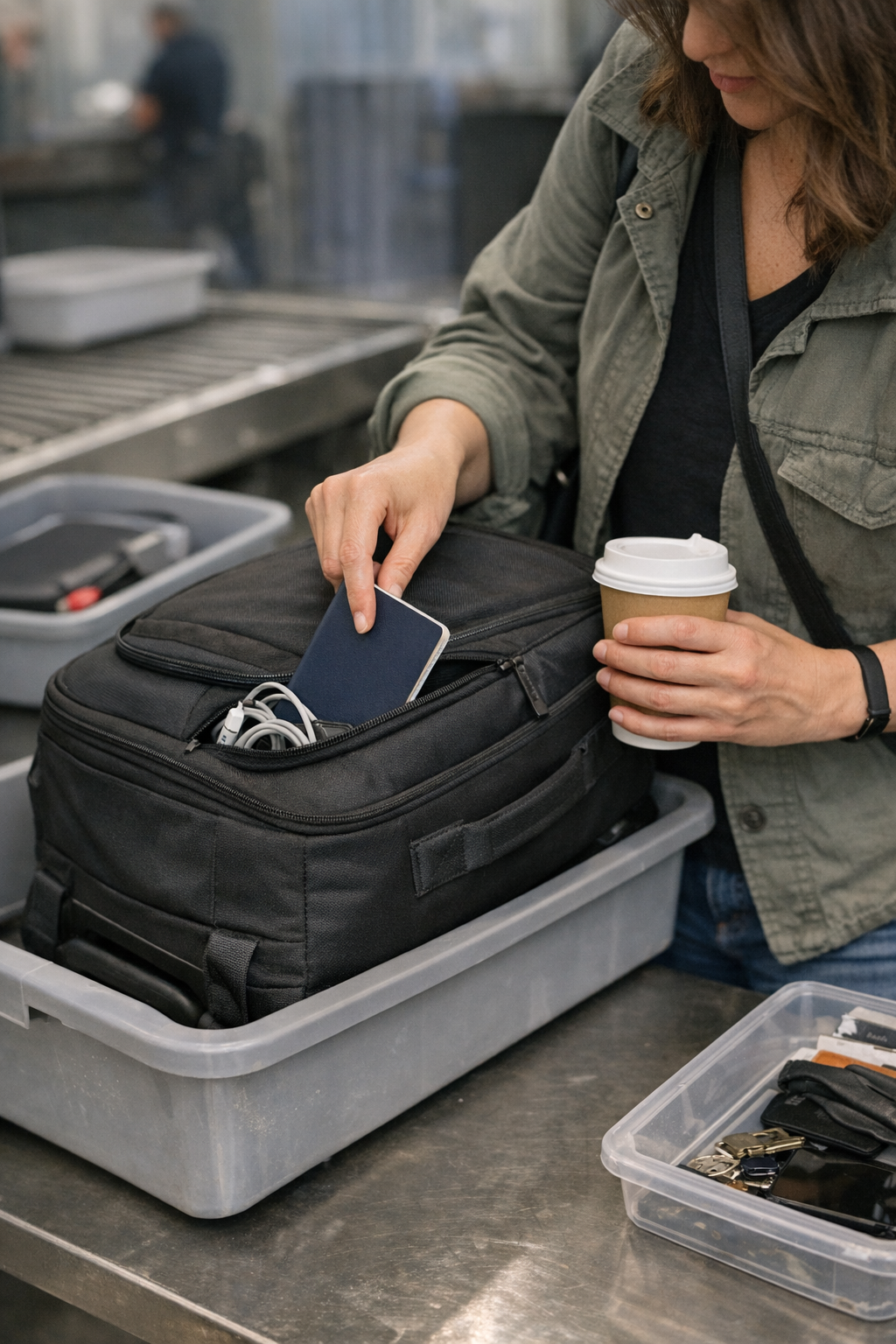
There’s a moment, usually somewhere between security and your gate, where an organized bag can start to work against you. What felt like control at home—all those tidy pouches, perfectly zipped—begins to slow you down in the real texture of travel. The order holds up until something small but essential slips under the surface, forcing one more pause, one more round of shifting pouches while you stand in the way. I didn’t really notice this pattern until a few repeated trips made it impossible to ignore.
Overlap, and the Cost of Order
You notice it after a few transitions. A passport checked and rechecked means digging past stacked organizers. Chargers slip beneath toiletries. The calm from having “a place for everything” is real, but each layer acts like a barricade. What looked reliable at home sometimes becomes a trap in the tight space between tray tables and armrests.
It all works—on paper. Then, in the security line, the zipper sticks for a second and you’re unwrapping what you spent the morning packing. Order only holds as long as nothing needs to move.
Repetition Exposes the Friction
This thought kept returning every time I needed a boarding pass or ID—especially when the line behind me started leaning in. It happened again while stowing the bag; with a handle in one hand and phone in the other, pulling out an organizer only to shuffle it back before sitting down. Good systems, once, but too nested. The so-called “clean lines” began to slow me down.
There’s a cumulative effect. Not a big deal by itself, but it repeats. The neat pouch system requires unzipping and restacking, each time messier than before, until even the outer seams start bulging, quietly worn from constant undoing and redoing.
Small Shifts, Tangible Difference
One small change—moving the essentials to a shallow outer pocket—felt almost careless at first. Easy to reach, but less visually tidy. Yet the difference kept appearing. I stopped rearranging the inside every time. The one-handed zip, tapping for the right card or cable, drew less attention and used less energy with each step of the trip.
It’s not that everything found a perfect spot. Some things float now, a little loose by design. What matters is that nothing blocks the piece you actually need. I kept coming back to that after the fifth airport segment.
There’s more here, if you’re curious: http://www.carryonsupply.myshopify.com



