When Travel Pace Shapes How Pets React and Owners Adapt
Pet travel setups that look neat often fail with multiple stops; prioritize easy access and flow to reduce friction and keep both moving smoothly.
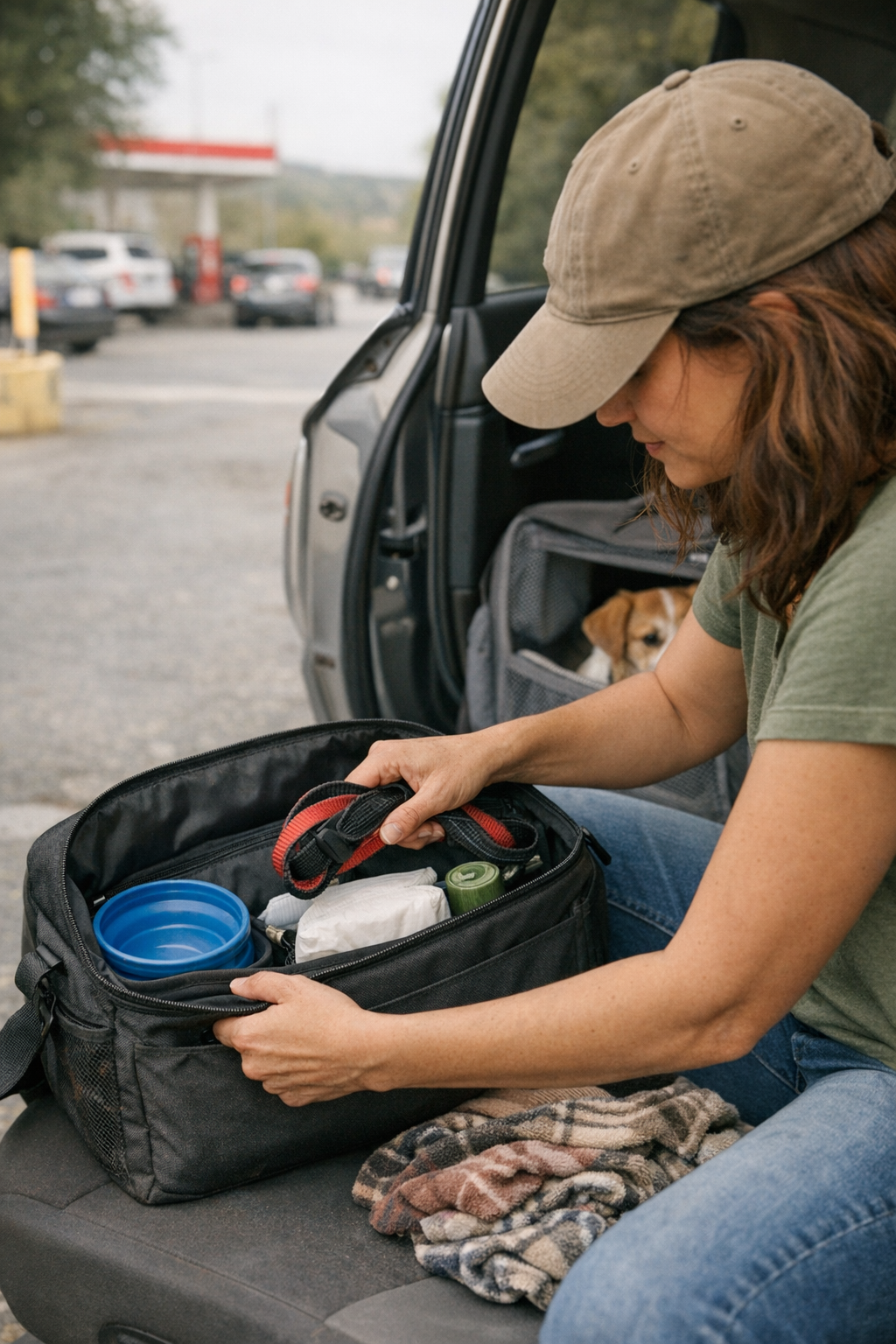
There’s a certain comfort in packing a pet travel bag so everything stands upright, zipped and slotted, before leaving home. It feels reassuring and a little calming to see compartments mapped out, wipes tucked beside bowls, cleanup bags layered in order. But the tidy promise of organization—the kind that looks satisfying on a Sunday before a drive—starts to unravel the moment you hit the road.
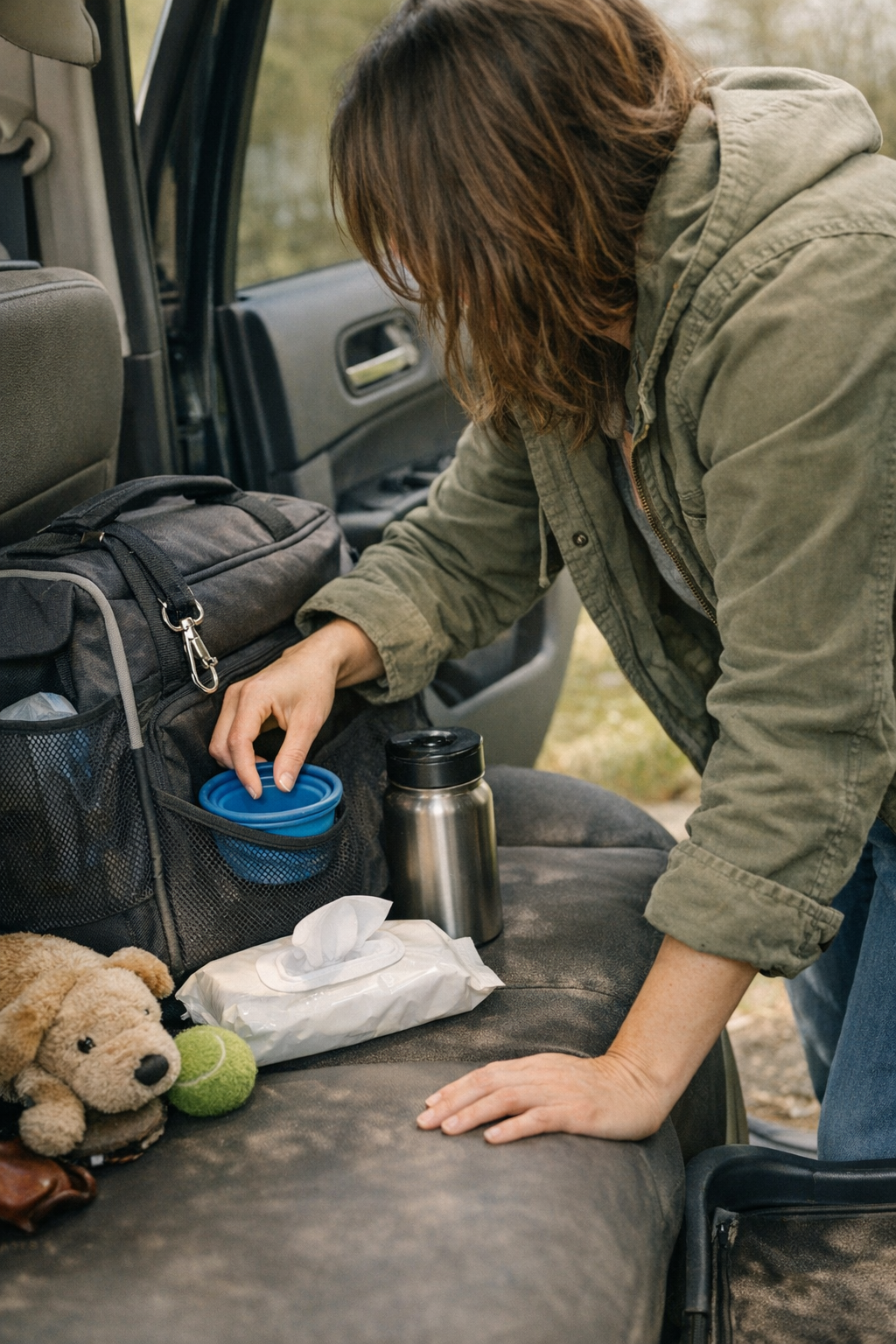
You notice it after a couple of stops. The dog, patient on the first break, grows tense, watching for each pause with a preemptive flinch. One hand steadies her pulling on the leash while the other struggles to unzip a pocket that, back at home, seemed perfectly placed for quick-access wipes or the foldable bowl. The gap between prepared and practical widens as the bag’s careful organization demands more attention than your pet does.
Movement Finds the Weak Spots
What looked organized at first isn’t always easy in real time. Every return to the car brings another round of reshuffling—bowls slipping behind mats, leash handles drifting into the wrong section, wipes buried under backup treats. These small, hidden snags quietly slow everything down, time after time.
Usually, it’s not the gear itself that’s the problem. It’s how the arrangement works against you when you move from packing to actual use. A bowl tucked just a zip too far, or a leash tangled with a roll of bags, starts as a minor nuisance but quickly becomes friction—quiet but cumulative.
By midday, you expect it. What felt seamless at home becomes fussy after the second rest stop. Movement isn’t just forward motion—it’s about how easily you can get everything back in place for the next round.
The Quiet Tension of Repeated Use
With each stop-and-go cycle, organization takes on a new kind of tension. It’s in the reach for a cleanup pouch that has shifted since the last use, in the second glance to check nothing tipped out, in the pet who hesitates just enough to show she senses the pause.
There’s a tradeoff beneath it all: tightly stacked bags slow your hand but look neat on the seat; looser arrangements ease movement but invite mess. Your energy shifts toward whichever setup causes less friction at the moment. It’s not a sharp frustration, just a string of micro-hesitations accumulating between the moment you think you’re “out the door” and finally settling again.
Somewhere on the road, the pattern becomes clear—a quiet argument between order and momentum, replaying each time a zip sticks or a bag resists coming out in one smooth motion.
Letting Routine Speak Over Design
After enough round trips and mid-drive pauses, I stopped stacking so tightly. Instead of sorting by category and nesting by size, I placed the core items side by side at seat level—not layered or tucked away. One hand free, one zip left half open, everything close enough to reach without disturbing the balance.
The bag’s outside didn’t change—no Instagram transformation here. But inside, my hand landed on exactly what I needed without fuss or extra steps. The relief—for both of us—came in those seconds not spent fumbling, and in the way my pet no longer braced every time I turned to reach. Sometimes the smallest change is just letting the routine show what really works—messier in setup, cleaner in experience.
Sometimes that’s enough.
If you’ve been there too, you might find yourself looking at your travel setup a little differently one day: http://www.pawgotravel.myshopify.com