When Travel Plans Meet Real Airport Chaos
A visually neat bag can cause delays in travel; separating frequent-use items into dedicated pockets speeds access and reduces stress.
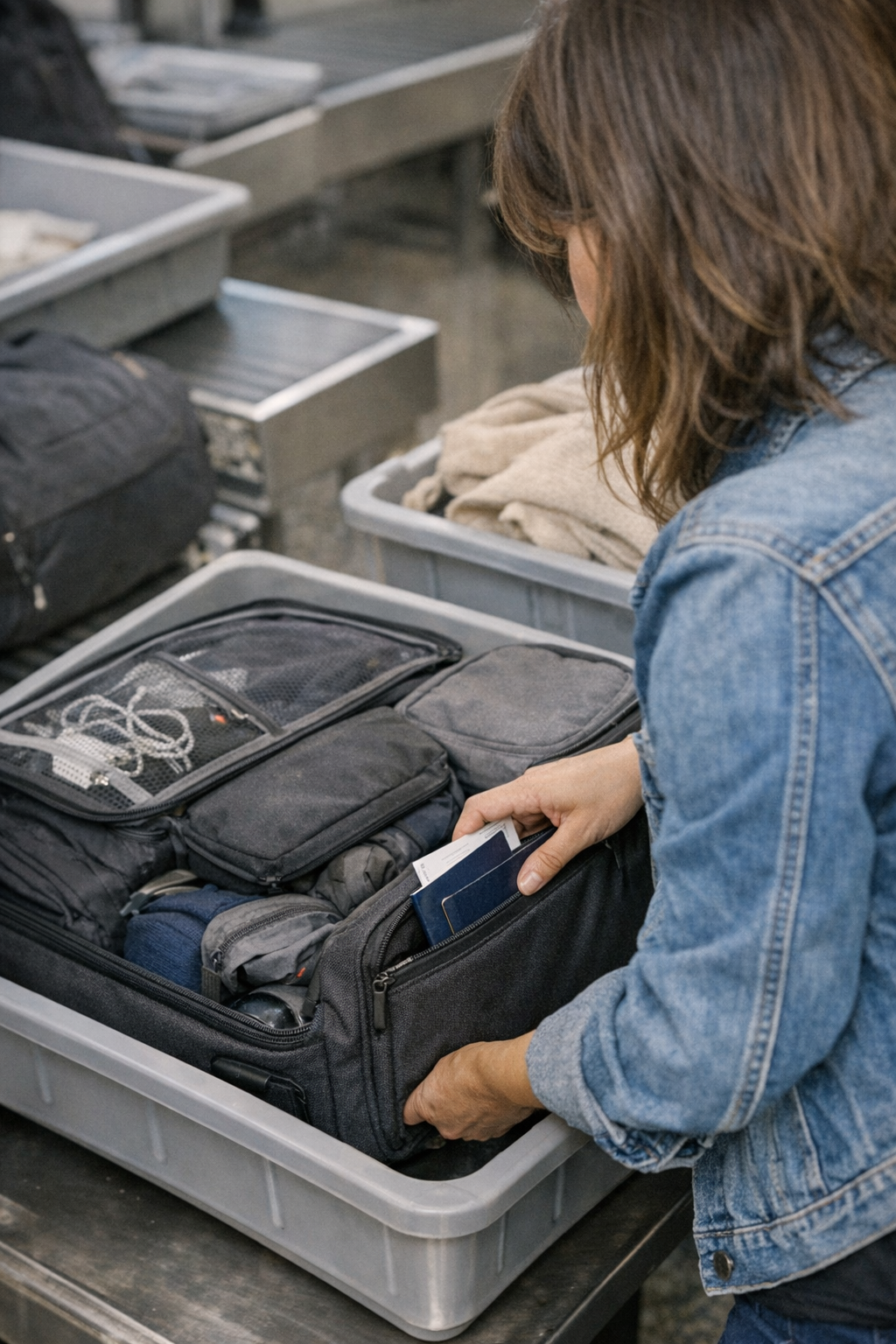
There’s a moment that sneaks up on you, somewhere between scanning your boarding pass and shuffling for overhead bin space. The carry-on you packed carefully—zipped tight and everything aligned—suddenly feels heavier, less responsive, and a little too complicated. I’ve noticed these moments more than once, standing in that mild pressure bubble where seconds start to count and the idea of “organized” breaks down under real movement.
You notice it after a few transitions. The tidy bag that looked perfect at home suddenly interrupts itself, layers overlapping hastily. That was the part that kept coming back. A carry-on can seem methodical under a lamp’s light, with every packing cube and pouch in place, but once you start grabbing and returning items in motion, the clean lines soften and small delays add up.
When the Bag Stops Keeping Up
The difference shows most clearly when you’re fumbling for your passport at security, one hand balancing a tray, the other working a zipper blocked by a stray charging cord. Neat at home—clumsy in action.
Stacking organizers made sense at first, each having its own neat square of space. But in practice, I found myself reaching twice for the same item or doubling back after putting things in the wrong slot. The flaw wasn’t obvious until I was repacking at baggage claim, aware of shrinking time and personal space in crowded corners.
It looked fine on the kitchen table. But the friction kept revealing itself—a pause each time something was shared between compartments or buried behind another packing cube.
Small Divides That Open Up the Flow
One change stuck with me: separating travel documents into their own shallow, quick-access pocket. Nothing dramatic, just moving essentials like passports and boarding passes out of the “pouch of everything.” Suddenly, there was no unzipping through USB cables or adapters just to pull out a boarding pass.
On a tired layover, this small switch became obvious. Each document retrieval was one smooth motion instead of three, and everything went back easily by touch, no looking needed. The difference wasn’t just speed but calm—the feeling that the bag moved in sync with the security line instead of breaking it.
It’s subtle, but after a few flights, the routine changes when the main compartment stays closed and your fingers know exactly where your passport will be, every time.
The Cost of Looking Controlled
A carry-on that photographs well or sits perfectly packed at home can start costing you time when routines repeat—especially with accidental overlaps. I’ve unpacked the same pocket twice in ten minutes: once for headphones, once for ID, each time digging through a jumble and stacking things back with growing disorder. Every shared compartment or bundled pouch turns into another slow-down at boarding or awkward fumbling at seat entry.
You really only see the gaps after living through several cycles of access and return. Outward order can hide these choke points, which emerge only after the bag is opened, moved, lifted, closed, and repacked multiple times.
There’s a real comfort in the bag that flows with your movement, the one that opens cleanly at each checkpoint and expects your habits. Smaller adjustments—like giving every high-use item its own dedicated spot—can make the difference, even if it means your packing isn’t as photogenic as it was on your kitchen table.
If you want to see the kind of gear I kept coming back to, it’s quietly listed here: carryonsupply.myshopify.com



